On November 3, voters across America handed Democrats both the U.S. House and the Senate. In California, the wave hit Republicans at every level, from Congress down to the state Legislature.
When California's last House race was called, the state's Republicans in Congress had gone from nine members to four. CalMatters says that appears to be the party's smallest California delegation since 1937, back when the state had only 20 seats. Republicans lost every statewide race. They lost about a third of their seats in the Legislature. Their voter ID measure lost by 21 points.
And for the three weeks before all that, Trump's Justice Department was in court trying to stop California from counting some of the ballots.
Here's the good, the bad and the ugly.
The good: five Republican seats are gone
California has 52 seats in the U.S. House. Starting in January, Democrats will hold 48 and Republicans four, CalMatters reported. That's a net loss of five seats for the Republicans.
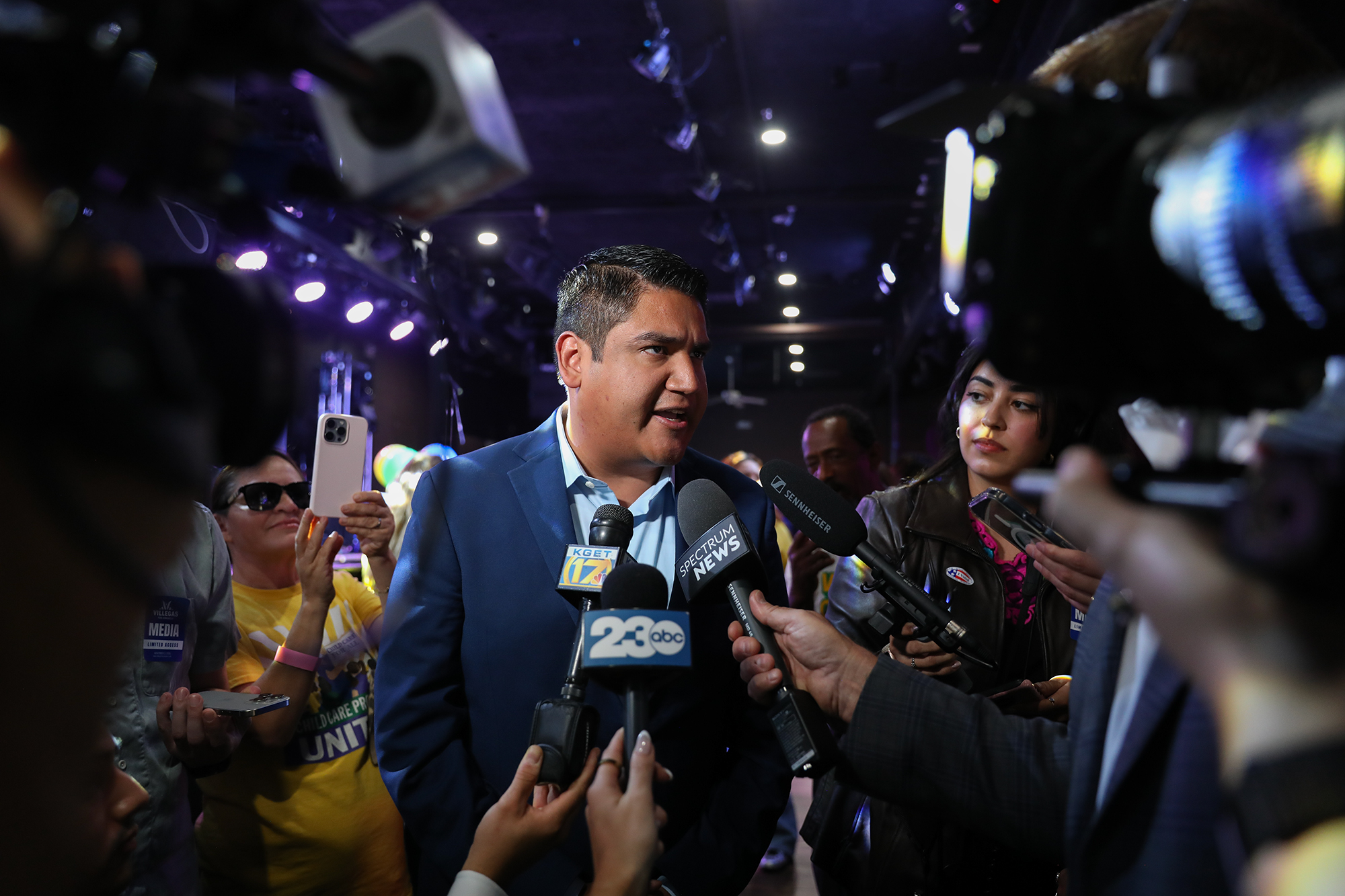
The biggest loss was in the Central Valley. David Valadao, a dairy farmer who has held off Democrats for most of the last 12 years, lost to Randy Villegas, a political science professor from Bakersfield. With 99% counted as of November 27, Villegas had 103,689 votes, or 68.2%, to Valadao's 48,371, or 31.8%. That's a margin of 36 points. Two years ago Valadao won with 53.4%, though the district's lines have changed since then.
CalMatters called it "no result was more stunning." It also said why it happened: Valadao "faced a reckoning" over his vote for Trump's budget bill, which will cut health coverage for more than 2 million Californians. More than 27% of households in his district get food stamps, and he told a reporter the cuts didn't worry him. Then he ran ads promising to protect the Medicaid he'd voted to cut.
Four more seats went with his:
- James Gallagher lost the far-north 1st District to Democrat Mike McGuire, the former leader of the state Senate, 59% to 41%. Gallagher had won the seat in a special election in June after the death of Doug LaMalfa. Before that, as a state lawmaker, he sued to block Newsom's order mailing every voter a ballot.
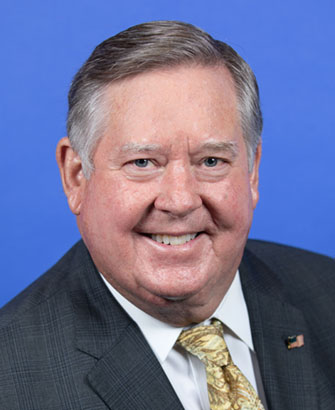
- Kevin Kiley lost to Democrat Richard Pan, a doctor and former state senator, 58.9% to 41.1%. Kiley quit the Republican Party this year and ran as an independent, but kept caucusing with House Republicans. He had voted for the law that broke California's Medi-Cal tax, then asked RFK Jr. to block the state's fix.
- Jim Desmond, a Republican San Diego County supervisor, lost the seat Darrell Issa gave up to Democrat Marni von Wilpert, 59.9% to 40.1%. While he ran, his county office spent $249,470 in public money on ads for his own videos.
- Young Kim lost too, to another Republican. The new lines redrew Ken Calvert's district, and he ran in hers instead, so only one of them could come back. Calvert won, 52.5% to 47.5%. Kim had posted a promise not to vote for a budget that cut Medicaid, then voted for the cuts three times.
The map, and the wave
Those seats were lost on new lines. Last year, California voters passed Proposition 50, which set aside the state's independent map-drawing commission and redrew the House districts to push out five Republicans. It was Gov. Gavin Newsom's answer to Trump's push to redraw Texas's map for Republicans, and voters approved it overwhelmingly.
But the map didn't do all the work. Across the country, Democrats did 15 points better than they did in 2024, and they won seats in red districts Trump carried by double digits. CalMatters reported that it's not clear yet whether Democrats could have won these five seats under the old lines.
Every statewide race, and a third of the Legislature
Steve Hilton, the Republican Trump endorsed for governor, lost to Democrat Xavier Becerra. With 99% counted, Becerra had 8,740,723 votes, or 65.7%, to Hilton's 4,571,077, or 34.3%. Four years ago the Republican nominee got 40.8%. Hilton's campaign ran a Spanish-language ad with a computer-generated Becerra saying words Becerra never said, and paid two self-described independent journalists more than $72,000 without either one telling their viewers.
Democrats won every statewide office, "right down to the Board of Equalization," CalMatters reported.
In the Legislature, Republicans lost at least nine of their 30 seats, CalMatters reported. They'll have 12 of the 80 seats in the state Assembly. Here's where some of the losses came:
- The Assembly's Republican leader. In the San Joaquin Valley, a 28-year-old Democrat with a thin résumé unseated the leader of the Assembly's Republicans, according to CalMatters. That leader is Assembly Minority Leader Alexandra Macedo of Tulare County, according to ABC10.
- Swing-seat Republicans. Assembly members Jeff Gonzalez, Leticia Castillo, Tri Ta and Greg Wallis all lost, and Josh Hoover conceded, ABC10 reported. In Orange County, CalMatters reported, a Democrat beat the Vietnamese American Republican who represents Little Saigon, a traditional Republican stronghold.
- The state Senate. Tony Strickland lost his Huntington Beach seat. The open seat of Republican Brian Jones went to a Democrat. And the new Senate Republican leader, Roger Niello, held on by only about 5,000 votes. "This election cycle in my opinion is inexplicable. I've never seen anything like it," Niello told ABC10.
Why does it matter? Some bills, like tax increases, need a two-thirds vote. That means a big enough minority can block them. To get there, Republicans would need 15 more members in the Assembly and six more in the Senate. They're further from it now than before the election.
Voters said no to voter ID
Proposition 39 would have written a voter ID requirement into California's constitution. It lost 60.5% to 39.5%, a margin of more than 2.7 million votes, with 99% counted.
It was Republican money from all over the country. Republican Assemblymember Carl DeMaio put it on the ballot with his group, Reform California. The measure raised $37 million, including $17 million from packaging magnate Richard Uihlein and $8 million from Airbnb co-founder Joe Gebbia, who works in the Trump White House. The California Republican Party endorsed it.
CalMatters noted that experts widely agree voter fraud is rare in California. Opponents said the ID rule would have blocked eligible voters, like people who'd just moved or changed their names.
The bad: four held on
Four Republicans on our list won. They all won on new lines, so their totals from two years ago aren't a straight comparison.
- Tom McClintock won a tenth term in the Sierra foothills, 55.6% to 44.4% over Democrat Michael Masuda. Two years ago he won with 61.8%. After the election, he said voters are "hurting and angry about the economic impact of the war in Iran and the tariffs," and that Congress "has surrendered too much" of its power to the president. He's right. He also voted against ordering U.S. forces out of the Iran war in September, the sixth time he had voted no on it this year.
- Vince Fong won a second full term in the Bakersfield area, 61% to 39%, in a district where Republicans have a 20-point edge among registered voters. His campaign wouldn't make him available to CalMatters to talk about his party's losses. Fong now warns California's health tax will raise premiums, but he voted for the law that forced the change.
- Jay Obernolte barely survived in the Mojave Desert. He beat Democrat Tessa Hodge by 2,907 votes, 50.7% to 49.3%, with 99% counted. It was the last House race in the state to be called, and CalMatters said it wasn't even considered competitive before Election Day. Two years ago he won with 60.1%. He told his district "no one is being forced off Medicaid" by the budget bill. California's health department now projects 1.1 million people will lose Medi-Cal by 2029-30.
- Ken Calvert beat Young Kim for the one Orange County seat still drawn for a Republican. He'll start his 18th term in January.
The ugly: the fight to stop the count
California mailed a ballot to all 23 million of its registered voters. In the middle of October, with voting already underway, Trump's Justice Department went to court to stop the state from counting some of them.
What the Justice Department wanted
The government had a list of about 20,000 people that Homeland Security suspected were not citizens. It handed Los Angeles County the names on a password-protected thumb drive and gave the state 48 hours to set aside their ballots. It didn't say how it had decided they weren't citizens.
The pressure didn't stop at a lawsuit. Justice Department lawyers threatened to prosecute election workers who counted those ballots, saying they'd be helping noncitizens vote. Election clerks in Los Angeles and Orange counties got grand jury subpoenas. And federal agents arrested Californians over their voter registrations fifteen days before the election: 28 cases out of 23 million voters.
"We want to stop the illegal voting. We don't want to chase it later," Bill Essayli, the top federal prosecutor in Los Angeles, said the week before the election.
What the courts said
Every court said no.
U.S. District Judge David O. Carter turned the government down first. He warned that separating ballots that late could take votes away from citizens and would "wreak havoc" on the election. He appointed an outside expert to check how accurate the list was. Then the federal appeals court ruled against the government too.
The day before the election, the Supreme Court said no in a one-sentence order, with no dissents noted. It didn't even ask California to file a response first. Steve Vladeck, a Supreme Court expert at Georgetown's law school, wrote that he couldn't remember the court ever turning down a Justice Department request that way.
The list didn't hold up either. A group of data experts working for an immigrant rights group found that 42% of the names weren't on California's current voter rolls, and at least 22 of them matched U.S. citizens. In a court hearing that same Monday, a federal judge asked a government lawyer whether the list had "a high error rate — not nominal — but a high error rate."
"I think that's a fair statement," the lawyer, Assistant U.S. Attorney Kenneth Kao, answered.
What it was worth once the votes came in
Nothing. On November 6, three days after Republicans' big losses, the Justice Department asked to drop its own case. Its filing said the help it wanted was "no longer available," because the ballots had been counted along with everyone else's. The appeals court signed off on November 23, which ended the fight.
So for three weeks, the federal government threatened local election workers with prosecution over a list its own lawyer admitted was full of mistakes. Then it walked away.
California's Republicans in Congress were asked about all of this before the election. CalMatters asked whether they'd signed a pledge to accept the results and seat whoever won. Obernolte's office said "I can't answer that." Calvert, McClintock, Valadao and Gallagher didn't respond.
The rest of the ugly
- The survivor is the one who tried to overturn 2020. On the night of January 6, 2021, Calvert voted to reject Arizona's and Pennsylvania's electoral votes. When the new map redrew his district, he moved to hers and ran against her. The two scrambled to "out-Trump" each other in the primary, CalMatters reported. Calvert called Kim a "Trump-traitor". He has run for years on bringing home federal money, and for 20 years some of it has landed near property he owns.
- Obernolte still won't say. He voted to reject the same two states' votes on January 6, 2021. Now he'll go back to Washington after a race decided by fewer than 3,000 votes, still without saying whether he'd have accepted the result if it had gone the other way.
What the results show
California's Republicans in Congress went from nine to four, the party's smallest delegation from the state since 1937. David Valadao lost by 36 points, and James Gallagher, Kevin Kiley, Jim Desmond and Young Kim lost too. Steve Hilton got 34.3% for governor, down from the 40.8% the Republican got four years ago. Republicans lost at least nine of their 30 seats in the Legislature, and voters rejected their $37 million voter ID measure, 60.5% to 39.5%. Tom McClintock, Vince Fong, Jay Obernolte and Ken Calvert held on, with Obernolte winning by 2,907 votes. And Trump's Justice Department, after threatening to prosecute election workers over a list of 20,000 voters its own lawyer said had a high error rate, lost at every court up to the Supreme Court and dropped the case three days after the election.
Source
5 key races that reshaped the California congressional delegation — Maya C. Miller, CalMatters, November 17, 2026.