In May, Tennessee Republicans split Memphis into three congressional districts. The goal was to win all nine of the state's U.S. House seats. On Nov. 3, they won the Memphis seat by about 2,500 votes. They also lost a seat they had held since 2011, by a few hundred votes, in a district their own new map made.
So Tennessee still sends eight Republicans and one Democrat to the House, the same as before the map was redrawn. Every Republican on this site who won here won by less than last time. Marsha Blackburn is the new governor, and she got less than half the vote.
Here's the good, the bad and the ugly.
The good: Scott DesJarlais is out
Scott DesJarlais lost the 4th District to Democrat Victoria Broderick. With 99% counted as of Nov. 27, NBC News has Broderick ahead 95,722 to 95,361. That's a margin of 361 votes. DesJarlais conceded on Nov. 16, almost two weeks after Election Day, once provisional ballots counted in Nashville added to her lead.
Two years ago he beat the same woman 70% to 26.8%. The district was drawn differently then. But the new one wasn't drawn for a Democrat. Trump won it by 24 points in 2024, according to the Cook Political Report's Erin Covey. She called it the largest House flip of the 2026 cycle.
Hardly anybody spent money to make it happen. National Democrats and a PAC funded by Illinois Gov. JB Pritzker put millions into the 5th and 9th districts. Broderick raised less than $100,000. She's a tech support worker and a mom of two from Lincoln County, and she ran on affordability. She said she was in the race "because we deserve better than being treated like an afterthought."
DesJarlais, a doctor, served eight terms. In March he signed on to a bill banning abortion from the moment of fertilization, with no exception for rape or incest. Years earlier, a recorded call caught him pressuring a patient he was having an affair with to get an abortion.
Six state House seats flipped
Democrats flipped six state House seats. It was the first time since 1996 that the party gained more than one seat in an election. Republicans go from 75 seats to 69, so they still have a supermajority, but a smaller one.
- Rutherford County. Three of the county's five Republican state representatives lost: Mike Sparks to Connie Casha and Robert Stevens to Brett Windrow, both in Smyrna, and Tim Rudd to Owen Farnsworth in Murfreesboro. Trump won the county with 60% in 2024. Blackburn got 41% there.
- Memphis. Jesse Huseth beat Rep. John Gillespie in a rematch. Gillespie and Brent Taylor sponsored the bill that overturned Memphis's ban on "pretextual" traffic stops. The city passed that ban after police beat Tyre Nichols to death following a traffic stop.
- Clarksville. Allie Phillips beat Rep. Michael Lankford. Phillips had to leave Tennessee to end a pregnancy that could not survive, because of the state's abortion ban.
- Knoxville. Bryan Goldberg beat Rep. Elaine Davis.
Here's why the six seats matter. Tennessee's private-school voucher expansion passed the state House 52–43 this year. Eight House members who voted for vouchers lost this cycle: two in the Republican primaries and six to Democrats in November. Blackburn's spokesman says she "will not stop working to expand education freedom," her name for vouchers. House Democratic Caucus Chair John Ray Clemmons said Democrats will file a bill to repeal them. "I don't know if it will get repealed, but it could be defunded," he said.
The bad: they won, by less
Marsha Blackburn was elected governor with 45.5% of the vote to Democrat Jerri Green's 43%, a margin of 52,683 votes with 99% counted. Two years ago, running for Senate, she won with 63.8%. Four years ago, Gov. Bill Lee won this office with 64.9%.
The Tennessee Lookout found that Blackburn got nearly 1 million fewer votes than in 2024. She is the first Tennessee governor since before World War II to win with less than 50%. Independent David Hatley spent nearly $12 million of his own money going after her with conservative voters. He got about 9%.
The Lookout's Sam Stockard described how her campaign nearly lost a race that shouldn't have been close. She relied on dark-money groups, never sought the backing of the rivals she beat in the primary, and refused to debate. We wrote in July that she skipped forums and claimed forums her rivals say never happened. She also had help from the biggest outside spender in the race: a Club for Growth PAC that spent nearly $13 million for her. Months earlier, she had sent $4.8 million from her Senate campaign account to another Club for Growth PAC. Tennessee law bars her from spending that Senate money directly on a governor's race.
Bill Hagerty won a second Senate term with 55.1% to Marquita Bradshaw's 42.9%. Against the same opponent in 2020, he won with 62.2%. He lost Rutherford County. This year he wrote a bill aimed at "mixed-status" families, where most people in the household are eligible for housing help, and it would put about 37,000 children at risk of losing their homes.
The House Republicans ran on lines redrawn in May, so their 2024 numbers come from different districts. Treat the comparison as a rough guide. NBC's counts, with about 99% in:
- Diana Harshbarger won the 1st District with 67.4%, down from 78.1% in 2024. Four days after Trump endorsed her, he pardoned her husband, who had served time for putting a cheap unapproved Chinese ingredient into medicine for kidney dialysis patients.
- Tim Burchett won the 2nd with 57.7%, down from 69.3%. He said he'd probably vote no if Trump's budget bill added to the deficit. Then he got a nameplate signed at the White House and voted yes on a Senate version that added about $1 trillion more to the deficit than the House bill.
- Chuck Fleischmann won the 3rd with 57.6%, down from 67.5%. When the new map passed in May, he said he was "thankful that the state did what President Trump asked them to do". He's among the names in the running for Blackburn's Senate seat.
- Matt Van Epps won the 7th by 5,233 votes, 50.3% to 48.1%. He won a special election for the seat in December 2025 by 8.8 points. The May map gave the district a smaller Republican edge. In that special election, outside groups spent more to elect him than his own campaign raised.
- David Kustoff won the 8th with 51.6%, down from 72.3%. He voted for the budget bill that is taking $7 billion out of TennCare. No state has a larger share of rural hospitals at risk of closing than Tennessee.
Two Republicans won seats no one on this list held. They aren't on this site. Charlie Hatcher, who beat Andy Ogles in the August primary, took the 5th 51.7% to 46.7% over Columbia Mayor Chaz Molder. Johnny Garrett took the 6th 50.8% to 47.5%.
The ugly: the map that split Memphis
How the map was drawn
The U.S. Supreme Court's ruling in Louisiana v. Callais scrapped key parts of the Voting Rights Act, including the rule that made states with a history of discrimination draw districts like Memphis's. Days later, Gov. Bill Lee called the Republican legislature into a special session. On May 7 it passed a new congressional map that divides the Memphis-based 9th District, the state's only majority-Black district, among three districts. It also splits Nashville five ways. State troopers cleared the public gallery. Lawmakers redrew the map at Trump's request.
The old 9th had been held by Democrats for more than 40 years. The new one is shaped like an L. It runs from the Memphis airport along the southern edge of rural West Tennessee, then turns north into Middle Tennessee to pick up part of wealthy Williamson County. Rep. Steve Cohen, who held the seat, ended his campaign rather than run in any of the three new Memphis districts.
What the court said
Memphis voters sued, saying the map was drawn to weaken Black votes. A panel of three federal judges let the map stand for 2026 in July. On Oct. 1 it threw the case out, the Tennessean reported.
The judges said the voters hadn't proved that race was one of the reasons for the lines. "Here, political motivations explain the map's effects," they wrote. They gave the legislature the benefit of the doubt that it had acted "in good faith."
So the court never said the map was fair to Black voters in Memphis. It said they hadn't proved race was a motive, and it accepted politics as the explanation. Data scientists at the University of Chicago ran tens of millions of simulated maps. They came to the opposite conclusion: race, not politics, was the only thing that could produce this one.
What it was worth on election night
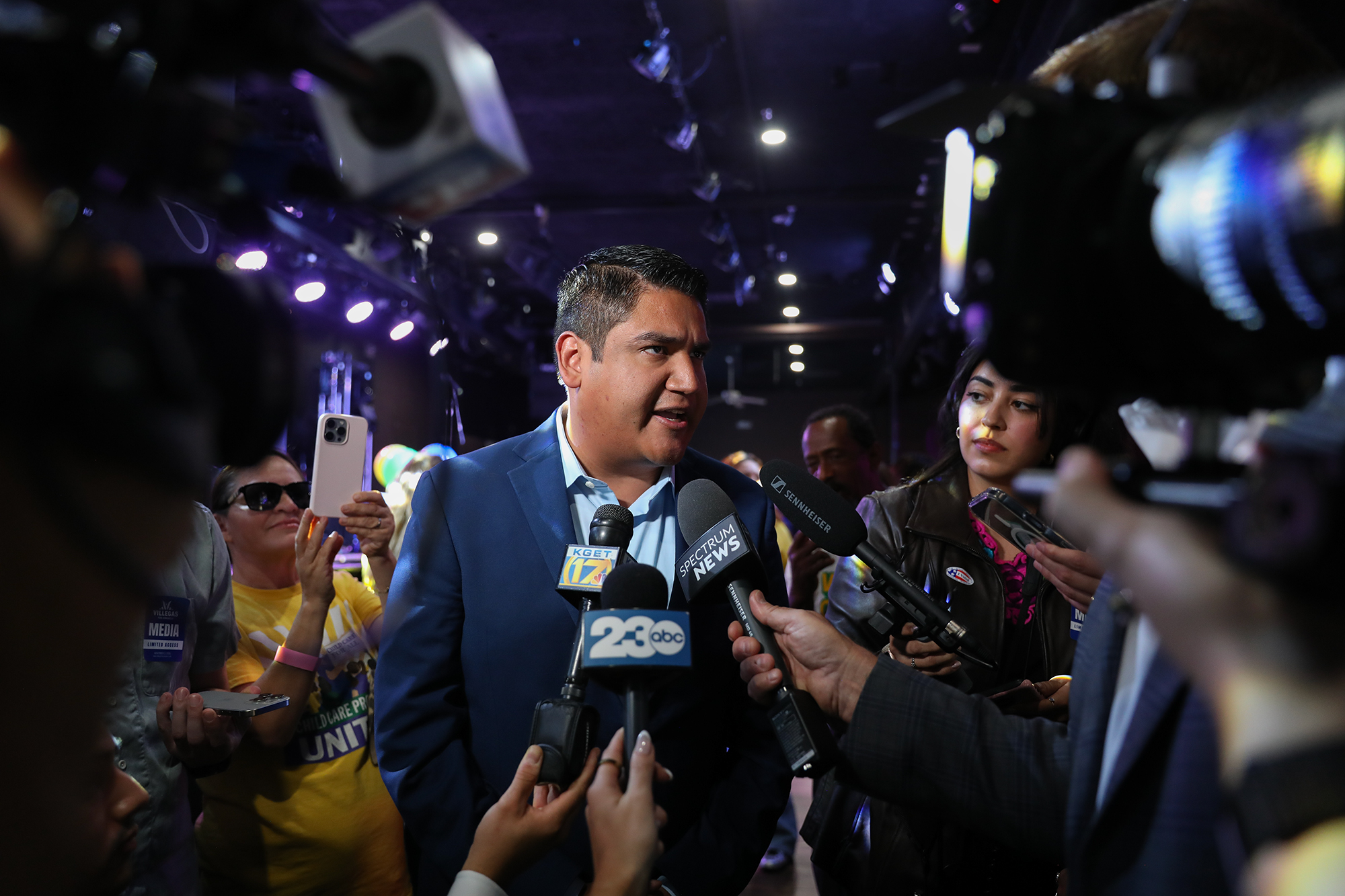
Republican state Sen. Brent Taylor beat Democratic state Rep. Justin J. Pearson in the new 9th by 2,539 votes, 49.6% to 48.5%.
The map's math is in the county results. Pearson won about 85% in the Shelby County part of the district, according to Associated Press data. Taylor won the rural West and Middle Tennessee counties the map attached to Memphis, and he took the Williamson County piece 60.4% to 38.1%. Pearson conceded the next day. "Together, we have made history in a district that they drew to gerrymander us into oblivion," he had told supporters on election night.
To take the 9th, though, Republicans had to give up votes in other districts. With a push from Trump and Blackburn, they redrew six districts, and to do it they had to shrink their own margins in all six. Trump won the 5th through 9th districts by 20 to 25 points in 2024, the Lookout found. By NBC's count, Republicans won them this year by between 1.1 and 5.2 points. And the 4th was redrawn to take in southeast Nashville and all of Rutherford County. More than 80% of Broderick's votes came from those two counties. The seat the map gained in Memphis was cancelled out by the seat it cost them in the 4th.
Statewide, Republicans got about 54% of the U.S. House vote and won eight of nine seats, or 89%. In the state House, which Republicans redrew in 2022, they got 58% of the vote and won 69 of 99 seats.
"Republicans got greedy in Rutherford," Middle Tennessee State University professor Kent Syler told the Lookout, about the 2022 state House lines there.
The rest of the ugly
- A man accused of sending unsolicited nude photos is going to Congress. A week before the election, the Nashville Scene reported that more than one source said they had received or seen unsolicited nude photos from Brent Taylor, as recently as 2021. Taylor called them "youthful indiscretions." He later told a radio host the messages were consensual and involved someone "I shouldn't have been communicating with." Trump and Blackburn had endorsed him. He won.
- A private-prison boss is in line for Blackburn's Senate seat. The morning after she won, Blackburn wouldn't say whether she'll appoint former CoreCivic CEO Damon Hininger, one of her top donors. Hininger was at her press conference and said he is "absolutely" interested.
- A fix for a problem that doesn't exist. Voters passed Amendment 2 by 66.7% to 33.3%. It bans the state from charging a statewide property tax. Tennessee hasn't had one since 1949.
What the results show
Scott DesJarlais lost a district Trump won by 24 points, by 361 votes, to a Democrat who raised less than $100,000. Democrats flipped six state House seats, including three of Rutherford County's five, and eight voucher votes are gone from the House. Marsha Blackburn won the governor's race with 45.5%, down from 63.8% two years ago. Bill Hagerty fell from 62.2% to 55.1%. Republicans split Memphis three ways to take the 9th District, which they won by 2,539 votes, and they lost the 4th, so the delegation stayed at eight Republicans and one Democrat.
Source
Live updates: 2026 Tennessee election — Tennessee Lookout staff, November 3, 2026, and the Lookout's follow-up coverage linked above.