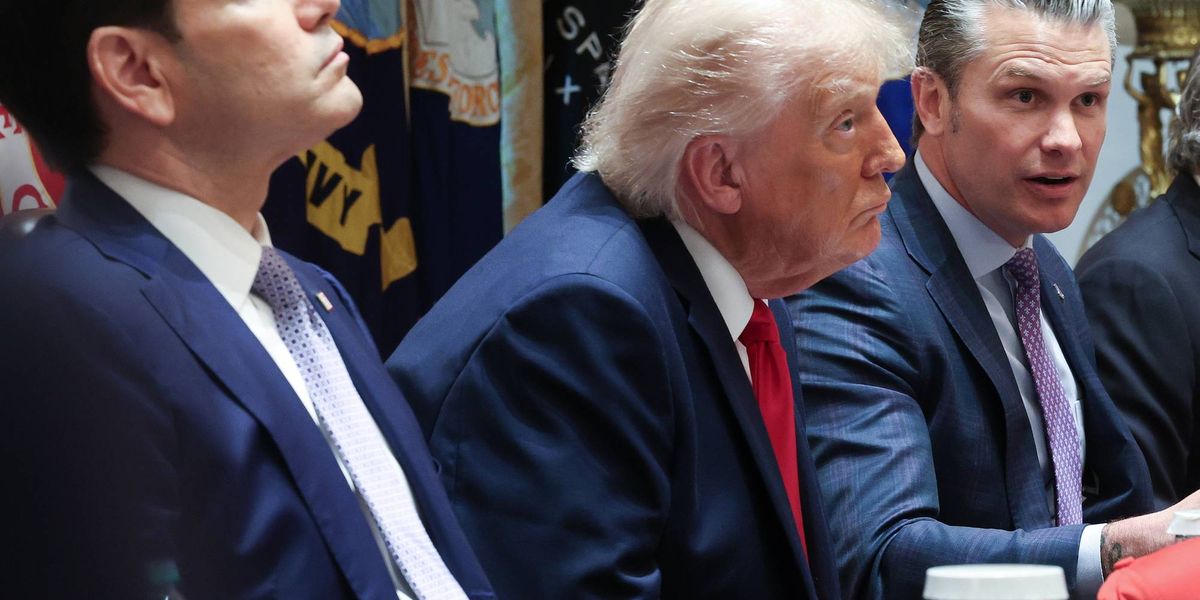
President Trump launched the war with Iran on February 28. It was supposed to last a few weeks. Congress has never voted to authorize it.
Late on Tuesday, September 15, 2026, the House voted 220 to 204 to order the president to stop. The resolution, H. Con. Res. 93, was pushed by Rep. Seth Moulton of Massachusetts, a Marine who served in Iraq. It passed.
That makes three times. The House passed a resolution like it in June, and again in July. Each time, nearly every Republican voted no. This time Republicans voted 203 to 7 against it.
180 of the members who voted no have a report card on this site — 179 Republicans, plus Kevin Kiley of California, whom the House clerk lists as an independent. Their names are at the bottom of this post.
What the war has cost so far
The same day as the vote, Congress's own nonpartisan budget office put a number on the war for the first time.
According to the Congressional Budget Office's report, as covered by The Washington Sun:
- The war cost the U.S. $38.1 billion through August 1.
- It is costing about $2 billion to $3 billion more every month, and that could rise when the fighting gets heavier.
- $21.7 billion of that went to replacing weapons, including $13.1 billion in missile-defense interceptors. Since June 2025, the U.S. has used between half and two-thirds of its supply of several kinds of those interceptors, and the budget office says rebuilding the stockpile could take five years or more.
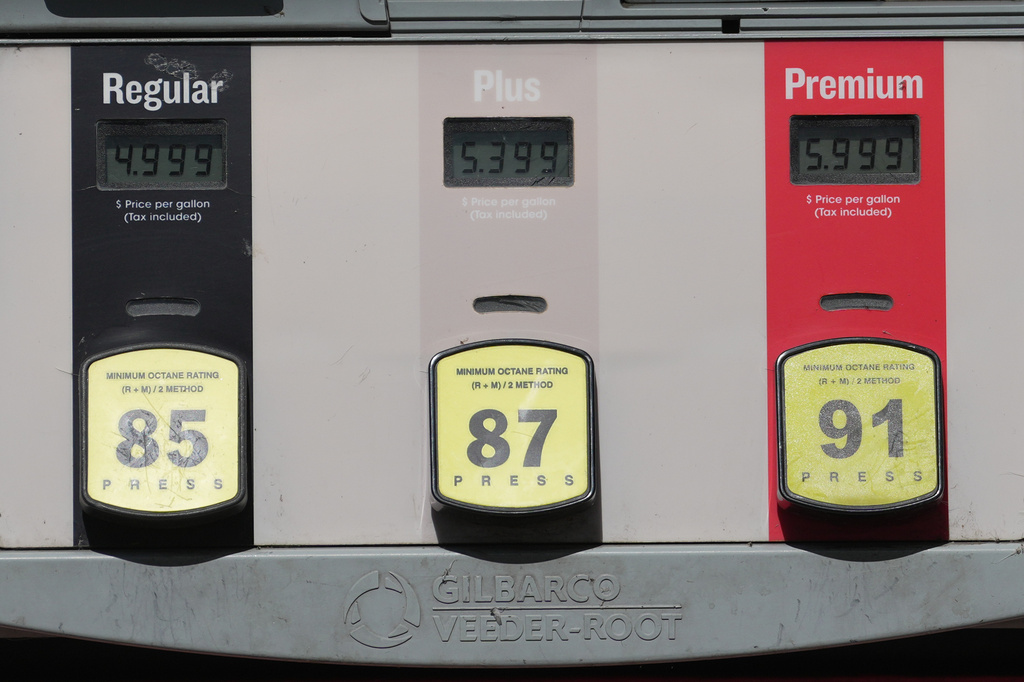
- The war will add about half a percentage point to inflation in early 2027, mostly from higher energy prices.
- The budget office now expects oil prices to be 41% higher this year than it forecast before the war started.
The budget office also said its estimate is uncertain for a reason: the Pentagon didn't answer its requests for information. So it had to work from public databases and reports, and it couldn't estimate what it will cost to fix the U.S. bases Iran has hit.
That's the cost to the government. You're paying a second bill at the pump and the grocery store. We broke down what the war has cost the average household earlier this month.
What they were voting on
The War Powers Resolution is a law from the Vietnam era. It says a president needs Congress's approval to keep U.S. forces in sustained fighting past 60 or 90 days. Congress, not the president, gets to decide whether the country stays at war.
A yes vote said: Congress wants the troops out of this fight. A no vote said: the president can keep going on his own.
Like the June and July versions, this one is a concurrent resolution. It doesn't go to the president's desk, and Trump would almost certainly veto anything that did. It's Congress putting its position on the record. That's what makes the no votes telling: a yes vote couldn't end the war on its own, and 180 members we track still wouldn't cast it.
The Speaker's promise
House Speaker Mike Johnson admitted Tuesday that gas prices need to come down. His answer was to wait.
According to the Associated Press, via The Washington Sun, Johnson said the war is entering a "new phase," and that when it does, "anytime gas prices will go down again, the cost of groceries will as well." He said Trump expects that shift after the election, though he added, "I'd love it to happen today."
So the plan is: vote to keep the war going, go home to campaign, and ask voters to believe prices will fall once the ballots are counted.
Brian Mast of Florida, who chairs the House Foreign Affairs Committee, argued against the resolution on the floor. He said Trump is against "forever wars, and that is what he is ending," meaning decades of hostilities with Iran. The war Mast was defending is now more than six months old.
Two Iowa Republicans changed their votes
Seven Republicans voted yes this time. Five of them have report cards here: Tom Barrett of Michigan, Warren Davidson of Ohio, Brian Fitzpatrick of Pennsylvania, and two from Iowa: Mariannette Miller-Meeks and Zach Nunn.
Barrett, Davidson and Fitzpatrick voted yes in July too. Miller-Meeks and Nunn did not. On the July roll call, both voted no. Seven weeks from an election, both switched.
Three Republicans we track who voted no in July didn't vote at all this time: Byron Donalds and Tom Tiffany, who are both running for governor, and Steve Womack of Arkansas.
Congress keeps saying stop
This is not a close call that Congress is still thinking about. The House has now voted three times to end the war. The Senate voted 13 times on ending it by early August. According to the AP, the Senate passed a war powers resolution on its 10th try, and Republican senators reversed course the very next day after Trump berated them at a closed-door lunch.
The AP also reported that most Americans say the war hasn't been worth fighting, per an AP-NORC poll in July. The fighting has already wounded hundreds of American troops.
And this is likely the House's last vote on the war before the midterms. Lawmakers head home this week to campaign.
The 180 who voted to keep the war going
Every one of these members has a report card on this site, and every one of them is recorded on the official House roll call voting no on ordering U.S. forces out of the war with Iran:
Alabama — Robert Aderholt, Barry Moore, Gary Palmer, Mike Rogers, Dale Strong
Alaska — Nick Begich
Arizona — Andy Biggs, Juan Ciscomani, Eli Crane, Paul Gosar, Abraham Hamadeh
Arkansas — Rick Crawford, French Hill, Bruce Westerman
California — Ken Calvert, Vince Fong, James Gallagher, Kevin Kiley, Young Kim, Tom McClintock, Jay Obernolte, David Valadao
Colorado — Lauren Boebert, Jeff Crank, Gabe Evans, Jeff Hurd
Florida — Aaron Bean, Gus Bilirakis, Mario Diaz-Balart, Randy Fine, Scott Franklin, Carlos Gimenez, Mike Haridopolos, Laurel Lee, Anna Paulina Luna, Brian Mast, Jimmy Patronis, John Rutherford, Maria Elvira Salazar, Greg Steube
Georgia — Rick Allen, Andrew Clyde, Mike Collins, Clay Fuller, Brian Jack, Rich McCormick, Austin Scott
Idaho — Russ Fulcher, Mike Simpson
Illinois — Mike Bost, Darin LaHood, Mary Miller
Indiana — Jim Baird, Erin Houchin, Mark Messmer, Jefferson Shreve, Victoria Spartz, Marlin Stutzman, Rudy Yakym
Iowa — Ashley Hinson
Kansas — Ron Estes, Tracey Mann, Derek Schmidt
Kentucky — Andy Barr, James Comer, Brett Guthrie, Hal Rogers
Louisiana — Clay Higgins, Mike Johnson, Julia Letlow, Steve Scalise
Maryland — Andy Harris
Michigan — Jack Bergman, Bill Huizenga, John James, Lisa McClain, John Moolenaar, Tim Walberg
Minnesota — Tom Emmer, Brad Finstad, Michelle Fischbach, Pete Stauber
Mississippi — Mike Ezell, Michael Guest, Trent Kelly
Missouri — Mark Alford, Eric Burlison, Bob Onder, Jason Smith, Ann Wagner
Montana — Troy Downing
Nebraska — Mike Flood, Adrian Smith
New Jersey — Tom Kean Jr., Jeff Van Drew, Chris Smith
New York — Andrew Garbarino, Nick LaLota, Nick Langworthy, Mike Lawler, Nicole Malliotakis, Claudia Tenney
North Carolina — Virginia Foxx, Pat Harrigan, Mark Harris, Richard Hudson, Brad Knott, Addison McDowell, Tim Moore, Greg Murphy, David Rouzer
North Dakota — Julie Fedorchak
Ohio — Troy Balderson, Mike Carey, Jim Jordan, David Joyce, Bob Latta, Max Miller, Michael Rulli, David Taylor, Mike Turner
Oklahoma — Stephanie Bice, Josh Brecheen, Tom Cole, Kevin Hern, Frank Lucas
Oregon — Cliff Bentz
Pennsylvania — Rob Bresnahan, John Joyce, Mike Kelly, Ryan Mackenzie, Dan Meuser, Scott Perry, Guy Reschenthaler, Lloyd Smucker, Glenn Thompson
South Carolina — Sheri Biggs, Russell Fry, William Timmons, Joe Wilson
Tennessee — Tim Burchett, Scott DesJarlais, Matt Van Epps, Chuck Fleischmann, Diana Harshbarger, David Kustoff
Texas — Brian Babin, John Carter, Michael Cloud, Monica De La Cruz, Beth Van Duyne, Jake Ellzey, Pat Fallon, Brandon Gill, Craig Goldman, Lance Gooden, Ronny Jackson, Nathaniel Moran, August Pfluger, Keith Self, Pete Sessions, Randy Weber, Roger Williams
Utah — Mike Kennedy, Celeste Maloy, Blake Moore
Virginia — Ben Cline, Morgan Griffith, Jen Kiggans, John McGuire, Rob Wittman
Washington — Michael Baumgartner
West Virginia — Carol Miller, Riley Moore
Wisconsin — Scott Fitzgerald, Glenn Grothman, Derrick Van Orden, Bryan Steil, Tony Wied
Wyoming — Harriet Hageman
What the roll call shows
On September 15, 2026, the House voted 220 to 204 to end a war Congress never authorized, and Republicans voted 203 to 7 against it. 180 of the members who voted no have report cards on this site. They cast those votes on the same day Congress's budget office reported the war has cost $38.1 billion so far, is costing $2 billion to $3 billion more each month, and will push inflation higher into 2027. It is the third time since June that the House has voted to end the war, and the third time nearly all of them voted no.
Sources
- House Roll Call 307: H. Con. Res. 93, September 15, 2026 (passed 220–204)
- House Roll Call 282: H. Con. Res. 89, July 23, 2026 (passed 214–208)
- The Washington Sun / Associated Press: House Votes a Third Time to End the Iran War as Conflict Drags On
- The Washington Sun: CBO Warns the Iran War Is Driving Up Inflation
Photo: Vahid Salemi/AP, via The Washington Sun.