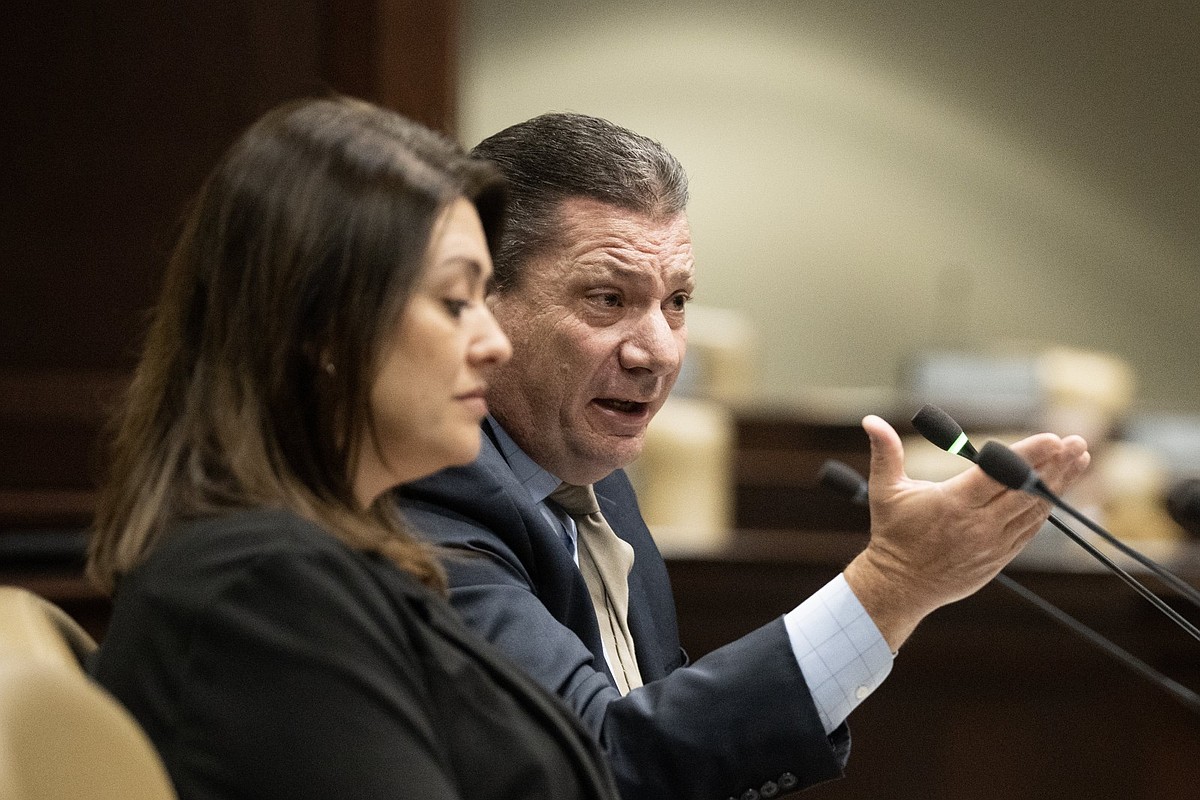
On August 15, the Arkansas Department of Education said it expects about 5,500 more students to join the state's school voucher program this school year. That's roughly 50,000 kids on Educational Freedom Accounts, and a bill to taxpayers of more than $367 million.
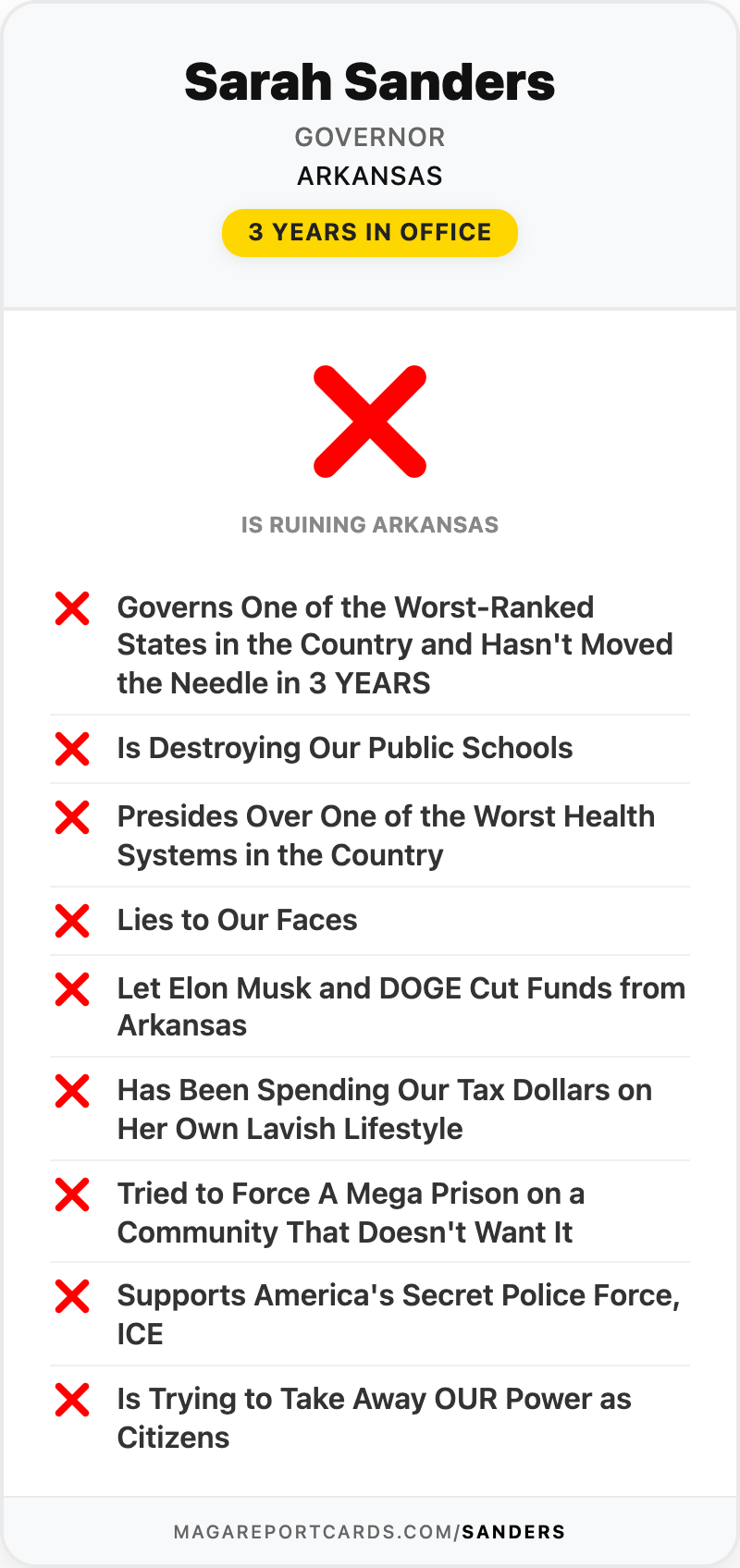
The program is Sarah Sanders' baby. It was created by the LEARNS Act of 2023, the marquee bill of her first legislative session, and she championed it. Her spokesman, Sam Dubke, called the growth proof of "strong demand from families across the state."
Ten times bigger in four years
Watch what this thing has cost us, year by year. The numbers come from the state's own annual report, produced by the University of Arkansas:
- 2023–24: $37.3 million
- 2024–25: $93.8 million
- 2025–26: $309.4 million approved by the Legislature
- 2026–27: up to $379 million approved, with actual costs expected to top $367 million
That's a tenfold increase in four years. And the state keeps guessing low. That same University of Arkansas report projected the 2025–26 program would cost "about $277 million." Lawmakers ended up appropriating $309.4 million. This spring they went up another 22.5%.
The per-student award is climbing too — from $6,864 last year to $7,208 this year. Every year the number of students goes up, the award per student goes up, and the Legislature writes a bigger check.
Meanwhile, a legislative panel has already approved a study of a third Arkansas subsidy for private education — a $100 million tax credit on top of this — and Arkansas has opted into the new federal private school voucher that starts in January.
Only 12 out of every 100 came from a public school
The whole pitch for vouchers is rescue: kids trapped in bad public schools, finally getting a way out.
The state's own data says that is not what is happening.
In 2024–25, according to that University of Arkansas report, here is where voucher students came from:
- 12% had attended a public school
- 25% had attended a private school
- 17% were homeschooled
- 10% were first-time kindergarteners coming from preschool
- 3% weren't in school at all
- and about a third were already in the voucher program from the year before
Twelve percent. For every one child who came out of a public school, more than three were already in a private school or homeschooled — and we started paying their bills.
That is not a rescue program. That is a subsidy for families who had already made their choice and were already paying for it themselves. We just picked up the check.
The scale tells the same story. In 2024–25 the state funded 474,337 kids in public schools and 14,256 through vouchers. The public school kids are the overwhelming majority of Arkansas children, and they are the ones whose schools are competing with a line item that has grown by more than $300 million since the program's first year.
Bill Kopsky, who directs the Arkansas Public Policy Panel, called the latest expansion "just absolutely the wrong direction for the state." He'd rather see the money go to early childhood education, special education and after-school programs — the things that actually reach the kids who need the most help.
The AI tool the governor's office announced ten months ago still doesn't exist
If you want a single example of how this program is run, use this one.
Last October, a spokesman for Sanders' office said the administration had "recently" launched an "AI screener in the ClassWallet platform to flag unusual expenses more quickly." ClassWallet is the Florida company that processes voucher payments under a $12 million state contract.
It hadn't. In April, the Education Department handed ClassWallet a 12-page memo calling its platform "fragmented, inefficient and increasingly misaligned" with what Arkansas needs. On AI-assisted review — a feature ClassWallet had pitched as "a core efficiency" when it bid for the job — the memo said the tools were "absent or materially incomplete."
Speaking to homeschool families in late May, Darrell Smith, the department's assistant commissioner for school choice, said the department had expected that technology back "in September or October of this past year," and it hadn't materialized.
And this month — ten months after the governor's office announced it was live — Smith said the state is still working with ClassWallet on developing a "pre-approval tool" that uses artificial intelligence.
The governor's office said in October that the AI screener was up and running. Ten months later, her Education Department is still trying to get one built.
It gets worse. In three years, Arkansas has changed voucher payment vendors twice. ClassWallet ran it in 2023–24. The state replaced it with an Indiana firm, Student First Technologies, for 2024–25 — then declared two months into the fall semester that the company had failed to produce a working system, and brought ClassWallet back. Last September, lawmakers approved a $4 million increase in ClassWallet's contract, up from $8 million — the department's chief of staff said that covered other work the company does for the state as well. The April memo warns Arkansas may drop the company again anyway.
What we're actually buying
Sanders and Education Secretary Jacob Oliva point to rising scores on ATLAS, the state's own end-of-year exam, where overall proficiency went from 36.9% in 2025 to 42.2% in 2026. Oliva told the State Board of Education this month that the gains are due to LEARNS.
Read that number again. 42.2% proficient means most Arkansas students still are not proficient.
There's a bigger problem with using that score to defend vouchers: ATLAS is a public school test. The private schools cashing the voucher checks don't have to give it. So the number the governor points to measures the half of LEARNS that isn't the expensive half.
As for whether vouchers themselves improve learning, the Democrat-Gazette, citing EdWeek, noted that comparing voucher students to public school students is difficult because the two aren't held to the same accountability rules — and that earlier studies of programs like Arkansas' often found either no effect on test scores or worse outcomes.
We do know what the oversight looks like. A private school in the program had students scrub floors as punishment and directed a room full of kids to attack a 13-year-old classmate. Its founder pleaded guilty to criminal charges. The state was paying tuition there the whole time — more than $300,000 in public money.
The bottom line
Sarah Sanders built a program that costs ten times what it did four years ago, sends most of its money to families who were never in public school to begin with, and runs on a payment system her own department calls broken.
She calls that strong demand. Arkansans never got to vote on any of it, and the roughly 474,000 kids still in our public schools are the ones competing with it for money.
Source
Arkansas officials expect 5,500 more freedom account students for 2026-27, or about 50,000 total — Josh Snyder, Arkansas Democrat-Gazette, August 15, 2026.