Late on a Friday, Jim Pillen's administration announced a round of cuts to Nebraska's Medicaid program that take effect January 1. The Legislature doesn't meet again until January 6.
So 19 state senators asked to come back early. Pillen rejected the need for a special session, the Lincoln Journal Star reported on Wednesday.
That means the cuts land before the people who write Nebraska's budget get a chance to vote on them.
What's being cut
We already covered the Friday-afternoon email that announced the cuts. The Nebraska Examiner listed what is in them:
- A 3% cut in what Medicaid pays doctors, dentists and other providers starting January 1, with another 3% cut to follow the next budget year
- New copays for people receiving certain Medicaid services
- Cuts to mental health and addiction treatment payments
- Changes to hospital and specialty drug payments
- A $2,000 yearly cap on adult dental coverage
- A 4% cut in 2027 and again in 2028 for providers serving people on the developmental disabilities waiver
Aileen Brady, who runs the nonprofit Community Alliance, told the Examiner the changes are likely to cause several health care programs to close or cut back their services.
Lawmakers asked to come back. Pillen said no.
State Sen. Machaela Cavanaugh of Omaha put together a letter asking for a special session in about 24 hours. All 15 Democratic senators signed it, along with one nonpartisan senator and three Republicans: Tom Brandt, Myron Dorn and Merv Riepe.
The timing is the whole problem. The cuts start January 1. The Legislature convenes January 6. By the time lawmakers are back in the building, the cuts are already in force.
Under Nebraska law, 33 of the 49 senators have to sign within 10 days. If they do, the governor "shall, by proclamation," convene the Legislature, the Journal Star reported. Pillen's answer was that only the governor can call a special session, and "there is no need for me to call a special session at this time."
Two senators said the timing of the announcement looked deliberate. "It's no accident … that these vague communications are issued late on a Friday, after an election, in the midst of a holiday," said Sen. Danielle Conrad of Lincoln.
He turned down the Trump administration's extra time, too
This isn't the first time this month Pillen's administration chose the faster cut over the slower one.
On November 13, the Trump administration gave every state six more months to roll out the new Medicaid work requirements in Trump's budget bill. The extra time is meant to let state workers check whether people actually qualify before they lose coverage.
Nebraska said no thanks. A spokesperson for Pillen's health department said "there is no need for the state to participate in the hold-harmless period."
Nebraska was already the first state in the country to start the work rules, on May 1. We reported on what happened next: at least 1,090 people lost coverage or were turned away in four months, most of them over paperwork. People at an Omaha town hall said Medicaid patients spend hours on the phone with the state and often get disconnected before they reach help.
Nebraska isn't alone. Indiana turned down the same six months while 58,000 of its residents weren't meeting the rules.
Who pays
The work requirements apply to adults ages 19 to 64 making less than 138% of the poverty line. In Nebraska, that is about $22,025 a year for one person.
The provider cuts reach further: they apply to the physicians, dentists and other providers who accept Medicaid. Parent and Medicaid advocate Dominic Gillen said the announcement has united families from all five of Nebraska's separate Medicaid waiver programs against it.
Cavanaugh argued that letting the cuts go ahead would raise costs, sending more patients to hospitals and into institutions.
What the record shows
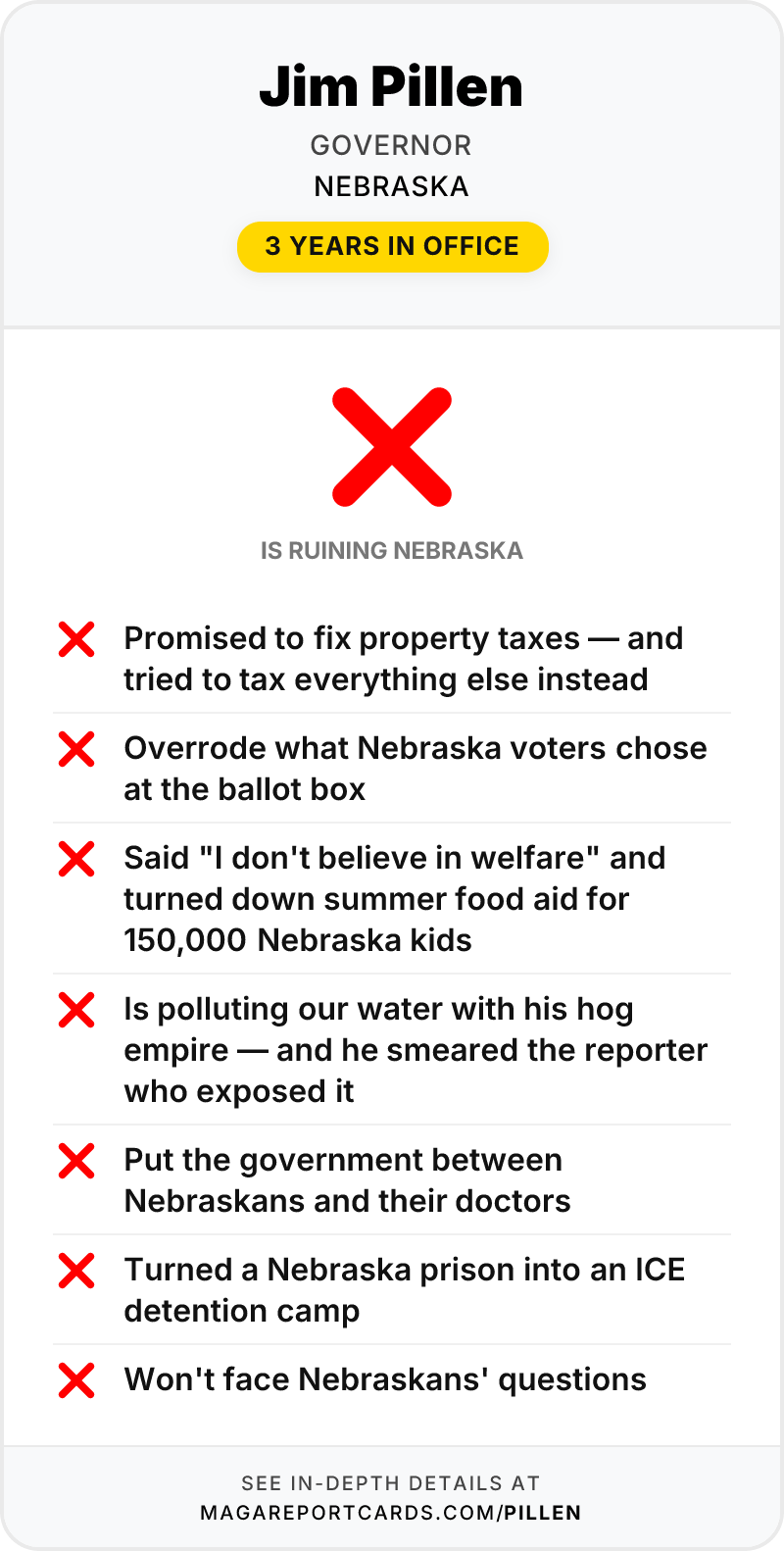
Jim Pillen's administration announced Medicaid cuts late on a Friday that take effect January 1, five days before the Legislature returns. They include provider pay cuts, new copays, mental health cuts and a $2,000 dental cap. When 19 senators, three of them Republicans, asked for a special session to deal with the cuts first, Pillen rejected the need for one. A week earlier his administration turned down six extra months the Trump administration offered on Medicaid work requirements, in a state where at least 1,090 people had already lost or been denied coverage under them.
Source
19 Nebraska lawmakers join call for special session to address Medicaid cuts coming Jan. 1 — Nebraska Examiner
Pillen rejects call for special session over Medicaid cuts — Lincoln Journal Star