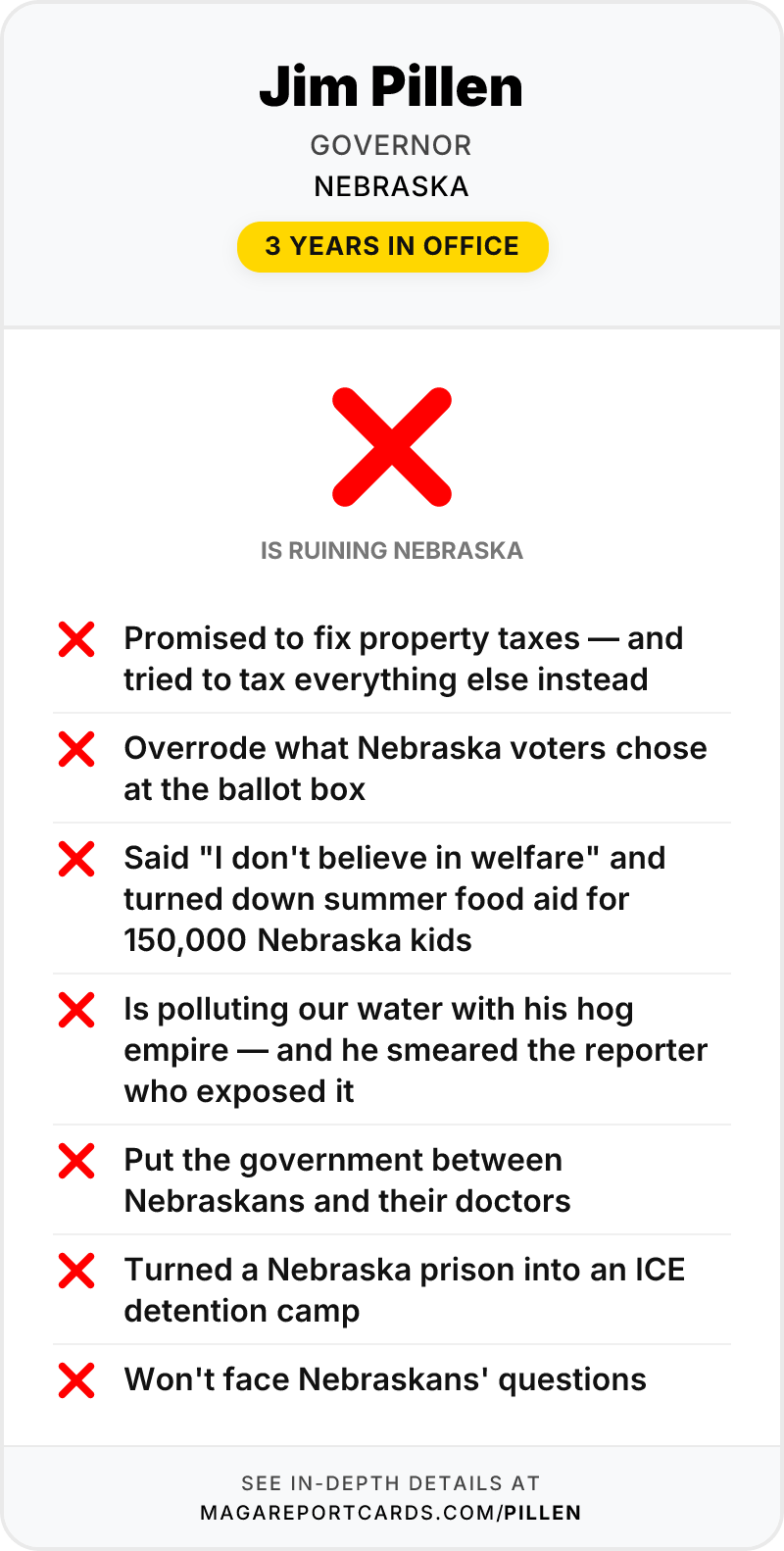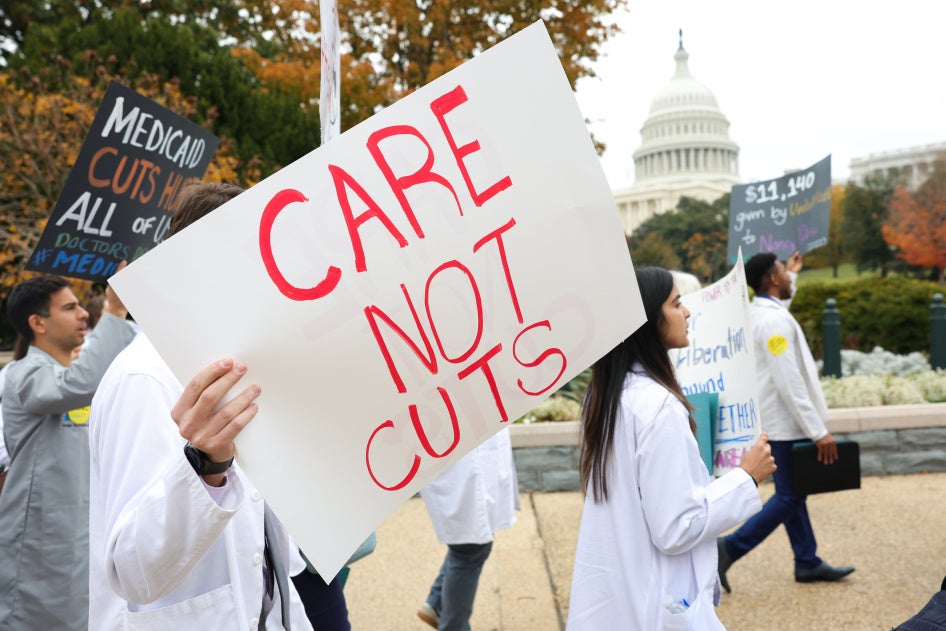
Trump's budget bill gave states until January 1, 2027 to start making some Medicaid recipients document at least 80 hours a month of work or other approved activities, like school. Jim Pillen, the Republican governor of Nebraska, didn't wait.
In December he announced that Nebraska would be the first state in the country to do it. According to Georgetown researchers, the rules started for new applicants on May 1 and for people already on Medicaid on July 1.
Now the first results are in. Human Rights Watch and Georgetown University's Center for Children and Families have both gone through what happened. It is exactly what critics warned.
Over 1,000 people cut off — mostly for paperwork
According to Human Rights Watch, over 1,000 people lost or were denied Medicaid coverage under the new requirements between May and August. Georgetown's analysis of the state's own numbers puts it at at least 1,090.
And most of them weren't cut because they don't work. Georgetown found:
- 92% of people who lost coverage at renewal were "denied for failing to provide requested information."
- Among new applicants, the rate of clearly reported paperwork denials was 84%.
- Another 4,434 new applicants couldn't enroll for "any other reason," which the state's data doesn't explain.
Of the 2,449 people who kept coverage by meeting the work rule, 97% did it through their income — they were already earning at least $580 a month. Almost two-thirds of everyone who kept coverage (61%) were exempt, mostly as parents or because they are medically frail. The people the rule dropped were mostly lost in the forms, not caught not working.
That's what researchers predicted. Human Rights Watch points to KFF's finding that more than 6 in 10 people under 65 on Medicaid are already working full or part time.
A cancer patient, mid-treatment
Human Rights Watch tells the story of Eli McCreary, a 64-year-old Nebraskan with kidney cancer and several chronic conditions. He lost his Medicaid while in treatment.
His managed care plan told him: "you're not working. I can't really do anything for you."
His appointment with his cancer specialist was canceled. "I was supposed to go see the cancer specialist here…. And that date was canceled, so I couldn't," he said. His care was on hold until he got his coverage back.
"We just sometimes don't know what we're doing"
The people running the program weren't ready either. A worker at Nebraska's Department of Health and Human Services told Human Rights Watch: "We just sometimes don't know what we're doing." The worker described a rushed, confusing rollout, with poor training, vague guidance and software that wasn't ready.
Human Rights Watch reports that no extra staff would be hired to track the work requirements — and in July, Nebraska put in place a hiring freeze for state agencies, including the health department.
So Nebraska took on a brand-new paperwork system, months early, with no new staff and then a hiring freeze. The result was people losing health care over forms.
He wanted this
Pillen didn't back into this. He went first on purpose. He made the announcement alongside the federal Medicare and Medicaid administrator, Mehmet Oz, and we wrote about how he has bragged about Nebraska going first on Trump's agenda.
It fits a pattern. This is the same governor who first turned down $18 million in federal money to feed Nebraska kids over the summer, explaining that he doesn't believe in welfare, before reversing himself two months later.
What Nebraska is a warning about
Every state has to start these rules by January 1, 2027, and Common Dreams notes that Montana and Arkansas have also moved early. Human Rights Watch cites an Urban Institute estimate that 3 to 7 million people could lose Medicaid by 2028 because of the requirements, and a Congressional Budget Office estimate of 4.8 million more uninsured by 2034.
Nebraska is the first look at what that looks like on the ground. Its governor volunteered for it.
What the data shows
Jim Pillen made Nebraska the first state to impose Trump's Medicaid work requirements, months ahead of the deadline, with no extra staff and then a hiring freeze at the health department. In the first four months, at least 1,090 Nebraskans lost coverage or were turned away — and 92% of those cut at renewal were dropped for paperwork, not for failing to work.
Source
- US: Nebraskans Losing Coverage as Medicaid Changes — Human Rights Watch
- Nebraska Releases First Data on Medicaid Work Reporting Requirement — Georgetown University Center for Children and Families
- 'Nebraska Is the Canary in the Coal Mine' — Common Dreams