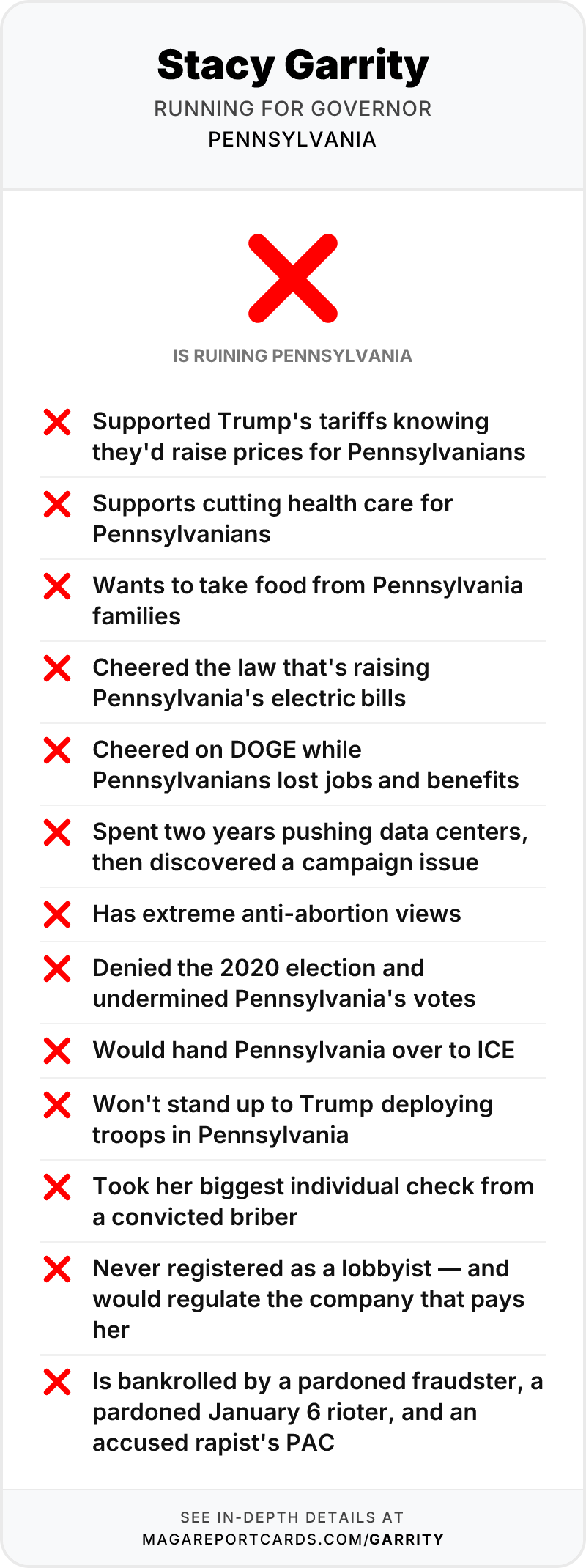
Two years ago, the Philadelphia Building and Construction Trades Council — a coalition of more than 50 unions — endorsed a Republican for Pennsylvania state treasurer. That Republican was Stacy Garrity, and the crossover support helped her win with about 3.5 million votes, the largest statewide total in Pennsylvania history.
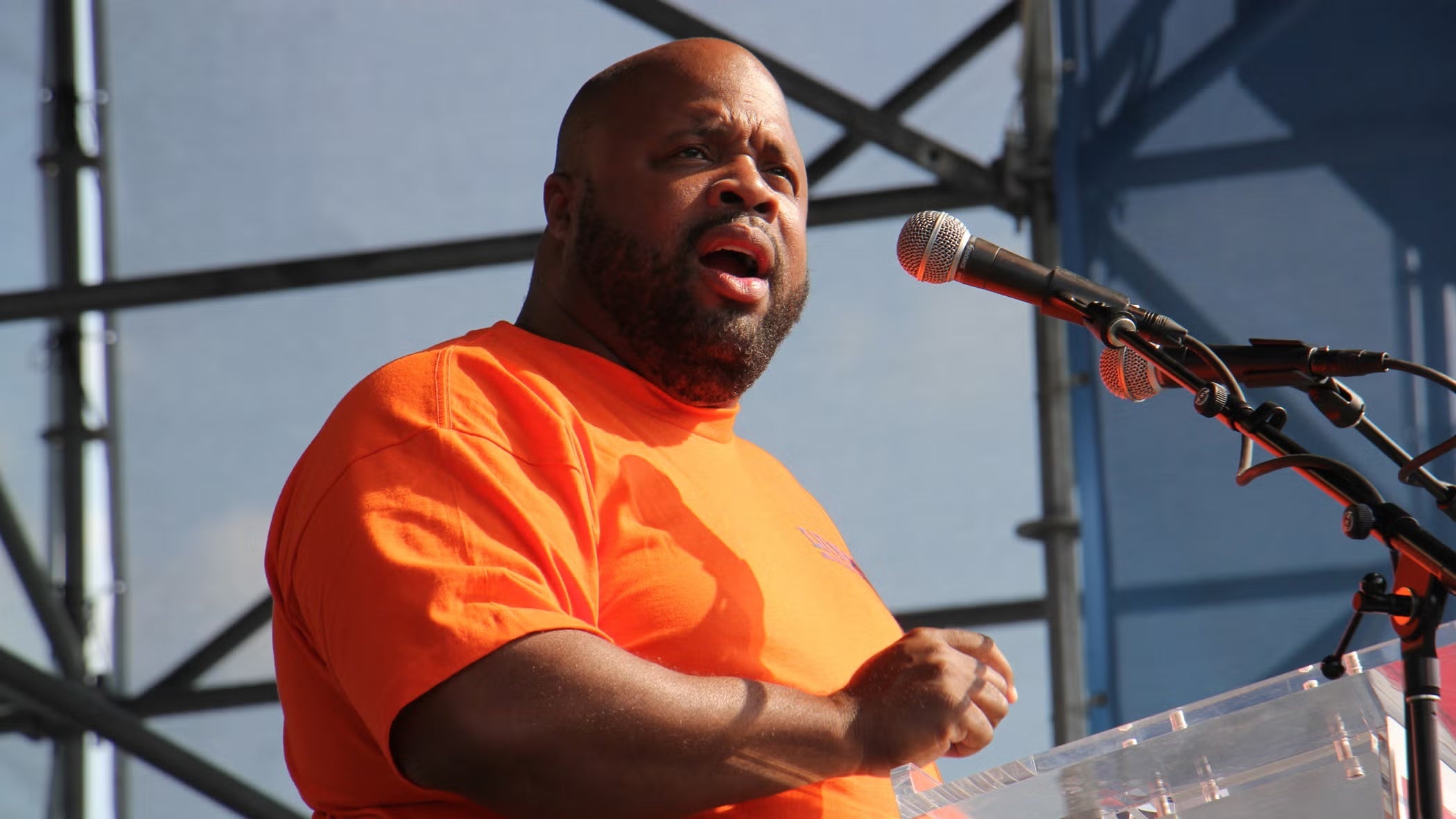
This week, the same council's business manager stood at a union training center in North Philadelphia and campaigned against her.
"I wouldn't support her if she ran for dog catcher"
Ryan Boyer runs the council. He said Garrity had promised the building trades she would not run against Gov. Josh Shapiro, whom the council had also endorsed.
She ran anyway.
"We think that Josh Shapiro's a superior governor and for her to break that promise led me to say that I wouldn't support her if she ran for dog catcher."
Boyer explained why they had backed her in the first place. She had made commitments — including pushing for an increase in Pennsylvania's unemployment compensation payments.
"She said the right things. She said that she would support the working men and women of the Commonwealth of Pennsylvania."
Boyer was clear that this isn't about party. "I'm not an R or a D," he said. "I'm a J for a job or O for an opportunity."
That's about as direct a verdict as a union leader delivers on a politician he once endorsed: we took her at her word, and the word was no good.
The endorsement she did take
Garrity has not announced the support of a single major traditional labor union in the governor's race. Shapiro has the Pennsylvania AFL-CIO — the state's largest labor federation — and the Pennsylvania State Education Association, its largest teachers union.
What Garrity has is an endorsement from the political arm of the Associated Builders and Contractors, a national construction trade group that supports "right-to-work" laws.
Right-to-work laws bar contracts that require workers covered by a union agreement to join the union or pay dues — even at a workplace where a majority voted to organize. Unions argue they drive wages down, a contention supported by some research, though the size of the effect is debated because right-to-work states differ in other ways too.
Lt. Gov. Austin Davis, appearing with Boyer, drew the line:
"Pennsylvania will never be a right to work state under our watch."
The question Garrity's campaign didn't answer
Here is the part that matters most, and we want to be precise about it.
Garrity has not made right-to-work a central plank of her campaign. No one has caught her promising to sign such a bill.
But WHYY asked her campaign a direct question — would she support right-to-work legislation? — and her spokesperson, Matt Beynon, did not answer it. Instead he said Garrity "will pursue free market policies that empower Pennsylvania workers and businesses," and accused Shapiro of "picking winners and losers."
A candidate who intended to veto a right-to-work bill could say so in four words. Davis managed it in twelve. Garrity's campaign used a paragraph and never got there.
For Pennsylvania's union members, that non-answer is the story. The governor is the last line of defense against a right-to-work bill reaching the statute books — which is exactly why Davis made the pledge he did. Refusing to say where you stand on it is a position.
Her campaign's other argument points the same direction: it has accused Shapiro of being too closely aligned with building-trades unions, and says Pennsylvania needs to expand workforce opportunities beyond traditional union apprenticeship programs. Those are the programs that train the electricians, steamfitters and carpenters Boyer represents.
Beynon's statement was that Garrity would "do what Josh Shapiro has not done — she will fight for Pennsylvania workers and advocate for Pennsylvania businesses."
Why 2024 was different
It would be easy to read this as ordinary partisanship. It isn't — and the 2024 result is the proof.
In 2024, the Philadelphia Building Trades, the Pennsylvania Laborers and other labor groups crossed party lines for Garrity. Those unions are not reflexive Democrats; they endorse whoever they think will deliver.
What changed is what's on the table. A treasurer manages the state's money. A governor signs or vetoes labor law. When the office in play is the one that decides whether a right-to-work bill becomes law, the unions that once vouched for her want an answer she won't give.
Boyer said the building trades remain willing to endorse from either party. He said Garrity forfeited their support by breaking her promise and by aligning with groups hostile to organized labor.
A pattern of not answering
The refusal to answer a straight question is becoming Garrity's signature.
- Asked whether Trump lost in 2020, she said she'd "rather look forward" — then said she would "absolutely" be more cooperative with the federal government's request for Pennsylvania's voter rolls.
- Asked about ICE converting Berks and Schuylkill County warehouses into detention facilities holding an estimated 9,000 detainees, her campaign would only say they "warrant serious review."
- Asked for her communications about a Treasury policy change that observers said benefited the natural gas industry, her office called the records request a "fishing expedition" and refused.
- After a year pushing data centers, she discovered she wanted a "pause" once it became a campaign liability — while insisting nothing had changed.
The bigger picture for workers
Garrity isn't an outlier in her party on this. We recently documented the Republicans with the worst records on workers and unions, and the 195 House Republicans who voted to keep a contract-stripping executive order in place after one in every 14 union members in America lost their bargaining agreement.
What makes Garrity's case sharper is that Pennsylvania's building trades gave her a chance, on the record, and are now taking it back in public.
Pennsylvania votes for governor on Tuesday, November 3. Before then, Garrity's campaign could simply answer the question: would she sign a right-to-work bill?
The workers who elected her once are still waiting.
Source
A labor-unions group that once supported Stacy Garrity for Pa. treasurer is campaigning against her bid for governor — Carmen Russell-Sluchansky, WHYY News, August 18, 2026. Photo by Emma Lee/WHYY.