A data center is a warehouse full of computers that run artificial intelligence. It drinks electricity and water on a scale most towns have never had to plan for, and somebody has to build the power plants and power lines that feed it. That somebody is everybody else on the grid.
All over the country, people have been showing up at county meetings to say no. Not activists — county commissioners, farmers, retirees, parents worried about a well.
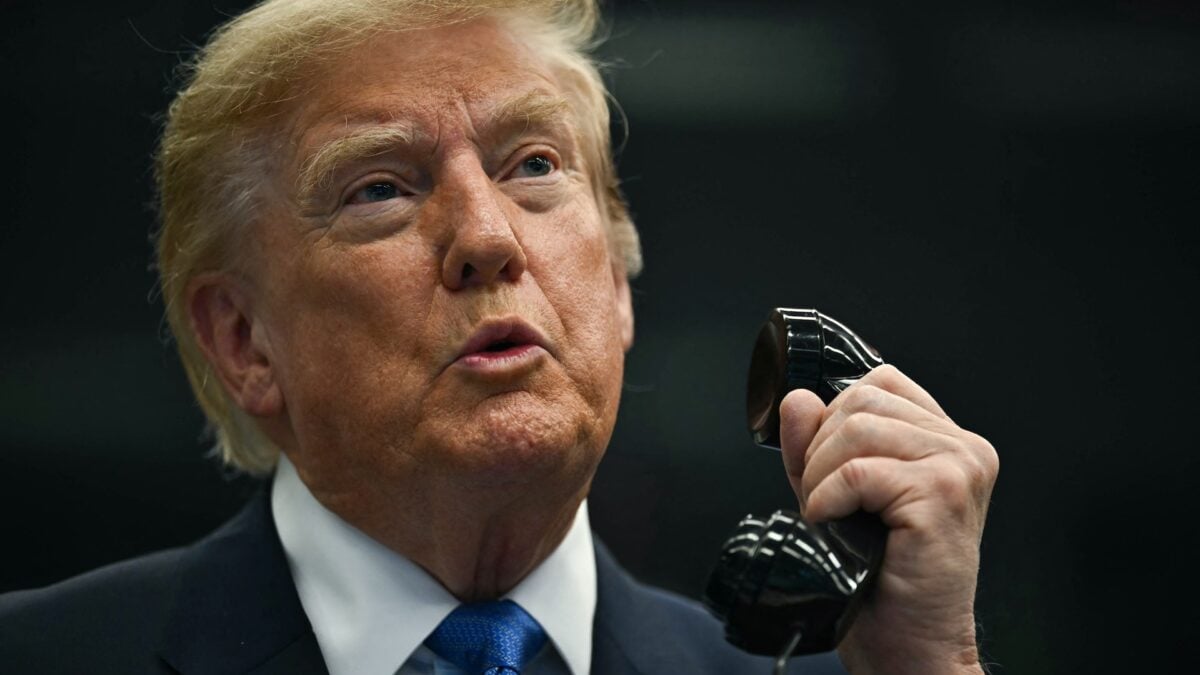
On Monday morning, August 31, 2026, President Donald Trump answered them on Truth Social:
"The only reason that communities throughout the U.S.A. should not want Data Centers is if they want to end up being backwards and poor. If they want to be successful and rich, with far lower taxes and jobs all over the place, let Data Reign. The good news is that there are plenty of other places that want them. If we kill the Golden Goose, you will only have yourselves to blame. China could not be happier with this anti Data Center movement. Actually, they can't believe it is happening!"
That is the whole argument. Not "here is why your electric bill won't go up." Not "here is what the company has to pay for." If you don't want one, you want to be poor, and China is glad you exist.
He is not describing a fringe
Gallup asked. Between March 2 and March 18, 2026, it found that 71% of Americans oppose building an AI data center in their area — including 48% who are strongly opposed. That is more opposition than a nuclear power plant next door gets, which is 53%.
It is not a partisan number, either. Gallup found majorities in every party opposed, and 39% of Republicans were strongly opposed — not merely against it, strongly against it. Those are his own voters.
And the number has been climbing. In mid-August, an Embold Research poll published by Heatmap put opposition at 75%.
You could see the same thing in his own replies. Truth Social exists because Trump owns it, and its users still told him he was wrong. "I have to disagree with this one," wrote one. Another wrote: "I don't think it's so much that we are against data centers. What we are against is our electric bill shooting through the roof and our water supply going low. And this is happening."
The order he signed
The reason this is not just a bad post is that Trump is not a spectator here. He is the person who put the federal government's thumb on the scale.
On July 23, 2025, he signed Executive Order 14318, "Accelerating Federal Permitting of Data Center Infrastructure." It applies to any project drawing more than 100 megawatts of new electricity for AI, to any project whose sponsor has committed at least $500 million, and to the transmission lines, gas pipelines and substations built to feed them. What it does for those projects:
- Opens federal land. The Interior and Energy departments are directed to offer sites; the Defense Department can lease out land on military installations.
- Cuts the environmental review. Agencies had ten days to list the "categorical exclusions" — the pre-approved reasons a project can skip a full environmental study — that could be used to speed data centers through.
- Points developers at contaminated land. The EPA was ordered to identify brownfield and Superfund sites for reuse.
- Puts public money behind it. The Commerce Secretary was told to launch an initiative to provide financial support that "could include loans and loan guarantees, grants, tax incentives, and offtake agreements."
Federal land, a shortened review, and taxpayer credit — for the companies. For the town, a phone number to call.
His EPA has kept going in the same direction. It is now proposing to scrap the federal rule that requires states to tell you when an air-polluting facility applies for a permit near your home, and to let developers start building before the permit is approved. The one mechanism that reliably gets an ordinary person to a county meeting in time is the notice — and the notice is what's on the chopping block.
And in May 2025, almost every House Republican voted for a ten-year ban on any state, city or county enforcing a law that limits AI systems — a definition written broadly enough to cover the buildings, the cooling and the power hookups. The Senate stripped it out 99–1. The House vote still happened.
So when Trump says communities that don't want data centers should go ahead and be poor, he is talking about communities whose ability to say no he has spent the past year narrowing.
"China could not be happier"
The China line is not new, and it is not his alone. We have already written about the seven Republicans who decided the neighbors objecting to a data center might be on a foreign payroll — including four who asked federal law enforcement to open a file on them.
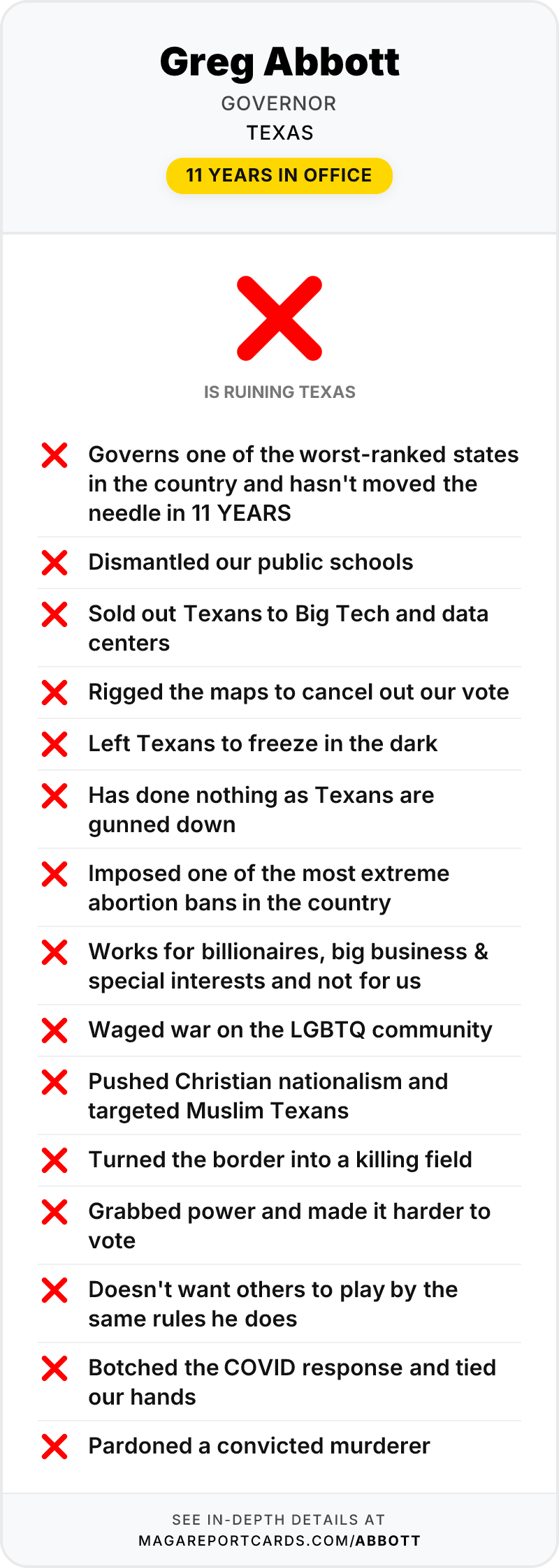
It is not an argument every Republican is making. Greg Abbott, who branded Texas "the epicenter of AI development" and whose state hands data centers a sales-tax break the comptroller now expects to cost $3.3 billion in a single budget cycle, says Chinese propaganda is not why Americans oppose these things. On August 3, 2026, Abbott paused new data center hookups in Texas pending a state audit — after years of selling the state to them.
Trump's response to that pause, in an August interview with Punchbowl News, was to call it a mistake:
"I saw Texas the other day sort of is against data centers. I think it's a mistake. And I'm not taking positions, I just think it's a mistake, because there are other communities that want it. When a community wants it, it means a lot of money is going to come into that community."
He also told Punchbowl data centers could be "bigger than oil."
The part about your bill
Vice President JD Vance was asked about the post on Monday and gave a more honest answer than the president did:
"I think probably 99% of the backlash to data centers has come in areas where building a data center means higher utility and higher electricity for the people on the ground."
That is the whole objection, stated by the administration's own vice president. His fix was deregulation — "if you build a data center, you should be putting power back into the grid, not taking it out."
Nothing in the executive order requires that. The order accelerates the building. The power plants are somebody else's problem.
Meanwhile the federal government's own forecasters are saying out loud what the county meetings are about. The Energy Information Administration expects U.S. electricity demand to rise for a fourth straight year — the strongest four-year growth since 2000 — and names the cause as "increasing demand from large computing facilities, including data centers." It forecasts residential electricity at 18.2 cents per kilowatt-hour in 2026, a nearly 5% increase over 2025, with parts of the East Coast rising as fast as 7% a year for two years running. In 2027, for the first time, commercial electricity use — the category that holds the hyperscalers — is expected to pass residential.
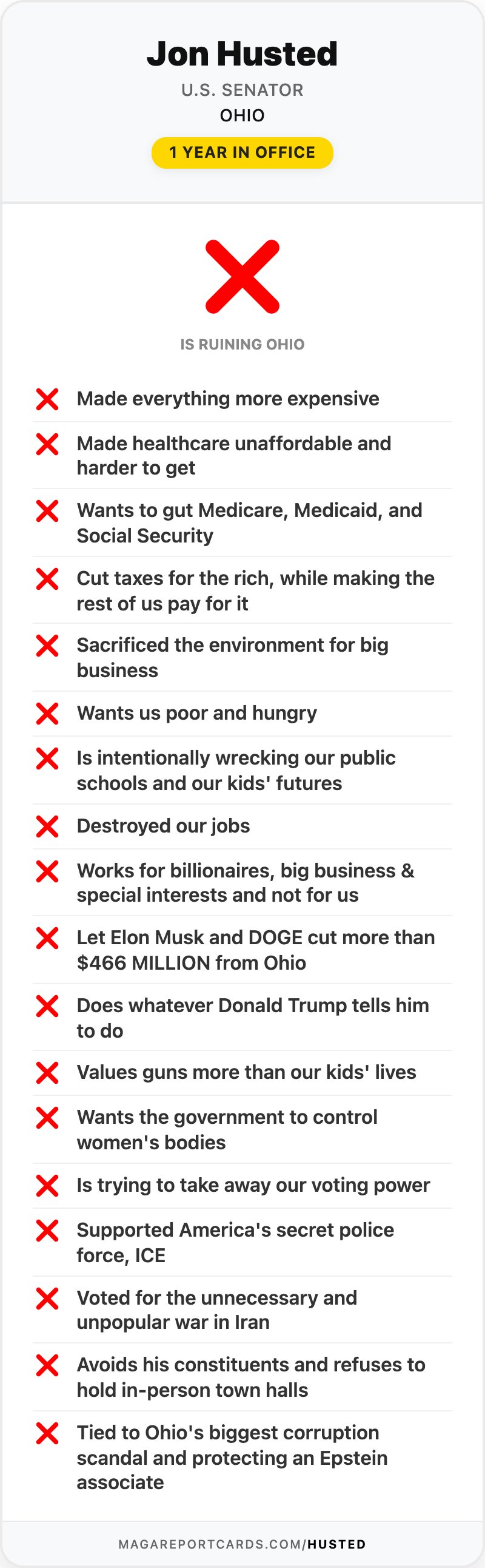
Republicans running for office have noticed, even where the president hasn't. Ohio Senator Jon Husted is the clearest case: his own party's Senate campaign committee wrote a memo calling his data center record an "anchor" on his campaign and told AI companies that fixing the public's view of data centers was up to them if he was to survive November.
The bottom line
Seven in ten Americans — including 39% of Republicans who are strongly opposed — don't want a data center built near them, mostly because of what the things use up: half of Gallup's opponents named data centers' excessive use of resources, and 18% each named their water and their energy. Trump's answer on Monday was that they are choosing to be "backwards and poor" and that China is delighted with them. Thirteen months earlier he had signed an executive order handing those same projects federal land, a shortcut around environmental review, and taxpayer-backed loans and loan guarantees — while his EPA moves to end the public notice that tells a town one is coming, and residential electricity heads to 18.2 cents a kilowatt-hour.
Source
Emily Chang, "'Let Data Reign': Trump goes all in on controversial data centers," ABC News, August 31, 2026. Additional reporting from Matt Novak, "Trump to Communities Fighting Data Centers: Have Fun Being Poor," Gizmodo, August 31, 2026.