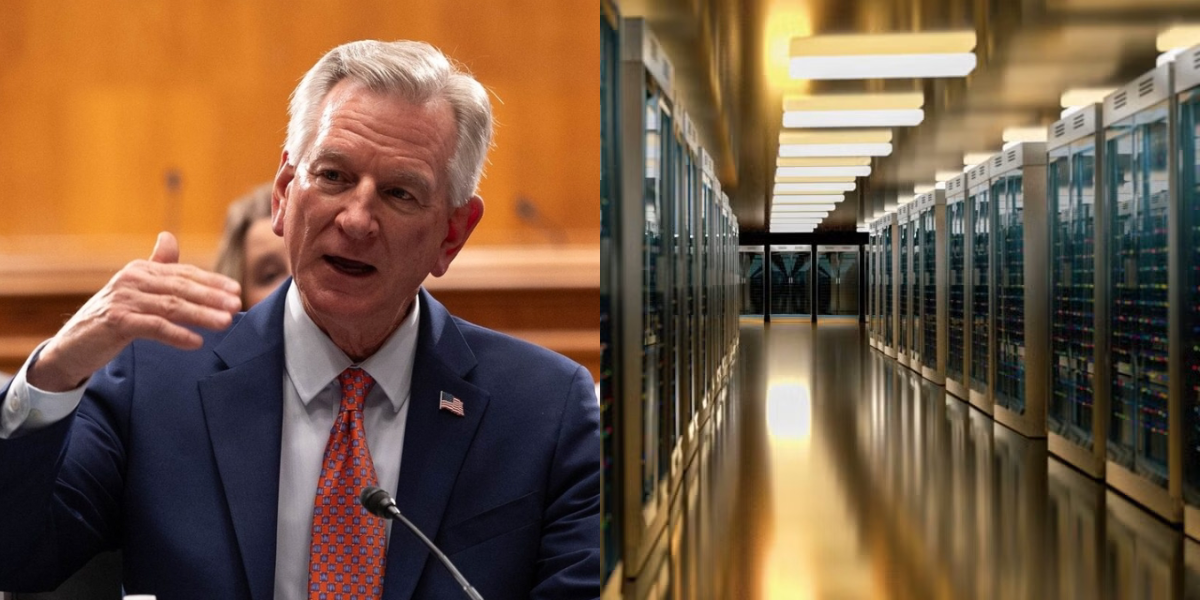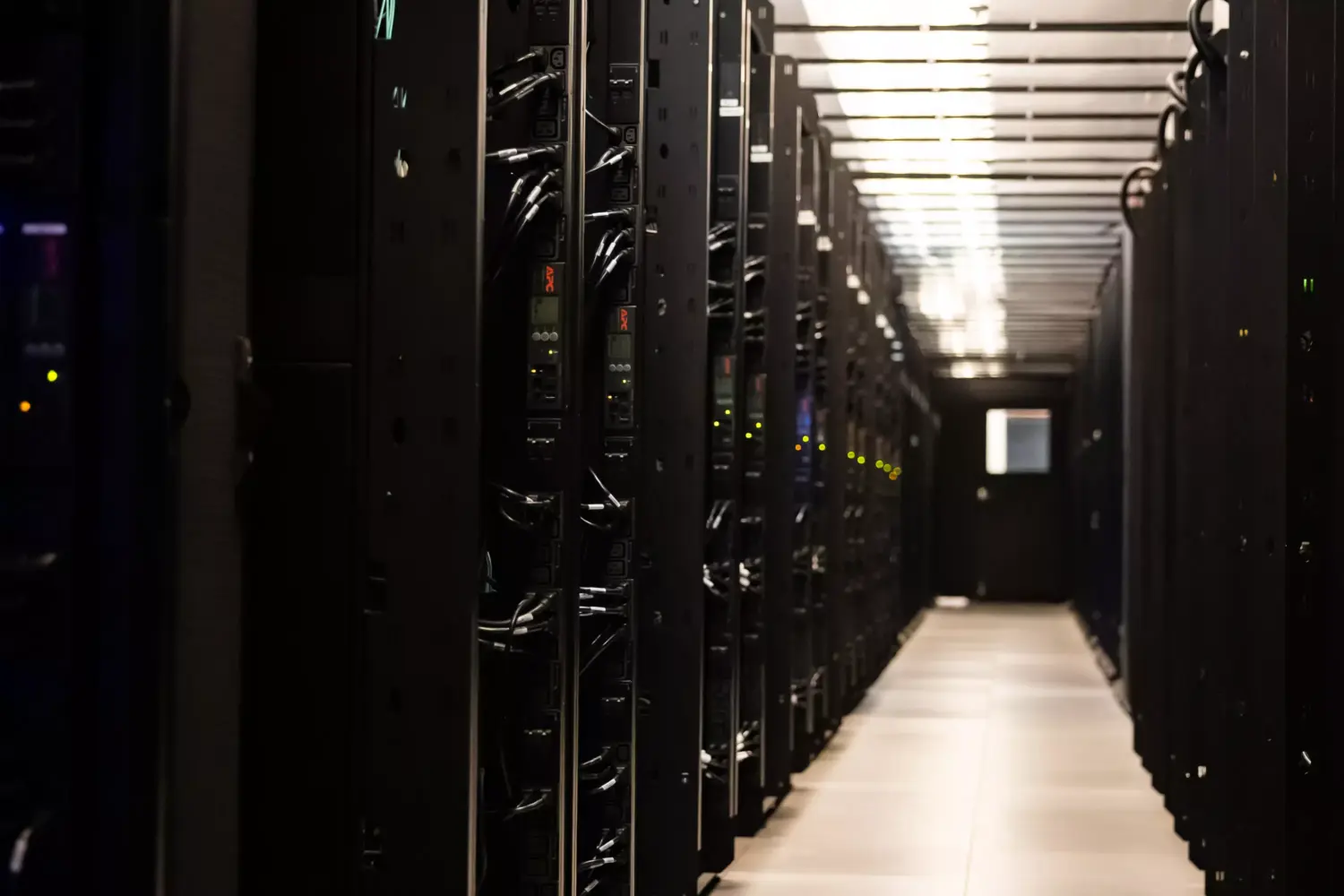
On Monday, August 3, 2026, Greg Abbott sent a letter to the two agencies that run the Texas power grid. No new data center gets to plug in, he said, until the state finishes a full audit of how much power and water these things use.
It sounded tough. Regulators took it seriously — ERCOT put its planning study on hold the same week.
But there's a problem with the Governor riding in to save us from data centers. He's the one who invited them here.
He Called Texas "The Epicenter of AI Development"
Nine months ago, Abbott stood next to Google's CEO in Midlothian and celebrated.
Google was putting $40 billion into Texas — three new data center campuses. Abbott's own press release quotes him calling it "a Texas-sized investment in the future of our great state" and declaring that "Texas is the epicenter of AI development."
That was November 14, 2025. He wasn't warning us. He was selling us.
And it worked. ERCOT now says companies are asking to pull 474 gigawatts off the Texas grid — more than five times the most electricity Texas has ever used at once. About 90% of those requests are from data centers.
That's the fire. Abbott lit it.
The Tax Break Nobody Watched
Here's how Texas got so attractive to data centers: we pay them to come.
Texas created a sales tax exemption for big data centers back in 2013, and lawmakers expanded it in 2015 — Abbott's first year in office. At the time, the state figured it would cost about $14.6 million over two years.
At a Texas Senate Finance Committee hearing on July 27, 2026, the Comptroller's office told lawmakers the real number is now roughly $3.3 billion for the 2028–29 budget cycle. That is not a rounding error. That's more than 200 times what was promised.
The same hearing turned up more:
- Texas has certified 138 data centers for the tax break. Only about 20 have been audited or are under audit.
- Several of the ones that got audited were out of compliance. One company was ordered to pay back nearly $5.6 million after giving up its certification.
- To qualify, a data center only has to employ 20 people. Some couldn't even manage that. "To be unable to justify employment of even 20 people… tells you how little employment is really stemming from this," the state's chief revenue estimator told the committee.
- And the state doesn't actually know how many more are coming. "We don't really know what's going on," he said. "There's a lot of deliberate secrecy involved in these developmental plans."
Billions of our tax dollars went out the door with almost nobody checking the receipts. That happened on Abbott's watch, for eleven years.
What This Costs Us
This is not an argument about spreadsheets. It's about your electric bill, your water, and whether you can sleep at night.
Your bill. The U.S. Energy Information Administration ran the numbers and found that under a high-demand scenario, wholesale power prices at ERCOT's North hub could run 78.9% higher in 2027 than the baseline forecast. Data centers don't pay that bill alone. We all pay it.
Your water. In Texarkana, families are fighting a huge data center project because of what it would do to their wells. One of them, conservative activist Dale Huls, put it plainly: "My well is over 700 feet deep. If they're sucking water [out of the area], I'll have to have somebody come out there and go deeper." Not everybody has the money to drill deeper.
Your health. Granbury already knows what living next to one of these operations is like. In October 2024, residents sued the bitcoin mine next door over round-the-clock noise. Lawyers found more than two dozen neighbors with real medical harm — permanent hearing loss, tinnitus, severe migraines, debilitating vertigo. "In such a short time, Bitcoin mining has completely altered our community, for the worse," resident Cheryl Shadden said. "We are subjected to relentless noise that is physically harming us." Residents who drove out to that site recorded 90 to 130 decibels on a phone app.
And outside the city limits, nobody can stop it. Cities can set terms through zoning and their own utilities. Texas counties have no zoning authority and mostly don't run the water and power lines either. As one real estate lawyer explained, a city or county "can't say no, just for the sake of saying no or because it's controversial."
So people got hurt, and the one person who could call lawmakers back to change the rules was the Governor. He spent that time cutting ribbons.
"The Arsonist Is Not Going to Put Out the Fire"
Abbott's first big reversal came on June 10, 2026 — a letter to the PUC and ERCOT saying data centers must pay for their own power lines and stop draining community water. Suddenly the man who threw the party wanted to talk about the mess.
His opponent, state Rep. Gina Hinojosa, answered the same day:
"Nice try. Data centers are moving to Texas because Abbott helped create the most generous tax dollar giveaway to data centers in the country so Texans would foot the bill. This is a CYA move by Abbott."
"Greg Abbott has zero credibility here — no one believes that the arsonist is going to put out the fire."
Her campaign's release went on, in its own voice, to call the reversal "the Greg Abbott Corruption Tax in action: rig the deal for global corporations and his donors, send the bill to Texans, and put his own appointees in charge of the cover story when the public catches on."
When the August audit order came out two months later, Hinojosa told the San Antonio Current much the same thing: "So nice to see another strongly worded letter from Abbott after he proudly made Texas the Wild West of data centers. Abbott's call for a 'pause' could be for one day — and no one buys it."
Follow the Money
Here's the part that should bother every Texan, no matter how you vote.
While Abbott was writing tough letters about data centers, he was cashing checks from people who profit from them. The San Antonio Current reported that just four donors heavily invested in the AI boom gave Abbott $2.5 million this year alone: real estate titan Ed Roski Jr. gave $1 million in April, energy executive Kelcy Warren gave $500,000 in June, Elon Musk gave $500,000, and Rhett Bennett of Black Mountain — an energy company building data centers across Texas — gave $500,000. Both Warren and Roski recently announced data-center-related projects of their own.
The loudest objection didn't come from a Democrat. It came from Republican Agriculture Commissioner Sid Miller:
"Governor Abbott has taken millions from the very interests pushing massive data center expansion throughout Texas. Those contributions are documented in public campaign-finance records. If the governor has truly changed his position, there is only one clear way to prove it. Give the damn money back."
Miller also stood outside the Capitol in July demanding a special session on data centers, saying "Texans deserve more than just empty rhetoric." Abbott hasn't called one. He ordered a study instead — run by people he appointed.
We've Seen This Movie Before
The reason piling this much demand onto our grid is scary is that we already know what a failing Texas grid does to people. In February 2021, Winter Storm Uri knocked out the power Abbott was responsible for, and at least 210 Texans died. He had been Governor for six years at that point. After lawmakers passed their grid bills that spring, the Texas Tribune found that Abbott collected about $4.6 million from oil, gas and energy interests — "his largest haul ever from those groups" in the weeks after any of his four legislative sessions as governor. One million of it came from Kelcy Warren, cofounder of a pipeline company that made $2.4 billion off the storm.
That's the same Kelcy Warren who just handed Abbott another $500,000 in June.
He didn't fix the grid. He sold more of it.
Now, in an election year, with voters in both parties furious about data centers, he's discovered the problem — and wants to be the one who solves it. This isn't a fringe complaint: Gallup found 70% of Americans across the political spectrum don't want a data center built in their neighborhood, and Abbott is polling neck-and-neck with Hinojosa in a race he was supposed to coast through.
Greg Abbott had eleven years and every ounce of power in the state of Texas. He used it to hand out billions in tax breaks nobody audited, invite an industry nobody could regulate onto a grid that already killed people, and take millions from the men who built it. A letter in August of an election year doesn't undo that.
We deserve better.
Source
Gov. Greg Abbott pauses new data centers until ERCOT, PUCT audit energy, water usage — Natalie Weber, Houston Public Media, August 3, 2026. Photo: Michael Minasi / KUT News.