Ohio electric bills are going up, and most Ohioans think they know why. Nearly eight in 10 told Bowling Green State University pollsters they want to pause the building of new data centers.
Jon Husted has a different answer. At a recent energy summit in Columbus, he pointed at his opponent:
"(Sherrod) Brown voted to close down 23 power plants in Ohio alone. Ohio used to be an energy exporter; now it's an energy importer."
It's a sharp line. It is also wrong on both counts. Cleveland.com statehouse reporter Anna Staver checked it against grid records and federal energy data, and her verdict was simple: the numbers behind Husted's claim don't add up.
Claim one: Brown "voted to close" 23 plants
Here is the problem with that sentence. Congress doesn't vote to close power plants. Whether a plant stays open or shuts down is a decision made by the company that owns it, not by a senator.
Brown didn't vote to close any of them.
What Brown did do was support Obama-era pollution rules on coal plants, and vote against efforts to overturn limits on mercury and carbon pollution from power plants. Those rules made some old coal plants more expensive to run. But that is a very different thing from "voting to close down 23 power plants."
Even the count is shaky. Records from PJM, the company that runs Ohio's power grid, show 56 coal-burning units retired at 19 Ohio sites while Brown was in Congress. A unit isn't a whole plant — one plant can hold several of them.
And rules were only a small part of why coal lost. Fracking unlocked cheap natural gas right under Ohio, in the Marcellus and Utica shale. Coal plants were getting old. New gas plants were cheaper and cleaner to run.
Greg Lawson, a researcher at the conservative Buckeye Institute — not exactly a Sherrod Brown fan club — told cleveland.com that "gas got a lot cheaper," and that gas was cheaper "even notwithstanding" the pollution rules. He said regulation "had some impact" at the margin. Was it the main driver of prices? "No, I don't," he said.
Claim two: Ohio "used to be an energy exporter"
This one is even easier to check.
The U.S. Energy Information Administration has tracked how much electricity flows in and out of every state since 1960. According to cleveland.com's review of that data, Ohio was a net importer of electricity in 63 of the 65 years on record. The only two exceptions were 1982 and 2005.
So Ohio didn't "used to be" an exporter. For all but two years in six and a half decades, it has bought more power from its neighbors than it sold them.
Ohio did lean harder on other states for a while as coal plants closed. But as new gas plants came online — the Oregon Clean Energy Center near Toledo in 2017, the Lordstown Energy Center in 2018 — the gap shrank again. By 2023, Ohio's reliance on out-of-state power was back where it was before the wave of coal closures.
What's actually driving the bill
Ohio didn't lose its coal plants and leave a hole. It replaced them. When Brown got to Congress in 1993, coal made about 90% of Ohio's electricity. By 2019, natural gas had passed it.
Experts told cleveland.com that plant closures have played only a small role in rising prices. The bigger drivers are two things:
- Transmission. Utilities earn a guaranteed profit on building power lines, often without bidding the work out. That setup could be adding about 30% to the transmission part of your bill.
- Demand — and nearly all of it is data centers. Ohio's electricity use had been falling for years. It started climbing again in 2023. The Ohio Business Roundtable says 95% of that new growth comes from giant power users. Ohio now has more than 200 data centers, and its peak power needs could grow by half by 2034.
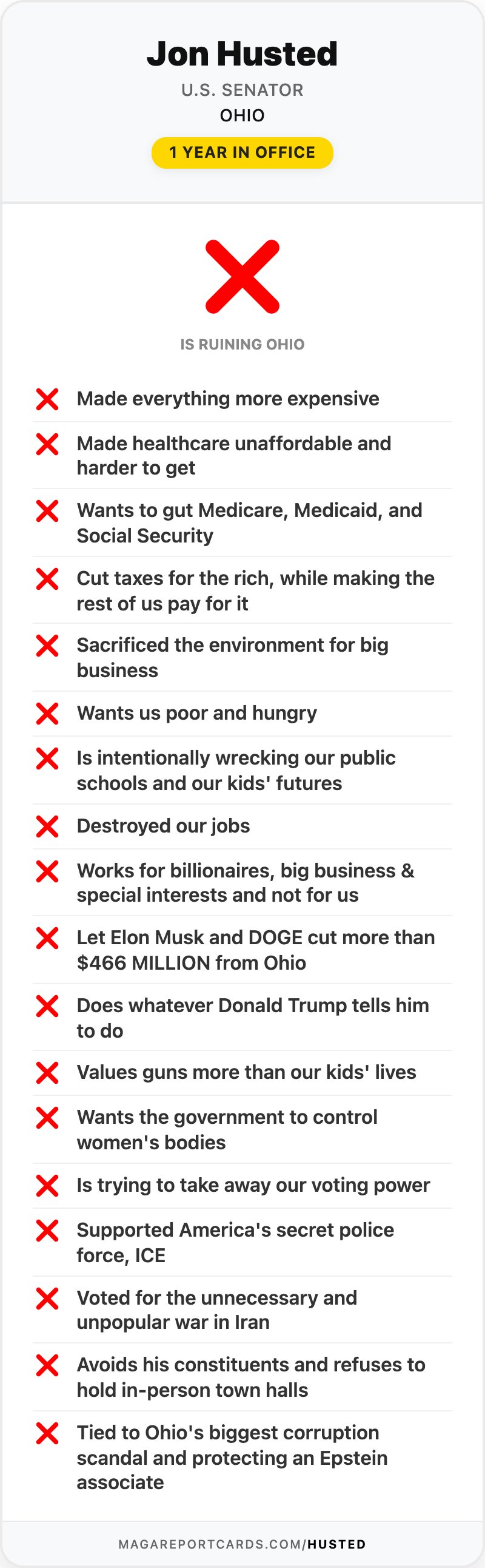
That is the very industry Husted spent six years selling as lieutenant governor. We've laid out how his own party's campaign committee called that record an "anchor" around his neck in a private memo, and how the tech and utility companies on the other side of the fight have been funding his campaign.
Why the coal story showed up now
Cleveland.com's Today in Ohio podcast noticed the timing. Host Chris Quinn said the attempt to blame closed power plants surfaced about six weeks earlier, just as anger over data centers and electric bills was building. His co-host Laura Johnston described Husted as looking for someone else to blame rather than becoming the face of the data center fight. Quinn's summary of Husted's claim was two words: "It's a lie."
The coal story has an obvious appeal for Husted. It points at Brown. It points at the past. And it points away from the data centers he recruited and the demand they are adding right now.
It's also not the first time a Husted attack on Brown has fallen apart under a fact-check. Last month, PolitiFact rated False his claim that Brown backed "Social Security payments for illegals".
What the record shows
Jon Husted told Ohioans their electric bills are rising because Sherrod Brown "voted to close down 23 power plants" and turned Ohio from an electricity exporter into an importer. Brown never voted to close any power plant — Congress doesn't make those decisions — and Ohio has been a net importer of electricity in 63 of the last 65 years. Cleveland.com found that plant closures played only a small role in rising bills and put more of the blame on transmission costs and new demand, and the Ohio Business Roundtable traces 95% of that new demand to giant users like the data centers Husted spent years recruiting.
Source
- Did closing coal power plants cause spike in Ohioans' electric bills? Claim fizzles under scrutiny — Anna Staver, cleveland.com
- Husted's coal-plant explanation for higher electric bills draws blunt response: 'It's a lie' — Today in Ohio, cleveland.com
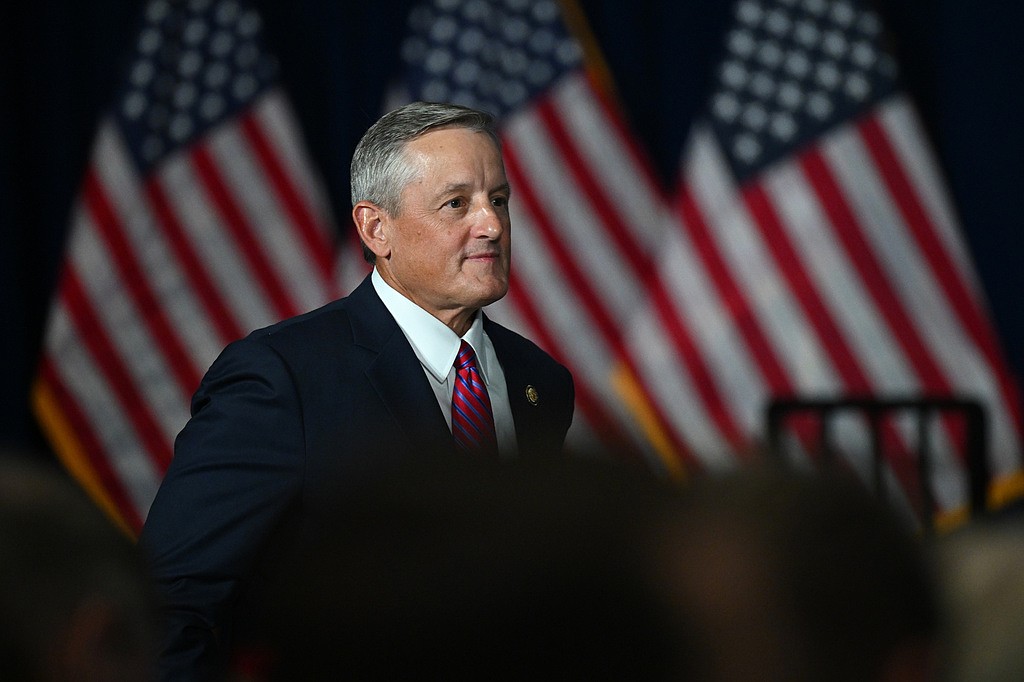
Photo: Official portrait of Sen. Jon Husted, via Wikimedia Commons.