Ohio's electric bills are going up. Data centers — the giant warehouses full of computers that power AI — are a big reason why. They use enormous amounts of electricity, and somebody has to pay to build the power plants and power lines that feed them.
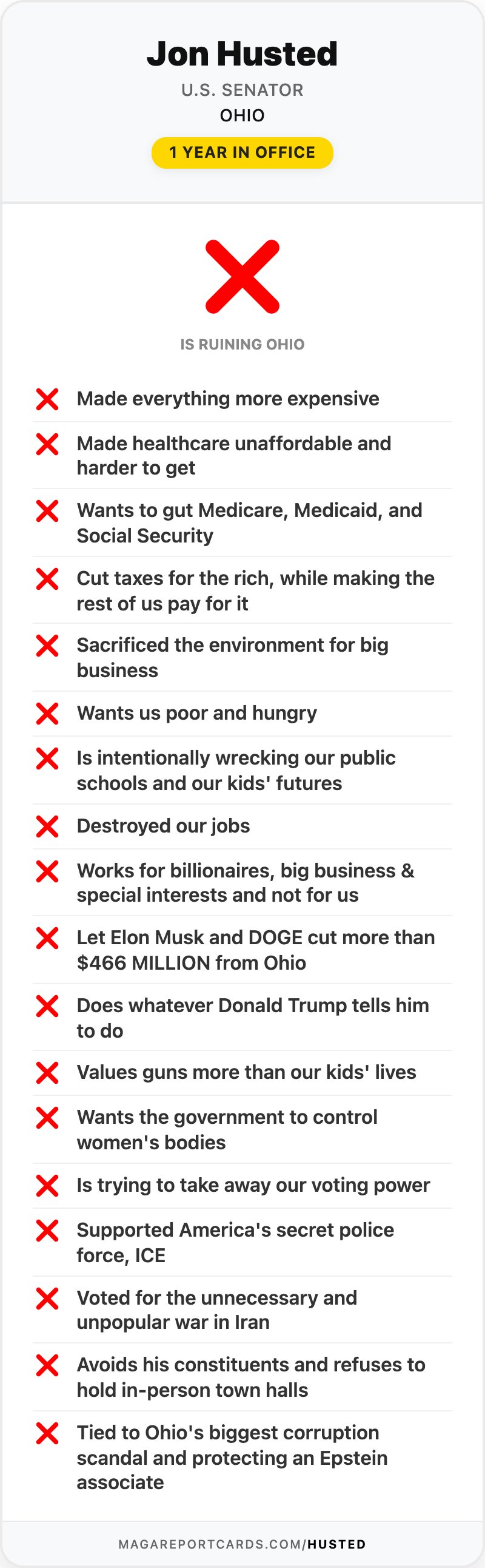
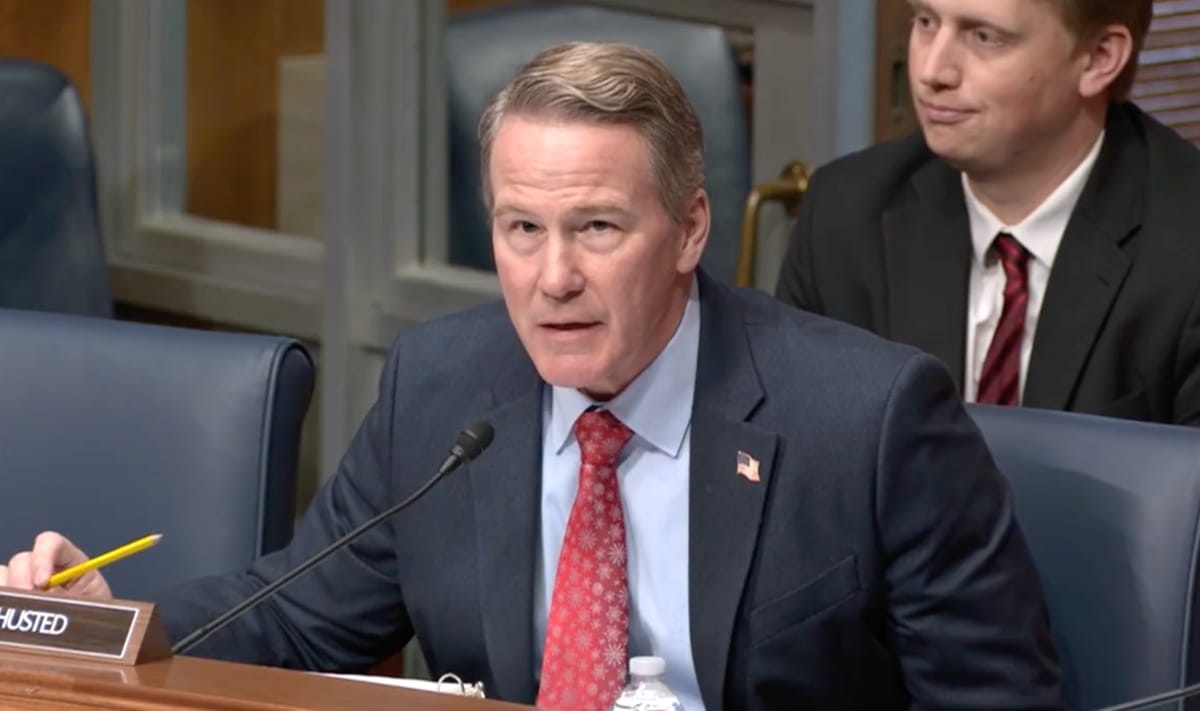
Jon Husted says he's on our side in that fight. In July he introduced a bill he called the Ratepayer Protection Act.
Here's what he didn't put in the press release: his campaign has taken about $69,750 from the very companies on the other side of that fight.
Where the money came from
TiffinOhio.net went through Husted's federal campaign filings through June 30 and found the donations:
- $16,000 from the corporate political action committees of Google, Amazon, Microsoft and Oracle.
- $28,750 from employees and executives of Google, Microsoft, Meta and Oracle — including two Oracle donors who each gave $7,000, the legal maximum. Their listed jobs: the company's chief technology officer and founder, and its president and chief executive.
- $25,000 from the PACs of three electric companies with a direct stake in data center growth: American Electric Power, Duke Energy and Vistra. AEP's Ohio utility serves the central Ohio corridor where much of the state's data center construction has concentrated.
Husted's campaign has raised $14.35 million overall, so this is a small slice of it. But that's not really the point. The point is who is writing the checks. When the companies that profit from data centers and the utilities that build power lines for them are all funding the same senator, Ohioans are entitled to ask the question Sherrod Brown's ad is asking: who is he really working for?
The bill has one problem: it doesn't actually do anything
Husted introduced the Ratepayer Protection Act on July 16. The idea sounds great — make big electricity users like data centers pay for the power infrastructure built to serve them, instead of spreading the cost across everybody's household bill.
But look at how it's built. The bill works through a 1978 law called the Public Utility Regulatory Policies Act. Under that law, federal standards require state regulators only to consider adopting them. Nothing in Husted's bill forces a single state to do anything.
And it's going nowhere:
- When this post ran, it had no cosponsors. Not one. (Nine Republican senators signed on in September.)
- It was sent to the Senate Energy and Natural Resources Committee, whose chairman said last month that data center legislation was not on his priority list.
- The version that's actually moving is a House bill — sponsored by a Colorado Republican and a Florida Democrat, not by Husted.
A bill with no cosponsors, in a committee that isn't interested, that couldn't compel a state to act even if it passed. That's not a ratepayer protection plan. That's a talking point with a title.
He was on the other side of this seven years ago
The reason Ohioans are skeptical isn't a mystery. Husted has a record on this, and it's the opposite of what he's selling now.
In November 2019, when Husted was lieutenant governor, Google got two big incentives for a data center in New Albany: a 15-year property tax abatement from the city, and a 15-year state sales tax exemption estimated at $43.5 million, approved by the Ohio Tax Credit Authority.
Husted defended it. He argued the economic return would outweigh the cost, said the investment would fuel Ohio's economy for years, and said charging sales tax would have driven Google out of the state.
We now know how that math turned out statewide. Ohio's data center sales tax exemption was projected to cost about $136 million in fiscal year 2025. The actual cost was more than $1.5 billion — over ten times the projection. Amazon, Meta and Google locked in 100% sales tax exemptions for up to four decades.
That's money that doesn't go to Ohio schools, roads, or hospitals. And it went to some of the richest companies on earth.
Why this pattern should sound familiar
If a senator taking money from electric utilities while promising to protect your electric bill feels like something you've heard before in Ohio — it is.
Ohio's biggest corruption case ever involved the utility FirstEnergy funneling $60 million in bribes to pass a $1.2 billion bailout paid for by Ohio ratepayers — money that came straight out of people's electric bills. In 2017 FirstEnergy gave $1 million to a dark money nonprofit supporting Husted's campaign for governor, and his name came up 386 times during the criminal trial, by the Ohio Democratic Party's count. HBO made a documentary about the scandal.
Husted has not been charged with a crime in that case. But the shape of it is the same shape we're looking at now: energy money flowing to Husted, and higher bills flowing to the rest of us.
The bottom line
Jon Husted has an environmental voting record scored at 3% by the League of Conservation Voters, both for 2025 and for his lifetime. He has voted five separate times to block efforts to rein in tariffs that raise prices for Ohio families. And now he's asking Ohioans to believe he's the guy who'll stand up to Google, Amazon and AEP on their electric bills — while cashing checks from all three.
Ohio votes on this Senate seat November 3. It's a good time to ask whose bill Husted is actually trying to lower.
Source
This post is based on original reporting by Dave Miller for TiffinOhio.net, with additional data from Popular Information.