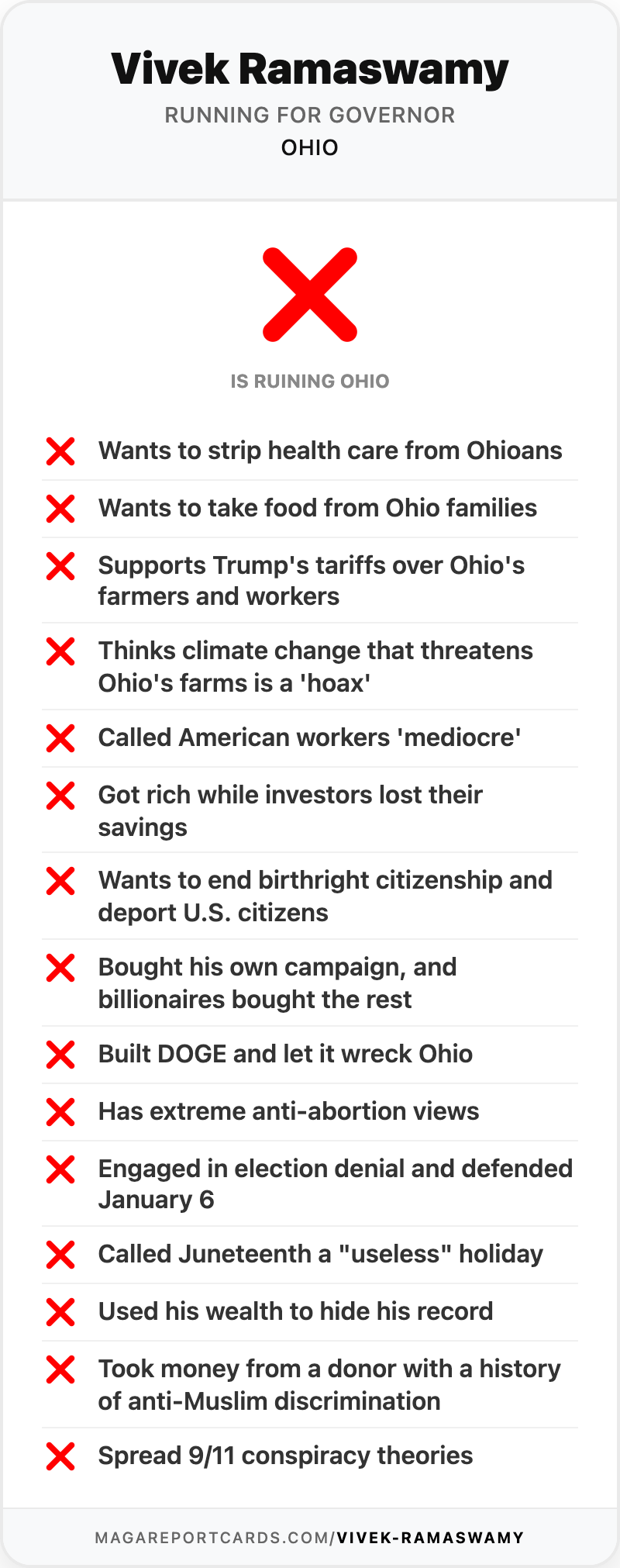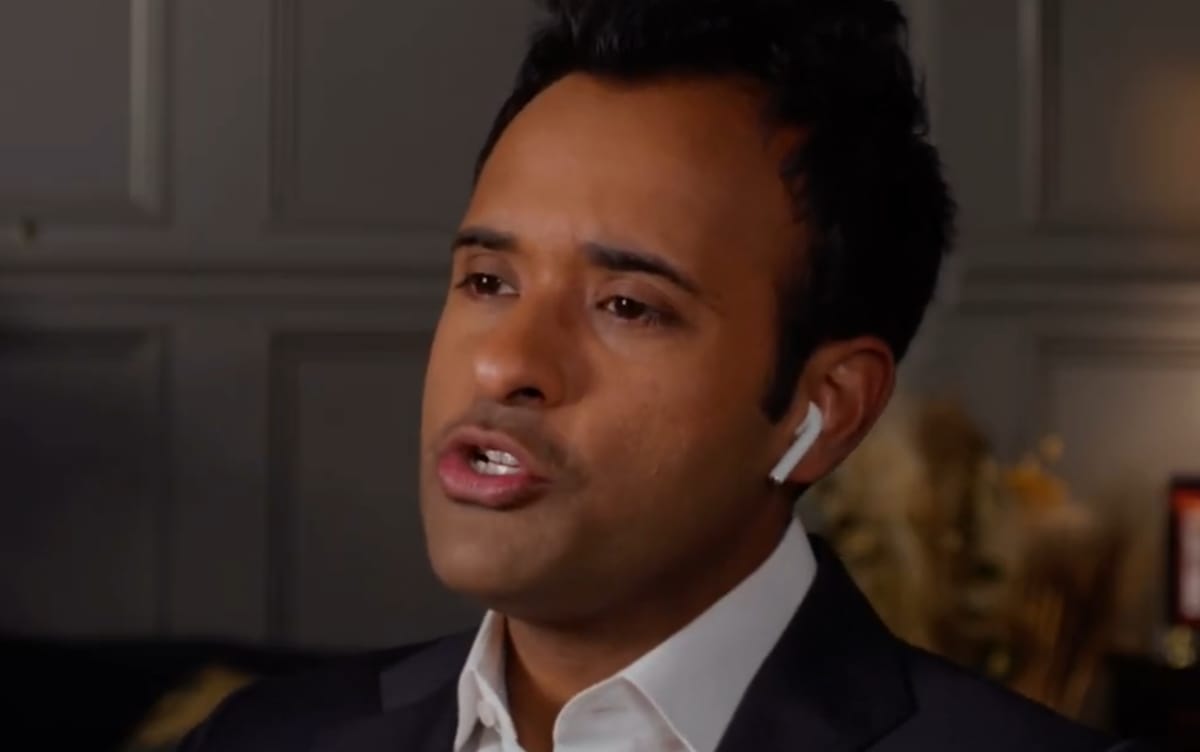
Vivek Ramaswamy made Ohioans a big promise on Thursday. Let a data center get built in your town, he said, and your household electricity becomes free, your property taxes go down, and the facility meets every air and water standard without exception. If those conditions aren't met, he wrote, the data center "won't be built. Period."
There's no law that does that. No rule. No statute. The whole promise rests on a governor being willing to squeeze the power industry on your behalf — using regulators the governor personally appoints.
So it matters a great deal who has been paying that governor's campaign.
$97,468 from the industry he'd regulate
Campaign finance reports filed with the Ohio Secretary of State show that PACs tied to electric utilities, gas distributors, oil and gas producers, pipeline companies and solar developers gave Ramaswamy's campaign $94,096.34 in cash during 2026, plus $3,372.57 in-kind from the Ohio Oil and Gas Producers Fund. Combined: $97,468.91, according to TiffinOhio.net's review of the filings.
His Democratic opponent, Amy Acton, received nothing from those PACs.
Here's the part that should stop you. Most of that money arrived after the giving became a public story.
On May 18, the Energy and Policy Institute reported that six of Ohio's biggest investor-owned utilities had sent more than $2 million to the two governors associations, and that corporate PACs for five of the six had given more than $68,000 directly to Ramaswamy, his running mate Rob McColley, or both.
In the ten weeks after that report published, another $65,603.24 came in from energy interests — nearly as much again, from a wider set of companies.
And the two biggest checks came on the last day covered by the campaign's latest filing. On Friday, July 31, three landed at once:
- $16,615.67 from the Utility Scale Solar Energy Coalition of Ohio PAC — the only energy contribution in the file that hits Ohio's per-election ceiling to the exact penny.
- $16,615 from the employee PAC of Vistra Corp.
- $10,000 from Diversified Gas & Oil Corporation's PAC.
AEP's Committee for Responsible Government gave $17,000 across two checks. Energy Transfer gave $5,000. NiSource — the parent of Columbia Gas of Ohio — gave $9,615.67 across two payments. Apex Clean Energy, Chesapeake Utilities and AES Ohio's Dayton Power & Light fund added more.
Why this money is different from ordinary campaign money
Ramaswamy has loaned his own campaign $25 million. Against that, $97,000 is nothing — and his campaign is entitled to say so.
But the size of the check isn't the point. The point is what a governor of Ohio actually controls.
Under Ohio law, the governor appoints all five members of the Public Utilities Commission of Ohio, and designates the chair, who serves at the governor's pleasure. PUCO decides rate cases. PUCO decides how the cost of new power lines and new generation gets split between data centers and everybody else. PUCO approved the data center tariff AEP Ohio operates under right now.
Free electricity for households near a data center is not something a governor can sign into existence. It is something a governor can push a commission and a utility toward — or quietly not.
The companies that would be on the receiving end of that push have introduced themselves.
What Ohioans are paying while this happens
This isn't abstract. Ohio's electric bills have climbed 53% since 2021.
In the year ending May 31, Ohio utilities cut off customers' power roughly 345,000 times — the highest rate in four reporting periods. AEP's Ohio Power was the worst in the state, cutting off 15% of its customers, more than four times FirstEnergy's rate.
Over the same period, the chief executives of Ohio's four investor-owned electric utilities took home a combined $81 million in 2025. AEP's CEO alone accounted for $36.6 million of it.
Three hundred forty-five thousand shutoffs. Eighty-one million in CEO pay. That's the industry now funding the man who'd appoint its regulators.
What's fair to say — and what isn't
Ramaswamy's data center plan is not an industry wish list, and it would be dishonest to pretend it is. It would end future property tax abatements for data centers, a break developers have fought hard to keep. It requires closed-loop water recycling, full environmental compliance, and building on brownfields instead of farmland. Some of that cuts directly against the companies writing him checks.
The solar coalition's money complicates it further — those developers are often on the opposite side of AEP and the gas producers in siting fights.
There is also no evidence that any contribution was solicited in exchange for anything. Ramaswamy holds no office. He has cast no vote. Legal contributions from registered PACs are how American campaigns work.
The problem is the timing. If the money were incidental, it would have tapered off once a watchdog put a spotlight on it. Instead it roughly doubled, spread to new companies, and the two largest checks were written on the final day of the reporting period — ten weeks after utility spending in this race became a documented story.
The pattern in Ohio
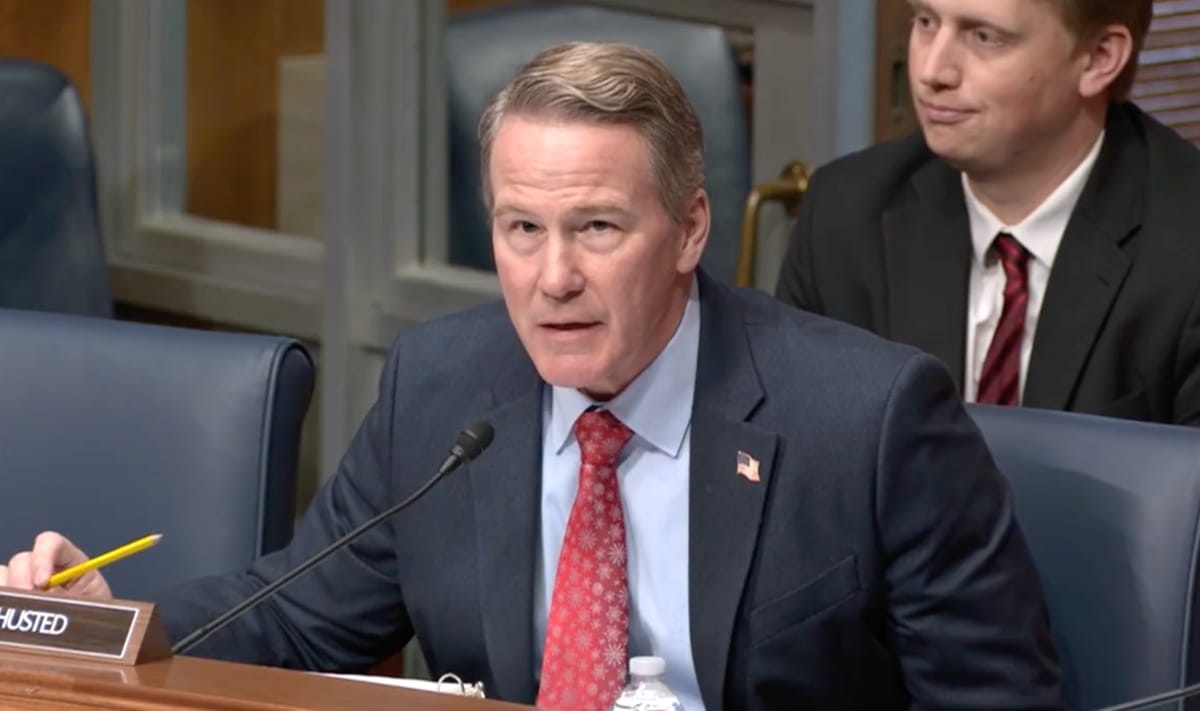
This is not happening in isolation. Ohio's other statewide Republican on the ballot, Sen. Jon Husted, has taken $69,750 from the tech and utility companies at the center of the same data center fight, while telling Ohioans he'll protect their electric bill.
And Ohio has been here before. House Bill 6 — the 2019 nuclear bailout that would have charged ratepayers roughly $150 million a year and produced the largest corruption prosecution in state history — is what happens when the companies that generate power and the officials who regulate them get too comfortable with each other. Ohioans kept paying its coal-plant subsidies until August 2025.
Ramaswamy's other big promise has the same problem underneath it: an analysis found his property tax rollback would blow a $4 billion-a-year hole in Ohio's schools, police and fire departments in his first budget, and his plan to pay for it is growing Ohio's population by 26%.
He is asking Ohioans to take on faith that when he sits across the table from these companies, he'll squeeze them until the power near their data centers is free.
They just handed him $97,000 and asked him to keep it.
Source
TiffinOhio.net, "Ramaswamy takes nearly $100K from energy interests as Ohioans' electric bills soar," by Bonnie Lucas, August 6, 2026.