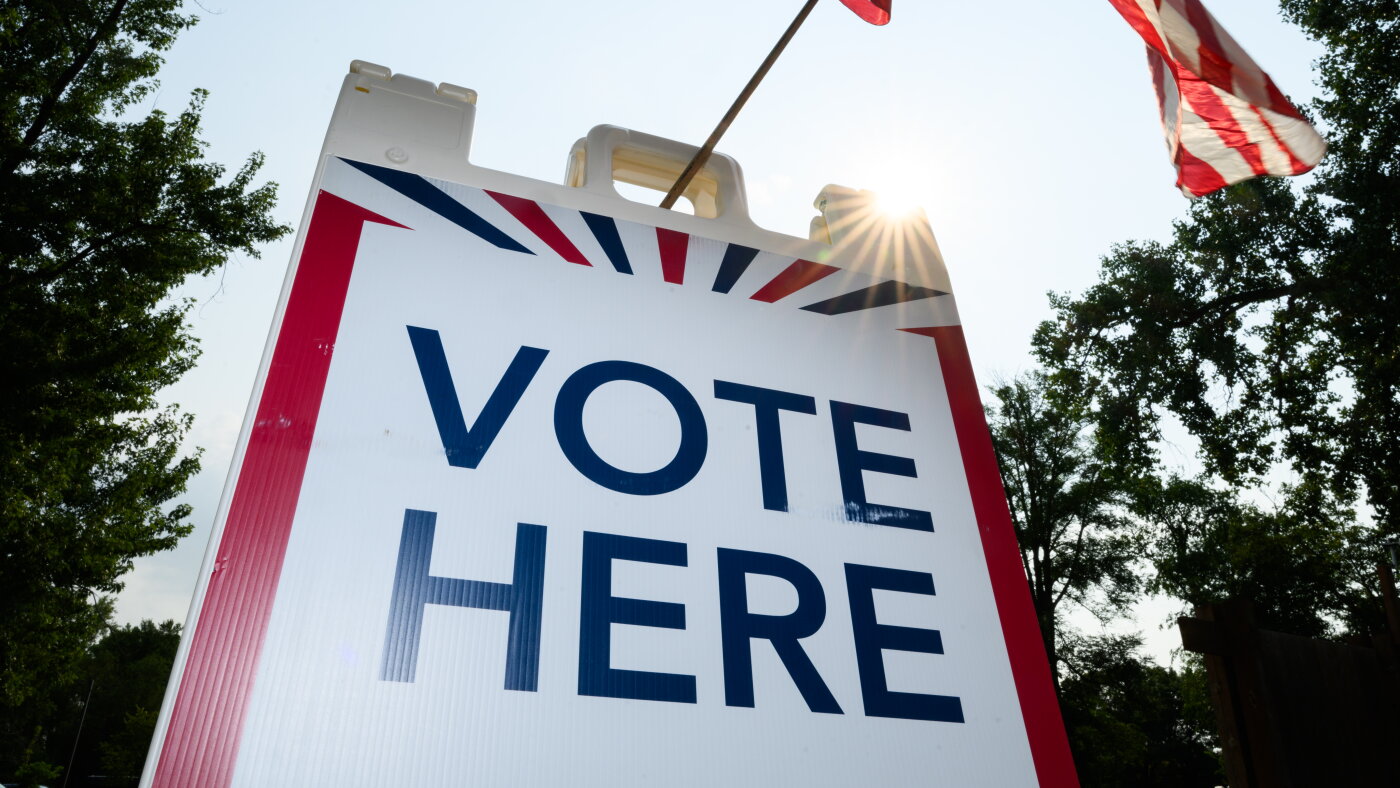
The U.S. Senate stayed up all night on Friday. Then, at 4:36 in the morning on Saturday, August 8, 2026, it took a procedural vote on whether to move ahead with a bill making Americans show a photo ID to vote in a federal election.
The vote to cut off debate and take the bill up failed, 52 to 46. It needed 60. Every Democrat who was there voted no.
Then the senators went home for a month.
That's the part worth sitting with. The Senate pulled an all-nighter, confirmed a new attorney general, passed a bill to keep the government's lights on — and squeezed in one more vote on making it harder to cast a ballot. Then everyone left for August recess.
The bill was three days old
The measure was S. 5271, and it is about as fresh as legislation gets. According to the official record at Congress.gov, it was introduced on August 5, 2026 — three days before the Senate voted on it. Its full official title is "A bill to amend the Help America Vote Act of 2002 to require voters to provide photo identification."
The sponsor was Jon Husted, the Republican senator from Ohio.
It picked up exactly two cosponsors, both on August 7 — the day before the vote. They were Ashley Moody of Florida and Dan Sullivan of Alaska.
So: a bill written by one senator, signed onto by two more, introduced on a Wednesday, and voted on before dawn on a Saturday. That is not how you pass a law. That is how you stage a vote.
What "show your ID" actually means for millions of people
Here's the thing about a photo ID requirement. It sounds like nothing. Most of us have a driver's license in our wallet right now. So what's the problem?
The problem is the people who don't — and the people whose ID doesn't match.
A national study from the Center for Democracy and Civic Engagement at the University of Maryland found that about 2.6 million U.S. citizens over 18 have no government-issued photo ID of any kind.
And the bigger number is the one nobody talks about. That same study estimated that 34.5 million people don't have a driver's license or state ID card with their current name and address on it.
Think about who that is. Someone who just moved. Someone who got married and changed their name. A college student. A young person who's lived at three addresses in two years. An older widow who never updated her license. None of them committed fraud. All of them could get turned away.
Noncitizens, meanwhile, are already barred from voting in state, federal and almost all local elections. That has been true this whole time.
This is the same fight, wearing a different hat
Husted's photo ID bill isn't a standalone idea. It's closely related to the SAVE America Act — the bigger Republican bill that would require voters to show documentary proof of citizenship when they register and a photo ID when they vote.
We've written about that bill a lot, because Republicans keep bringing it back. The SAVE Act is a solution to a problem that doesn't exist — and the citizenship-document half of it is even harsher than the ID half. The Brennan Center and its partners found that 21.3 million American citizens of voting age don't have ready access to a document proving citizenship.
President Trump has pushed hard for it. He wanted the Senate to skip its recess and stay in Washington until it passed. Republican leaders have said repeatedly that the votes aren't there — and Saturday morning proved them right.
Sen. Mike Lee of Utah, one of the loudest voices for the bill, wasn't discouraged. "This fight's not over," he said afterward. "We're just getting started."
Believe him. Republicans have tried to attach voter restrictions to an affordable housing bill and to a party-line budget bill. When the front door is locked, they try the windows.
The fifteen we track
Fifteen of the Republicans on this site voted yes on Saturday morning. Here they are, with what we already knew about each one.
Jon Husted wrote the bill. This is the same senator whose state saw a steeper drop in Obamacare enrollment than any other in America — a man with plenty of real problems back home who chose to spend his August writing a new voting restriction instead.
Ashley Moody and Dan Sullivan put their names on it as cosponsors the day before the vote.
Darline Graham of South Carolina was sworn in only weeks ago to fill her late brother's seat — and the very first bill she cosponsored was the SAVE America Act. Her South Carolina primary is Tuesday, August 11.
Roger Marshall of Kansas spent the week before this vote demanding a floor vote on the SAVE America Act on Fox News while describing it as a simple "voter ID" bill. It isn't: on top of a photo ID at the polls, it would require documentary proof of citizenship to register — the harsher half, and the half this week's separate photo ID vote left out.
Tommy Tuberville of Alabama, now running for governor, has his own history of repeating SAVE America Act talking points that don't survive contact with the bill text.
And the rest voted yes without much comment: Marsha Blackburn of Tennessee, Shelley Moore Capito of West Virginia, Susan Collins of Maine, Tom Cotton of Arkansas, Bill Hagerty of Tennessee, Cindy Hyde-Smith of Mississippi, Pete Ricketts of Nebraska, Jim Risch of Idaho, and Mike Rounds of South Dakota.
Two senators didn't vote at all: Republican Mitch McConnell of Kentucky, who is recovering from a health issue, and Democrat Peter Welch of Vermont.
What they didn't do before they left
It's worth naming what else was on the table that week, because it tells you what the Senate treats as urgent.
The Senate did pass a stopgap funding bill, 90 to 6, to keep the government running through December 11 — though the House passed a different version, so that isn't settled. It confirmed Todd Blanche as attorney general, with Collins and Sen. Lisa Murkowski voting no. It passed a Russia sanctions package, 86 to 11.
What it did not do was lower anyone's grocery bill, or their rent, or their electric bill, or their premiums.
It did find time, at 4:36 a.m., to vote on making people prove who they are at the polls.
Fifty-two Republicans thought that was worth staying up for.
Source
Reporting by Shauneen Miranda for States Newsroom: "US Senate leaves town for recess after passing stopgap spending bill, blocking photo ID for voting" (Michigan Advance, August 7, 2026). Photo by Jennifer Shutt/States Newsroom. Roll call details from Senate vote #231.