This week Congress did something it almost never does: it passed a big, bipartisan bill to make housing cheaper. Then it stopped cold — because the President wouldn't sign it.
On Wednesday, June 24, 2026, President Donald Trump canceled the signing ceremony for the 21st Century ROAD to Housing Act. The White House had supported the bill. The staff had already set up the desk and the presidential seal. Then Trump said he wouldn't sign it until Congress passes a separate bill — one that has nothing to do with housing and everything to do with making it harder to vote.
This is what holding people hostage looks like. Affordable housing for millions of families is the ransom. A voter suppression bill is the demand.
A rare win — passed by almost everyone
The housing bill wasn't close. The Senate passed it 85–5 on Monday. The House passed it 358–32 on Tuesday. Republicans and Democrats both voted for it in huge numbers. After years of fighting over everything, Washington actually agreed on something people across the country are desperate for.
And people are desperate for it. Home prices are up 54% since 2020. Last year the typical home cost nearly five times what a typical family earns in a year. Rents are still 17.2% higher than before the pandemic. For a whole generation of younger Americans, buying a first home has gone from "someday" to "never."
The bill tries to fix the root problem: there aren't enough homes. It cuts red tape and speeds up construction. It makes it easier to build cheaper starter homes, manufactured homes, and small rental units in people's backyards. It limits big corporate landlords from buying up single-family homes. It expands rental help and adds new protections for renters. It even helps towns turn old, abandoned buildings into housing.
It's not a magic wand. But it's the most serious housing bill in decades, and the real estate industry, homebuilders, and housing advocates all backed it.
The demand: a bill that makes it harder to vote
So why won't Trump sign it? He posted that the signing was canceled until Congress passes the SAVE America Act — a bill that would require every American to show documents proving citizenship in order to register to vote.
That sounds simple. It isn't. Most people don't carry a passport or a birth certificate around, and a lot of people can't easily get one.
- The Brennan Center estimates that more than 21 million citizens don't have ready access to the documents the bill would demand.
- Roughly 69 million women who changed their name when they got married have a birth certificate that no longer matches their legal name — which could block them.
- Voting as a noncitizen is already illegal, and study after study has found it vanishingly rare.
In other words, the bill solves a problem that barely exists by creating a giant new one for millions of real voters — married women, rural Americans, working people who don't have a passport in a drawer. That's the price Trump has put on housing relief.
They have the votes. They just won't use them.
Here's the part that should make every voter pay attention.
Those margins — 85–5 and 358–32 — aren't just big. They're what's called "veto-proof." If Trump actually vetoes the housing bill, Congress can override him and make it law anyway. They have more than enough votes. They could do it in a day.
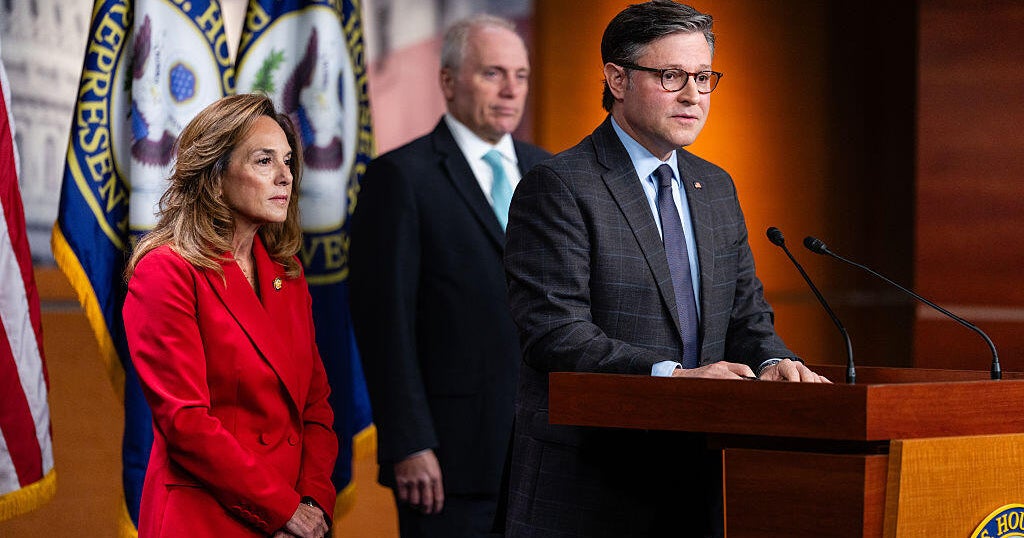
So far, they won't. Speaker Mike Johnson said he talked to Trump and is "confident the president would sign the bill" — which is another way of saying he'd rather wait and hope than stand up to Trump and override him. And the voter bill Trump is demanding? Senate Majority Leader John Thune has already admitted Republicans don't even have the votes to pass it in the Senate.
Read that again. Republican leaders won't use the votes they do have to deliver housing relief, because Trump wants a voter bill they don't have the votes to pass. Their own constituents are stuck in the middle.
This is the whole game. The same members who go home and talk about the "cost of living" had a finished, bipartisan, veto-proof housing bill in their hands — and chose to wait on Trump instead of overriding him. The cost of that choice lands on regular people.
Who pays for the delay
Every week this drags on is a week that builders don't break ground, that projects sit in limbo, that the housing shortage gets worse. Economists warn the country is already on track to fall another 2 million homes short over the next five years without action. As one Redfin economist put it, for buyers hoping for relief, having to wait even longer is "a tough pill to swallow."
And it didn't have to be this way. The bill passed. The pen was ready. The only thing standing between American families and the most significant housing law in a generation is a President using their homes as leverage — and a Republican Congress that has the power to act and is choosing not to.
The bottom line
Affordable housing isn't a left or right issue — 443 members of Congress just proved that. But Trump turned a rare bipartisan win into a hostage situation, demanding a voter suppression bill in exchange for relief that families need now. Republican leaders have the votes to override him and refuse to. When your rent goes up and the starter home stays out of reach, remember who had the fix in hand and decided to wait.
Source
This post is based on AP News reporting: "What Trump's refusal to sign bipartisan housing bill into law means to homebuyers and renters" (June 24, 2026).