Nina Freel found her daughter's new school in a Facebook ad.
Nova Roots Academy, in Hot Springs, promised flexibility, hands-on learning and real-life skills. It was built for kids who learn at their own pace. Freel's 7-year-old, Rhiannon, was working above her grade level. The woman running it, Donna Witte, had spent years teaching in the Hot Springs School District. It looked perfect.
Rhiannon never spent a day there. On August 1 — less than three weeks before fall classes were supposed to start — Witte emailed parents to say the school was shutting down. Then, parents say, she stopped answering. The website went dark. So did the Facebook page.
A complaint report the Arkansas Department of Education put together, obtained by the Arkansas Democrat-Gazette under the state's open records law, says 56 students had registered and paid — for summer classes, for the coming school year, or both.
Here is the part that should stop you. In the eyes of the state of Arkansas, Nova Roots was not a private school. Its students were not private school students. They were officially homeschoolers, attending something the state calls a microschool — and the state was sending it public money anyway.
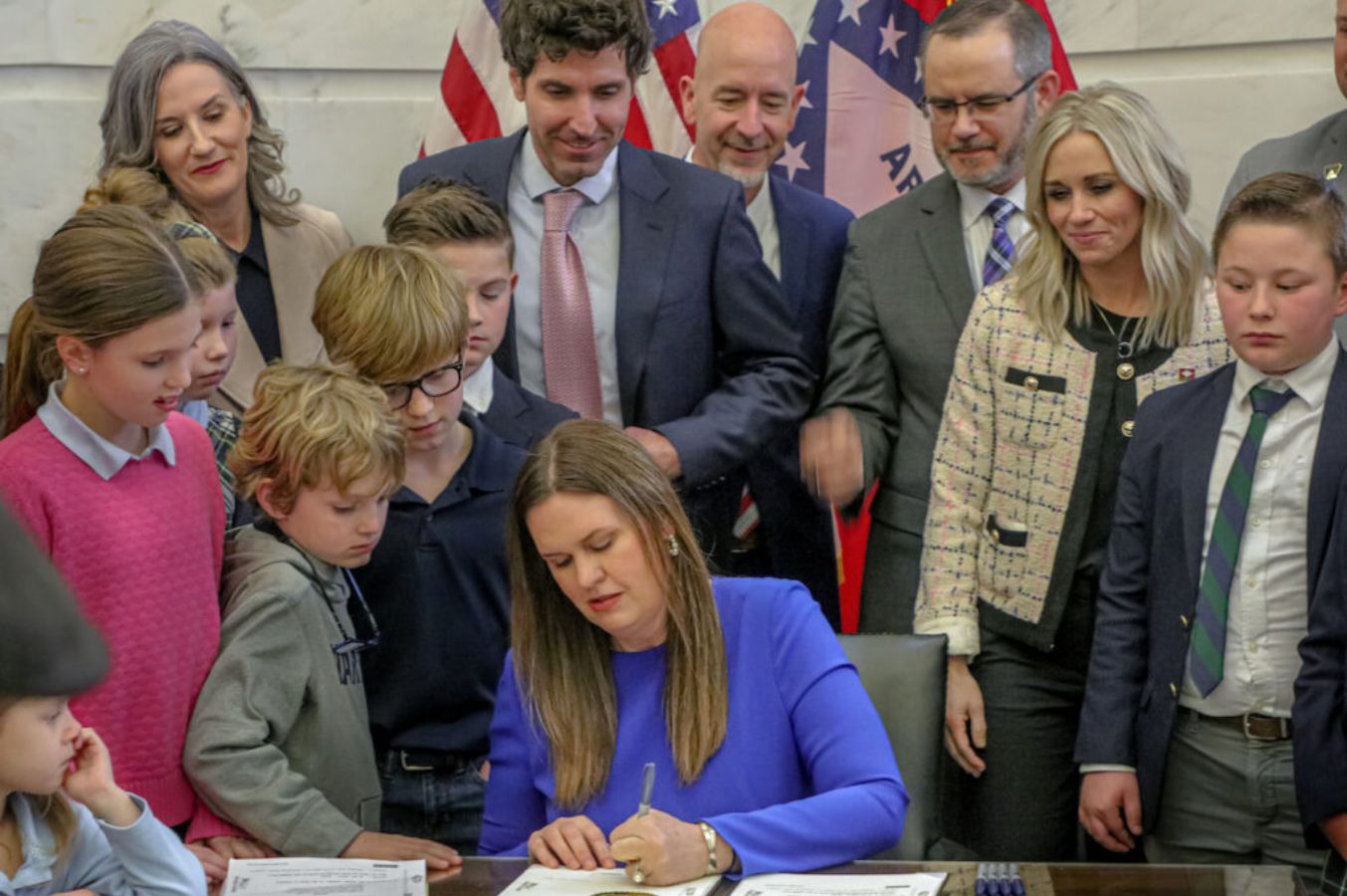
That money comes from Educational Freedom Accounts, the school voucher program created by the 2023 LEARNS Act. LEARNS is Sarah Sanders' signature law, the marquee bill of her first legislative session, and her office says she championed it.
A category of school the state made up, then declined to watch
Ask the Education Department what a microschool is and you get this, from spokeswoman Kaelin Clay: a "tuition-based organization serving a community of homeschool students." Parents who send a child to one have to tell their local school district they intend to homeschool. Microschools, Clay said, are explicitly not classified as private schools.
That distinction is not a technicality. It decides which rulebook applies — and the microschool rulebook is thinner.
Before a microschool can start cashing voucher checks, the Education Department looks at background-check and fingerprinting paperwork, instructor qualifications, and any licenses or accreditation the school happens to have. The school has to describe what it teaches, promise to cover math, English, social studies and science, and give students a national test once a year. Not the ATLAS exam Arkansas requires of every public school student — a different test.
And site visits?
"Site visits are not routinely conducted for approval of a microschool," Clay wrote. "However, they are one of the compliance tools available to ADE when a complaint or other information raises questions that warrant closer review."
The Democrat-Gazette asked the department a simple follow-up: has it ever done a site visit at a microschool? It did not answer.
96 last year. 142 now.
Educational Freedom Accounts opened to every Arkansas student in the 2025-26 school year. Microschools multiplied immediately.
Last August, the Education Department counted 96 microschools registered in the voucher program. For the 2026-27 school year, there are 142 — a jump of nearly half in twelve months. Most students in the program this year get $7,208 to spend, and students with disabilities can get more.
So the state built a new category of school, attached a per-child check to it, declined to inspect the schools as a matter of course, and then watched the category grow by half in a year.
We have written before about how big this program has gotten — roughly 50,000 students and more than $367 million this school year, with only 12 out of every 100 participants coming from a public school. The microschool numbers are the same story at a smaller scale, with even less watching.
The state says it's the parents' job
At a September 2025 State Board of Education meeting, Darrell Smith, who runs the Education Department's school choice office, was asked how vendors in the voucher program get vetted.
Smith's answer: the responsibility ultimately "comes from parents."
That is the actual oversight model. The state writes the check. The parent is the inspector. Parents also get an annual survey asking them to rate provider quality, service, communication and value.
Nina Freel is one of the parents that model was supposed to protect. She found the school in a Facebook ad, saw a licensed teacher she had reason to trust, and signed her daughter up.
"When you hear something that's too good to be true, you might want to take a beat before you jump on the opportunity," Freel said afterward. "I'm definitely going to remember that for next time."
She should not have to. Vetting a school is what the state is supposed to do before it puts that school on the payroll.
What the state found after the school was already gone
The Wittes told families on July 28 that Nova Roots would "cease operations." That same day, Education Department staff forwarded a complaint intake summary about the school up to Darrell Smith.
What that report describes is not a business that ran out of money. It is a list of things somebody should have caught earlier:
- The stated reason for closing doesn't match the facts. The Wittes told parents the building's owner was selling the property. Marty Coco, the Hot Springs businessman who owns it, says he evicted them around July 15 for not paying rent — and says they owe him roughly $24,000.
- The nonprofit status appears not to exist. The school claimed to be a 501(c)(3). A search of the IRS tax-exempt organization database turned up no records for it.
- Voucher applications parents filled out may never have been filed. The report says the operators helped parents prepare their Educational Freedom Account applications and collected the completed forms directly — and those applications "may never have been submitted, causing families to miss funding deadlines."
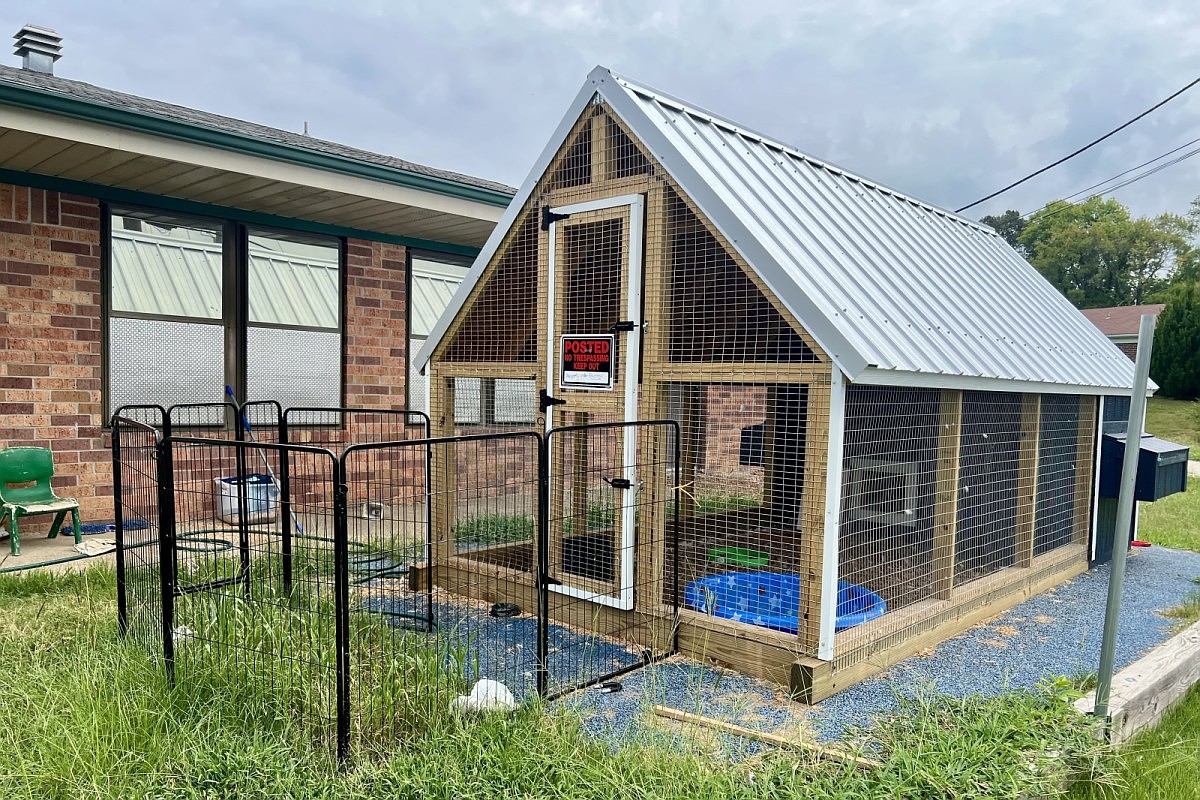
- Animals were left behind. Coco says the Wittes abandoned chickens and ducks on the property and that several died without food or water.
The report recommended the state refer "any potential fraud allegation to the appropriate local authorities."
Then the Education Department went looking at the money. It found 20 payments from students' voucher accounts that had to be refunded — for summer programming that was never delivered and for registration in a school year that never happened. A summer camp had ended two weeks early with no refunds.
Donna Witte disputed three of those 20 payments, $2,250 in all, saying they covered spring and summer courses the school had actually delivered to one high school senior. The department asked her for documentation. Three days later it wrote back to say nothing had arrived and that it could not "make adjustments to the original overpayment determination."
The bill came to $5,650. The deadline to return it was August 20. The Wittes missed it.
Who was in that school
Nova Roots advertised itself as an "inclusive microschool for neurodivergent & experiential learners." It sold special education services, nature-based learning, functional life skills.
In other words, it recruited the families with the fewest alternatives.
Callie Kimball's 10-year-old son Carter is autistic. She is a single mother with a full-time job. When Nova Roots collapsed, she couldn't find anywhere else that could take him — the other options in the area were full or couldn't meet his needs.
"I'm having to essentially bring my son to work with me for about 30 hours a week, and then at night we're having to do school," she said.
Freel's family had already moved to Glenwood. She got Rhiannon into Caddo Hills Elementary — a public school, on a four-day week — in time for the first day. "It was a 360 (degree) pivot for our entire family," she said.
This already happened once, in the same town
Nova Roots is not the first Hot Springs microschool the state has had to deal with.
Education Department employees visited Homestead Academy last fall after parents raised concerns about the quality of instruction, according to reporting by ProPublica and the Arkansas Times. The school's voucher funding was cut off for 10 weeks. It has since been reinstated to the program.
That is the pattern across this whole program. The state acts late, acts briefly, and then turns the money back on. It is exactly what happened at the private school where children were made to scrub floors and a 13-year-old was beaten by his classmates — a school that had already collected more than $300,000 in voucher money.
Lawmakers did make one change in June 2026: the Education Department now has to monitor tuition and fee increases at microschools, the way it already did for private schools. And the microschool application requires an operator who takes in $100,000 or more of voucher money in a year to post a surety bond the following school year — a financial guarantee it can repay what it owes.
Read that timing again. The bond comes after the year in which the school took the money. Nova Roots collected from 56 students and closed before a fall check ever cleared. A bond due next year protects nobody this year.
What we are actually paying for
Douglas N. Harris, who chairs the economics department at Tulane and holds its endowed chair in public education, told the Democrat-Gazette that microschools are clearly growing but that nobody can say with confidence how many exist nationally, because some lists fold them in with private schools.
He also said they aren't automatically better. He expects results to land "all over the place." And because microschools are small — one or two teachers covering many subjects and many grades — a lot of them lean on virtual learning, where he said student outcomes are "overwhelmingly negative."
"If you see a lot of evidence, as we do, that students are not learning even the basics (through virtual learning), then all the conversation about project-based learning and other things become a little less relevant," Harris said.
Arkansas has cleared 142 of these to draw public money without routinely looking inside any of them. The state's own answer to how they get checked is that parents do it.
Sarah Sanders championed the law that built this program and has defended its results. The oversight that would have caught Nova Roots before 56 families paid is not in it.
The bottom line
The Educational Freedom Account program now has 142 Arkansas microschools registered — a category the state says is not private school, does not routinely visit, and expects parents to vet on their own. One of them, marketed to families of children with disabilities, took money from 56 registered students and shut down three weeks before classes began, leaving $5,650 in unreturned public funds, a landlord owed about $24,000, and voucher applications that may never have been filed. The state found all of it after the school was already gone.
Source
This post is based on reporting by the Arkansas Democrat-Gazette: "Microschools get little state oversight, even as numbers surge under Arkansas LEARNS Act" and "Abrupt closure of Hot Springs microschool Nova Roots Academy leaves unanswered questions", both by Josh Snyder.