Politicians endorse across party lines occasionally. It's rare, and it's usually one person, and it's usually quiet.
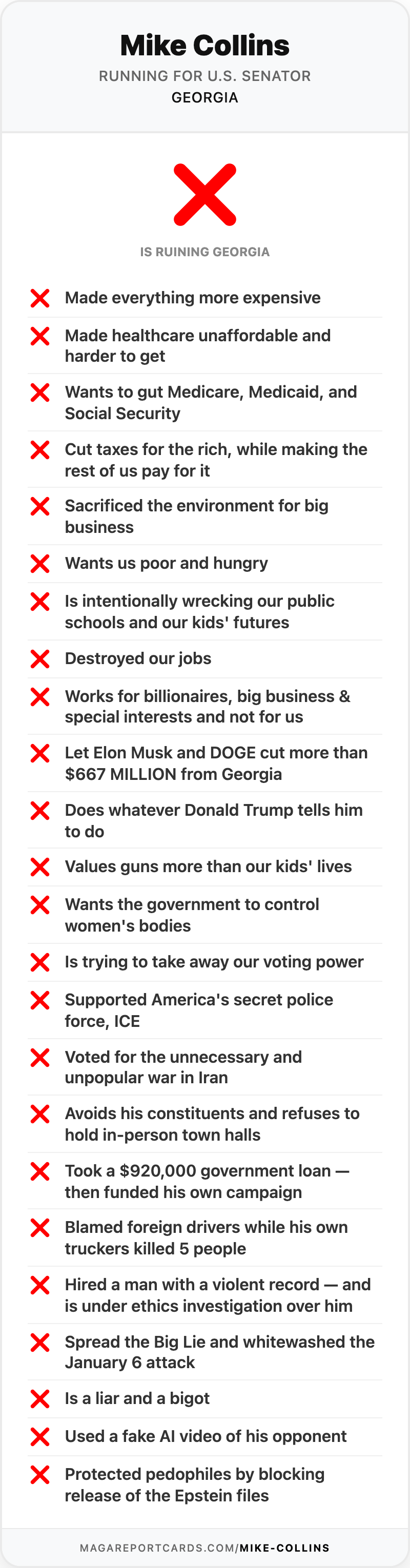
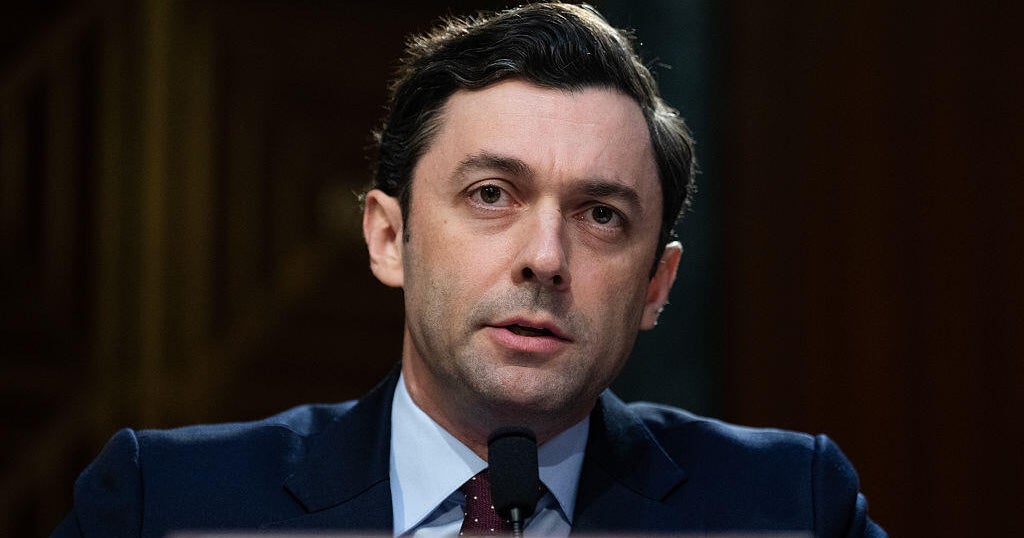
Three Georgia-relevant Republicans did it in three days. All of them endorsed Democratic Sen. Jon Ossoff. All of them were choosing against Mike Collins, the Republican congressman running to take that seat.
That happened in the same week a coalition of Black pastors in Atlanta publicly demanded Collins answer for his campaign's reported ties to antisemitic and white nationalist figures.
Who left
Jeff Flake is a former Republican U.S. senator from Arizona. He endorsed Ossoff citing his "character, constituent work and respect for the institution," and said those outweighed his policy disagreements with a Democrat.
Flake also said he was troubled by Collins' refusal to acknowledge that Joe Biden won the 2020 election.
Scott James Matheson is the Republican mayor of Valdosta. He acknowledged the political risk of crossing party lines:
"I will take heat for this endorsement, and it doesn't matter. There's no way I can turn my back on this relationship."
Julie Smith is the Republican mayor of Tifton. Her version was blunter still:
"He's been very good to South Georgia. I'm a Republican, but there are times when a person exceeds the party. They go above and beyond."
Two of these three are sitting Republican mayors in south Georgia — not retired officials with nothing to lose, not national commentators. They are elected Republicans in south Georgia who decided to publicly back a Democrat anyway.
What they're walking away from
Flake cited the 2020 election. The pastors' stated reason was extremism. Both are documented, and neither is new.
In July, a CNN investigation found that Collins' own son-in-law is a white nationalist influencer who shares antisemitic conspiracy theories and Nazi imagery with more than 1.5 million followers — while Collins publicly insists he stands with Israel.
Collins' campaign has denied the allegations about ties to antisemitic and white nationalist figures.
But the pastors' demand wasn't that he deny it. It was that he answer questions and say plainly whether he condemns the reported connections. A denial that the connections exist is not the same as condemning them, and so far the first is all Collins' campaign has offered.
This is a pattern, not an incident
The endorsements land on top of a record we've been documenting all summer.
Collins introduced the Laken Riley Act in the House — and then lied about how Ossoff voted on it, attacking his opponent for a vote his opponent didn't cast.
He says Congress shouldn't be trading stocks while being one of its busiest crypto traders.
And he spent $400,000 of taxpayer money on ads that look a great deal like campaign ads.
Put those next to each other and the mayors' decision looks less like a betrayal of the party and more like basic arithmetic. Matheson and Smith both framed it around working with Ossoff and what he has delivered for south Georgia. That's the comparison Collins lost.
What an endorsement defection actually signals
It's worth being clear about what this is and isn't.
Three endorsements do not decide a Senate race. Flake has been at odds with his party for years, and one could argue he's a special case.
But the two mayors aren't. They are Republican officeholders in a conservative part of a state where crossing Trump's party carries a real price — and Matheson said out loud that he expected to pay it. When local Republicans conclude that the reputational damage of endorsing a Democrat is smaller than the damage of standing next to their own nominee, that's information about the nominee.
Collins is asking Georgia to send him to the U.S. Senate for six years. Republicans in his own party keep choosing the other guy.
Source
"3 Republicans endorse Jon Ossoff in Georgia Senate race as Mike Collins faces scrutiny", CBS News Atlanta, August 6, 2026.