The Environmental Protection Agency looked at two new chemicals headed for semiconductor factories and wrote down what they might do to people. Its own consent orders list acute toxicity, genetic toxicity, eye corrosion, skin and respiratory irritation, neurological and systemic effects, and reproductive and developmental toxicity — and record that for this class of chemical, "acute lethality is the primary concern." Acute lethality means a single short exposure can kill you.
Then it acknowledged it didn't have enough information to know how bad the risks actually were.
Then it approved them.
On Friday, the Sierra Club and CHIPS Communities United — represented by Earthjustice — sued in the U.S. Court of Appeals for the Ninth Circuit to undo those approvals.
You are not allowed to know what the chemicals are
Here is the part that should stop you.
Neither chemical has a public name. In the complaint, they appear only as EPA premanufacture notice numbers P-26-0029 and P-26-0045. Their actual identities are withheld as confidential business information.
So a federal agency has written down that two substances may damage genes and harm reproduction and development, that the main concern with their chemical class is that a short exposure can be fatal, has admitted it doesn't fully understand the danger, has cleared them for manufacture — and the people who will live near the plants making them are not permitted to know what they are.
You cannot test your water for a chemical whose name is a trade secret. You cannot ask your doctor about an exposure you can't name. You cannot warn your neighbors.
This is what the data center boom actually looks like
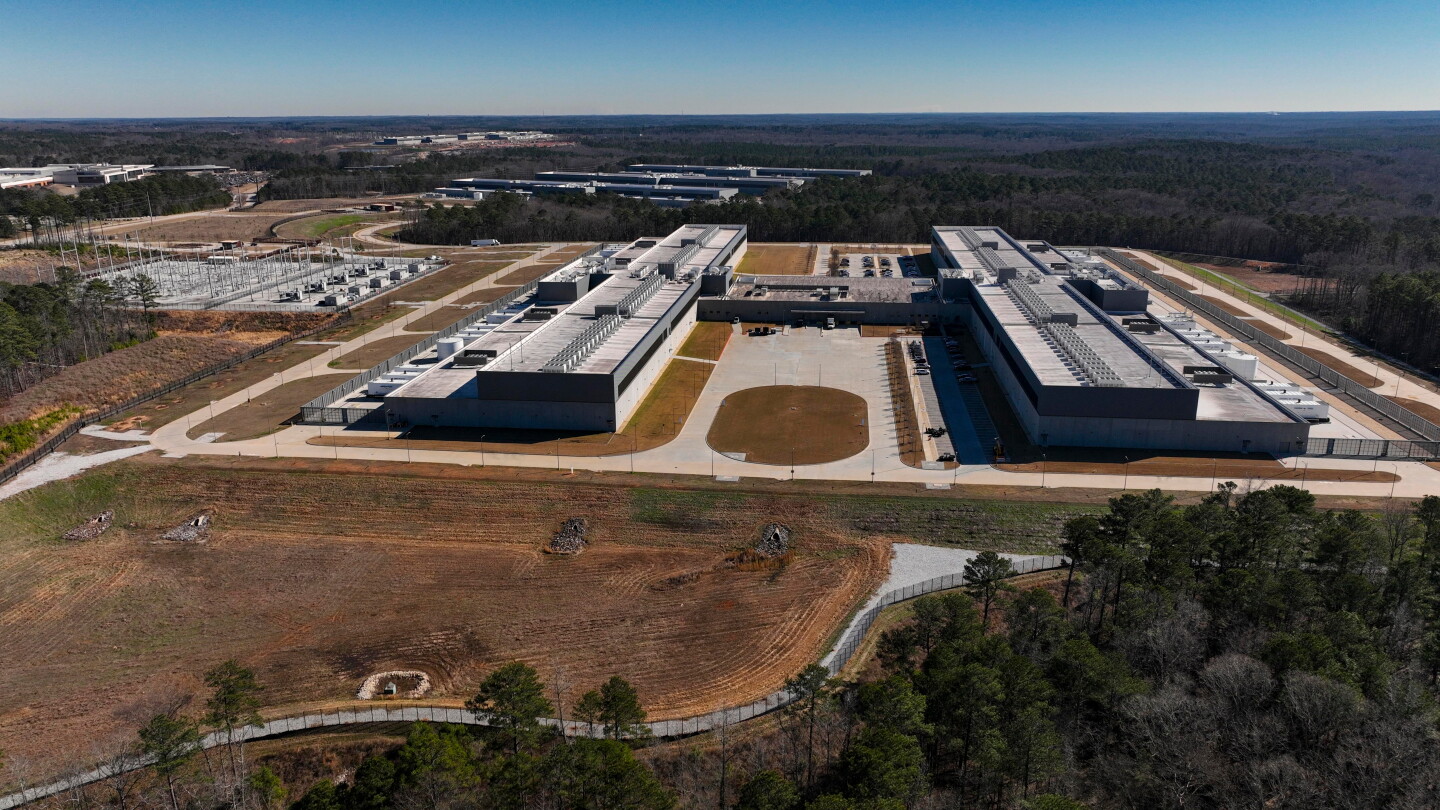
Semiconductors are the physical hardware artificial intelligence runs on. Every AI data center announcement — every "we're investing $50 billion in compute" press release — resolves, eventually, into chips, and chips get made in factories, and those factories use chemicals.
The point the petitioners press is that the harm doesn't stay inside the data center's fence line. "The rush to build more and more data centers is causing harm far beyond the data centers themselves," said Jane Williams, who chairs the Sierra Club's Grassroots Network National Clean Air Team — from the plants where the chemicals are used, to the roads they travel on, to the incinerators where they are burned.
And the chemistry problem isn't confined to fabrication. The chemicals tied to data center cooling, fire suppression and electronics manufacturing include refrigerants like Freon and Opteon, Teflon for cable insulation, Krytox for pumps and robotics, and Viton for sealing. Cooling systems can consume vast quantities of water, and the Natural Resources Defense Council notes that some immersion cooling techniques rely on PFAS — the "forever chemicals" that don't break down in a human body or in groundwater.
None of that shows up in the ribbon-cutting.
The EPA's own finding was that these may be dangerous
Under federal law, before a new chemical enters commerce, the EPA has to make a determination about it. That is the entire function. It is a gate.
The agency made one, and it is not reassuring. Under the heading "EPA's Determination," each order records that "in the absence of sufficient information to permit the Agency to make a reasoned evaluation of the health and environmental effects" of the substance, its manufacture, processing, distribution, use or disposal "may present an unreasonable risk of injury to health or the environment."
That is the statutory finding for a chemical the government cannot vouch for. Having made it, the EPA did not hold the approval back and go get the data. It authorized manufacture subject to conditions — gloves, chemical goggles, exposure controls, hazard labelling — and told the company to run the tests afterward, on a schedule that starts only once the EPA has approved the test protocols.
"We don't know" is not a finding of safety. It is the absence of one.
A pattern of an agency that doesn't want to regulate
This is the same EPA that, when a federal judge ruled its climate grant cancellations were illegal, decided the ruling meant it had to do nothing.
The through-line is an agency that treats its own obligations as optional — court orders, risk determinations, the statutory gate on new chemicals. What stays mandatory is the approval.
Who carries the cost
Chip fabs don't get built in wealthy neighborhoods. They get built where land is cheap, water is available, and a state government has offered a tax package. The people living downwind and downstream are the ones who absorb whatever P-26-0029 and P-26-0045 turn out to be.
They didn't get a vote on the approval. They aren't allowed to know the chemical's name. And the federal agency that exists to answer "is this safe?" wrote down that there are "currently insufficient data to assess these compounds," and signed off.
Meanwhile Republicans across the country are competing to bring data centers to their states — often, as we've documented, while taking money from the utilities and tech firms building them and telling constituents their electric bills won't go up.
The chemicals are the part of the deal nobody puts in the press release.
Source
Brett Wilkins, "Green Groups Sue Trump EPA for Approving Toxic Semiconductor Chemicals Amid AI Data Center Boom," Common Dreams, Aug. 14, 2026. Photo via Common Dreams.
The hazard findings and the determination quoted above are taken from the EPA's own TSCA Section 5 consent orders for P-26-0029 and P-26-0045 — signed by the EPA on June 3, 2026 — filed as appendices to the petitions for review. Earthjustice's press release describes those findings as "cancer... and even sudden death"; the orders themselves say "genetic toxicity" and "acute lethality," and do not identify either substance as a potential carcinogen.