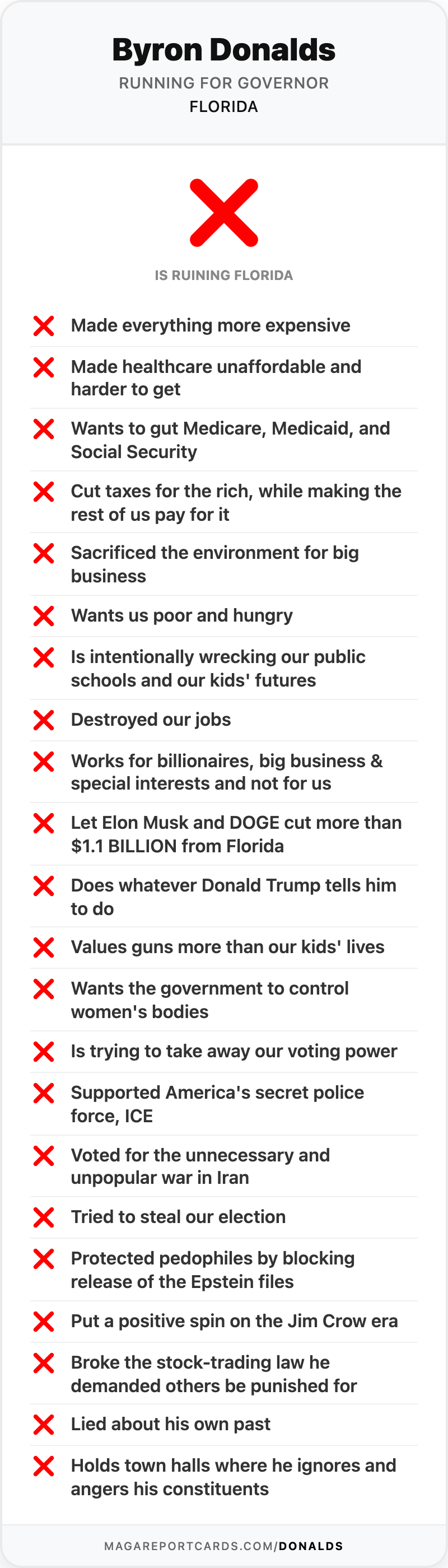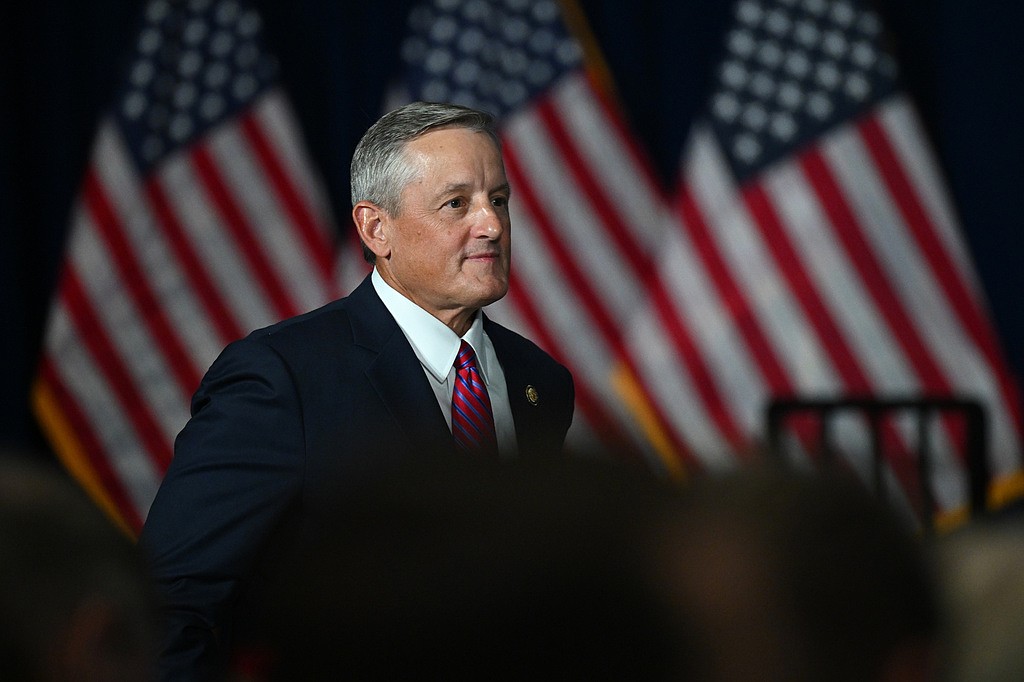
On July 22, 2026, Byron Donalds made a promise to Floridians on X. Talking about the state's new data center law, the Republican front-runner for governor wrote:
"Senate Bill 484 ensures that utility rates will not go up due to data centers."
That's an absolute. Not "helps protect against." Not "should prevent." Will not.
PolitiFact checked it and rated it Half True. Their finding, in one line from Florida State University professor Mark McNees, who researches how AI data centers affect consumers:
"Saying rates 'will not' go up because of (the law) claims an outcome the statute does not deliver."
What the law actually does
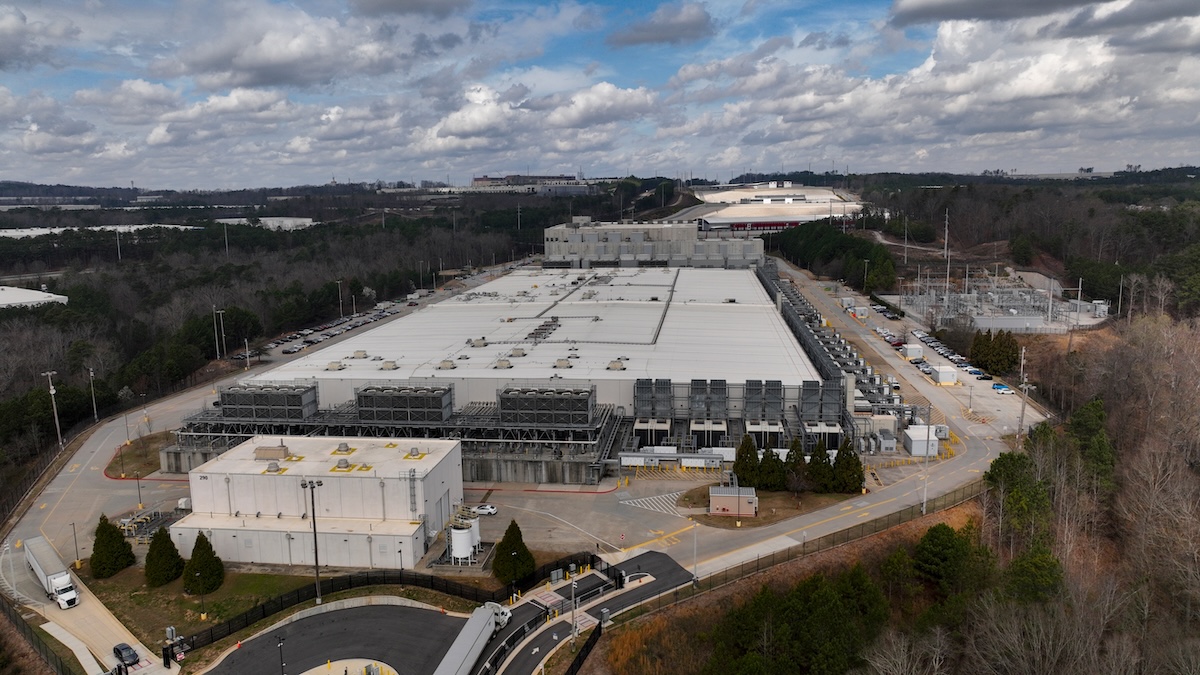
SB 484 is not nothing. It applies to "large load customers" — data centers drawing 50 megawatts or more, which is roughly the electricity of 30,000 to 50,000 homes. It tells the Florida Public Service Commission to approve pricing rules that "reasonably ensure" each data center "bears its own full cost of service" instead of shifting that cost onto regular customers. It even blocks developers from splitting one big site into several small hookups to dodge the bill.
Those are real consumer protections. But look at what they are: instructions to a commission.
McNees again: the law "directs a process, not a result." The phrase "reasonably ensure" is "an instruction to the commission" — not a cap on rates, and not a ban on increases.
Three specific holes:
1. It doesn't cover most of the map. Only four investor-owned utilities are governed by the commission and bound by the law: Florida Power & Light, Duke Energy Florida, Tampa Electric, and Florida Public Utilities Company. They serve about 75% of Floridians.
The other 25% — customers of rural cooperatives and municipal utilities like the Jacksonville Electric Authority, Orlando Utilities Commission, and Gainesville Regional Utilities — are not protected by this law at all. Their rates are set by local boards. If a data center goes up near them, they're on their own.
2. The enforcement tools are optional. The law lists things utilities could use against data centers — upfront financial guarantees, minimum demand charges so a developer can't walk away mid-project and stick locals with the cost. It doesn't require any of them.
3. It doesn't touch another driver of your bill. When fuel costs rise, utilities pass that straight through to customers. Nothing in SB 484 caps those charges or shields residential customers — even if a data center's enormous consumption is what drove regional demand up in the first place.
So a Floridian on a rural co-op, watching a hyperscale facility break ground nearby, has exactly zero protection from the law Donalds says guarantees their rates won't rise.
The $894,000 question
Here's the context PolitiFact noted in passing: Donalds "has received dozens of campaign contributions from AI companies."
That undersells it. Reporting on the backers of Florida data center projects found that developers behind four proposed facilities have given enormous sums to Donalds' campaign and political committee:
| Project / backer | Given to Donalds |
|---|---|
| Ferreira Construction and executive Nelson Ferreira (Martin County) | $500,000 |
| Phillips Infrastructure Corp. and Palm Beach Aggregates (Project Tango) | $350,000 |
| Timberline Real Estate Partners (Sentinel Grove, St. Lucie County) | $34,000 |
| Fort Meade LLC / Stonebridge Development (Polk County) | $10,000 |
| Total | $894,000 |
Nearly nine hundred thousand dollars from the people who want to build the things he's assuring you are harmless.
This is the same arrangement we keep finding in state after state. In Ohio, Jon Husted took $69,750 from the tech and utility companies at the center of that state's data center fight while promising to protect ratepayers. In Tennessee, Marsha Blackburn's campaign reported more than $100,000 from AI and data-center employees weeks after she called data centers "good and important" for the state. Florida's version is just bigger.
Why the overstatement matters
Florida already has more than 100 operational data centers. The hyperscale AI facilities — the enormous ones — are proposed but not yet open. Which means the rate impact Donalds is describing hasn't happened yet, and the law's protections haven't been tested even once. The four covered utilities must file compliant pricing plans with the commission by October 1.
In other words, Donalds guaranteed the outcome of a process that hadn't run.
His Democratic opponent David Jolly wants a moratorium on data centers, and several Florida counties have already enacted their own. Donalds has attacked that position while insisting the protections are already locked in. They aren't. They're pending, partial, and optional in places.
This isn't Donalds' first time promising Floridians a break that others say won't arrive. He is also the loudest voice for Amendment 3, a property tax cut that would pull as much as $12 billion a year out of Florida's cities and counties and gives renters nothing. And billionaire Ken Griffin wrote a $10 million check to a PAC backing him — the single biggest contribution of the race.
The pattern holds. A big promise, an absolute word — "ensures," "will not" — and underneath it a law that does less than advertised, backed by donors who benefit either way.
Floridians will find out who was right when the first hyperscale facility switches on and the bills arrive.
Source
"Donalds says FL law will prevent electric bill hikes from data centers. That's not guaranteed." by Samantha Putterman, PolitiFact, August 7, 2026. Photo: AP. Donation figures from reporting on the backers of Florida data center projects.