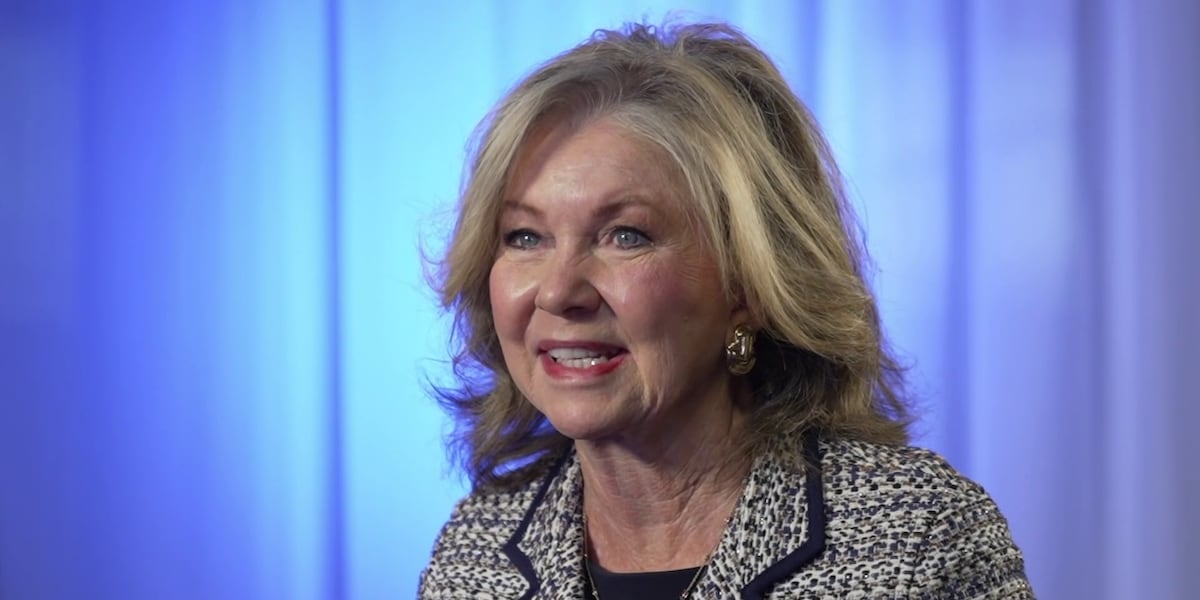
Marsha Blackburn wants to be Tennessee's next governor. And the companies building giant AI data centers in Tennessee would very much like to help her get there.
New campaign finance filings, reported by WVLT and WKRN, show Blackburn's campaign took in more than $100,000 this year from employees of artificial intelligence and data-center companies — the exact industry she says she wants to regulate, and the exact industry she's been publicly cheering on. Many of those donors don't even live in Tennessee.
It's a simple story about who a politician really works for. So let's follow the money.
The timeline
On June 13, Blackburn posted a campaign video with a clear message. In her own words:
"Let me be direct, data centers are going to be a good and important part of Tennessee's economic growth, but we've got to be thoughtful about their placement."
A few weeks later, her campaign finance filing came in. According to the filings:
- Anthropic — the AI company — had employees give her campaign $53,000 in just a few days.
- Oracle employees kicked in more than $50,000 by WKRN's count ($41,852.54 by WVLT's), including one of the company's top executives.
- All told, more than $100,000 poured in from AI and data-center workers.
This isn't happening in a vacuum. Oracle is moving ahead with plans for a campus in Nashville, which it announced in 2024 would be its new world headquarters, and data centers — the massive, power-hungry warehouses full of computers that run AI — are spreading across the state. Where they get built, how much water and electricity they use, and who has to live next to them are all political decisions. Blackburn is telling these companies she's on their side. They're telling her thanks.
"Donors like to give to winners"
You don't have to take our word for what this looks like. John Vile, a political science professor at Middle Tennessee State University, told WKRN exactly how it works.
"They say money is the mother's milk of politics," Vile said. "Donors like to give to winners."
And what do the winners give back? Vile didn't sugarcoat it:
"One would hope that you can't buy votes, but it does appear that you can buy influence. At least, you know, people are going to be more favorable to you."
That's the whole game. A company writing a five-figure check isn't doing charity. It's buying a friendly ear when it's time to decide where a data center goes, or how hard the state pushes back on the noise, the water use, and the sky-high power bills these projects can bring.
The part that doesn't add up
Here's where it gets rich. When WKRN asked about all this Big Tech money, Blackburn's campaign manager, Abigail Sigler, defended it like this:
"We're running a grassroots campaign that has received over 62,000 contributions. Marsha Blackburn has led the fight to hold Big Tech accountable."
Read that again. Her campaign's defense for taking piles of money from AI and tech company employees is that Blackburn "has led the fight to hold Big Tech accountable."
You can't have it both ways. Either you're the tough regulator Big Tech fears — or you're the candidate Big Tech is stuffing with cash because they expect you to look out for them. The people who run these companies are not in the habit of bankrolling their own worst enemy. When Anthropic's staff drops $53,000 on your campaign in a matter of days, that's not what accountability looks like. That's what a good investment looks like.
Her opponents didn't get this money
If this were just normal, everybody-does-it fundraising, you'd expect the other Republicans in the governor's race to be pulling in the same checks. They aren't.
WKRN reviewed the filings for Blackburn's two GOP rivals — Congressman John Rose and state Rep. Monty Fritts — and found that neither of them received donations from Oracle or Anthropic employees. The Oracle and Anthropic money went to Blackburn, and Blackburn alone.
That's the tell. These donors aren't just supporting "a Republican." They're backing the specific candidate they believe will be best for them — and they've decided that's Marsha Blackburn.
This is who she's always worked for
None of this is out of character. Blackburn's whole career has been bankrolled by the biggest corporate players in the game. Oracle isn't a one-time donor — its PAC and employees are already the top organization behind her Senate campaign money in the 2026 cycle. Her other top backers include CoreCivic, the Tennessee-based private prison company, and a string of investment firms.
We've seen this movie before. Back in 2016, at the height of the opioid epidemic, Blackburn co-sponsored a drug-industry-written bill that a 60 Minutes and Washington Post investigation found made it "nearly impossible" for the DEA to stop suspicious shipments of opioids. She had taken $120,000 from the drug industry, which spent more than $100 million lobbying while that bill moved through Congress. The pattern never changes: an industry needs something from Marsha Blackburn, the industry writes the checks, and Marsha Blackburn delivers.
Now it's AI's turn. The data-center companies want a governor who'll roll out the red carpet — cheap power, easy permits, and no hard questions about what these projects do to Tennessee communities' water, electricity bills, and quiet. They're paying up front. And Blackburn is telling them exactly what they want to hear.
The question for the rest of us is simple: when a data center wants to move in next door, and your power bill goes up to run it, who's going to be in the governor's office looking out for you?
Source
This post is based on reporting from WVLT and WKRN on Blackburn's latest campaign finance filings.