For most families, the house is the biggest thing they will ever own. It is the college fund, the retirement plan and the thing you leave your kids.
On August 31, 2026, President Donald Trump told the towns trying to keep a data center away from their houses that they were making a mistake. He posted on Truth Social:
"The only reason that communities throughout the U.S.A. should not want Data Centers is if they want to end up being backwards and poor. If they want to be successful and rich, with far lower taxes and jobs all over the place, let Data Reign."
Ten days later, two economists put a number on what a data center does to the people who live next to one. It is not "rich."
What the study found
Garrison Schlauch of UC Berkeley and Simon Greenhill of Harvard and Monash University published their paper through Berkeley's Energy Institute at Haas on September 10, 2026. Its title gives away the finding: Data Centers Lower Nearby Housing Values.
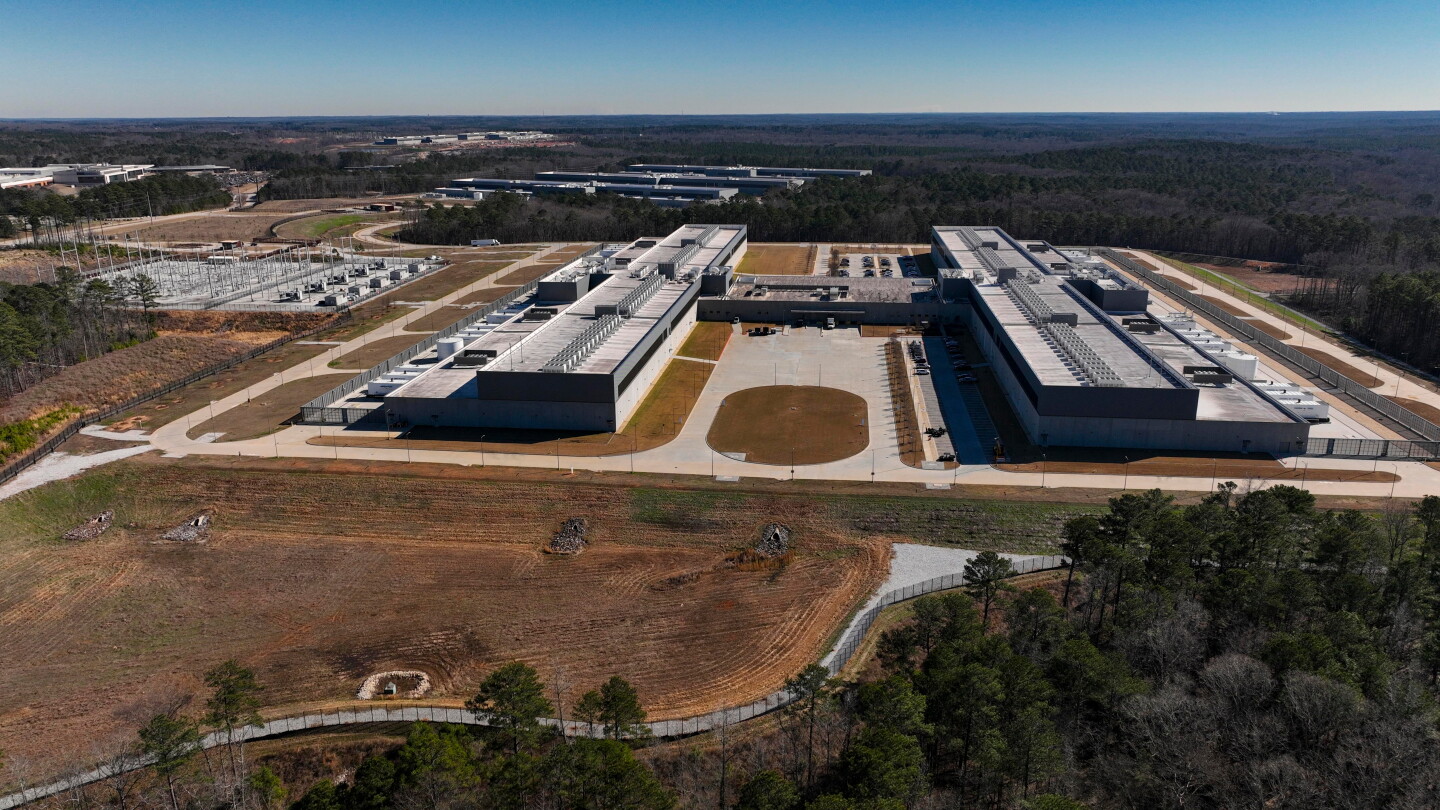
They drew on a new national database of large data centers, meaning at least 20 megawatts of power or 100,000 square feet of building. Then they matched 346 of them against home sales nearby, from five years before each one was announced to five years after. To make it a fair test, they compared those homes with homes near sites that got a data center later, in places with similar population density, incomes and vacancy rates. Before the announcements, prices in the two groups moved together. After, they split.
Here is what happened to the homes near the data center:
- Within 3 miles, home values fell about 3% on average over the five years after the announcement.
- Within 1 mile, they fell 7.2%. That's nearly two and a half times the 3-mile figure.
- The loss didn't bounce back. Prices kept sliding for a few years, then settled at a discount of about 3.8% and held there through the five years the study covers.
- Some did more damage than others. The drops were larger for "hyperscale" campuses, for data centers above about 70 megawatts, for data centers in urban areas, and for the first large data center to arrive in an area.
Added up across the country, the authors estimate large data centers have caused a $20.6 billion loss in housing value. For comparison, they point to a study that put the nationwide loss from being able to see wind turbines at $24.5 billion. That's about the same amount of money, "even though it is concentrated among far fewer homes."
The average home in the areas they studied sold for $387,380 before the announcement, in today's dollars. A 3% drop on that is about $11,500. That's our math, using the study's own numbers, and the loss is bigger the closer you live.
This is not a small group of people. The paper counts more than 34 million Americans living within 3 miles of a large data center that is either running or planned.
"Far lower taxes and jobs all over the place"
Trump's case for data centers is that the jobs and tax money make up for everything else. This study is built to test exactly that.
When a data center brings jobs and tax money to a town, people who live there should be willing to pay more for a house there. So if those benefits were as big as Trump says, prices nearby would go up. The paper's measurement already includes them. The authors found that for homes within 7 miles of a large data center, the costs outweighed the benefits over the five years they studied.
In other words, the people buying and selling those homes decided that living near a data center costs more than it brings in.
The authors are careful to say these local costs are probably small next to the benefits data centers bring the country as a whole. That is the point, though. The benefits spread out across everyone. The loss lands on the families who live closest.
People figured it out
The paper found something else that should worry anyone who wants to wave this away.
Before 2021, home prices barely moved when a data center was announced. The damage showed up later, once the building was actually running. From 2021 on, when the AI boom took off, that flipped. Prices now drop when the data center is announced, before it's built and before it hires anybody. Once it opens, there's almost no further drop.
The authors read that as the public catching on. Home buyers no longer wait to find out what it's like to live next to one. The paper also notes how fast opposition grew: in August 2025, under a quarter of Americans strongly opposed a data center near them, and by May 2026, more than half did.
So when Trump calls those people "backwards," he is talking about homeowners who read the situation correctly, and the housing market agrees with them.
Some earlier studies disagree
This is not the first attempt to answer the question, and some earlier studies came out the other way.
A George Mason University analysis of 2023 home sales in Northern Virginia found that homes closer to data centers sold for more. One Indiana study, which concluded that the homes around a proposed 250-megawatt campus near Indianapolis "will not be affected in a substantially adverse manner," was conducted at the behest of Sabey Data Centers, the company seeking approval to build it. And a study the National Association of Realtors commissioned found that the effects "differ dramatically from place to place," according to NPR.
The Berkeley paper doesn't look at just one region. It covers 346 data centers nationwide, follows home prices for ten years around each announcement, and compares them with similar places that hadn't gotten a data center yet. It still found a loss, and the result held when the authors dropped any one state at a time. The authors declare no competing interests. It's a working paper and hasn't been through peer review yet, so the numbers could still move. But the direction is clear.
What the authors say should happen, and what Trump did instead
The paper doesn't call for banning data centers. It argues against bans, because a blanket ban also blocks projects whose benefits outweigh the local costs. What it recommends is making developers pay for the harm they do to the neighbors:
- Keep them away from homes. The damage falls off quickly with distance, so where a data center goes matters most.
- Soften the impact with noise barriers, visual screening and setbacks from neighborhoods.
- Charge developers a tax equal to the home value they're expected to wipe out, or use the numbers to compensate the families who lose.
The authors point out that the companies can afford it. Building a data center cost about $10.7 million per megawatt in 2025, so a 100-megawatt campus can run more than $1 billion before a single server goes in. Paying back the neighbors, they conclude, "may be feasible at modest expense relative to total project costs."
Trump went the other direction. In July 2025 he signed an executive order to speed up data center construction, which orders the Commerce Department to launch financial support for qualifying projects that "could include loans and loan guarantees, grants, tax incentives, and offtake agreements." We laid out the rest of that order when he made the "backwards and poor" post: federal land for the buildings and a shortcut around environmental review. Taxpayer help goes to the developer. The order asks nothing of them for the family down the road.
His EPA is heading the same way. It is moving to scrap the federal rule requiring states to tell the public when a facility like a data center applies for an air-pollution permit, and it has proposed letting developers start building before the permit is approved. That matters more after reading this paper. The authors tried to measure noise and air pollution near data centers directly and couldn't: two-thirds of large data centers have no usable public air or noise monitor within 6 miles, and none has one within half a mile.
And House Republicans tried to take the decision away from towns entirely. In May 2025, 215 of them voted for a ten-year ban on states and localities enforcing laws that limit AI systems, written broadly enough to reach data centers. The Senate stripped it out 99–1. The zoning rules, setbacks and fees the Berkeley economists recommend are exactly the kind of local rules that ban would likely have blocked.
What the numbers show
Trump told the communities fighting data centers that they want "to end up being backwards and poor," and promised "far lower taxes and jobs all over the place" to those who say yes. A new UC Berkeley study of 346 large data centers found that homes within 3 miles lost about 3% of their value on average over five years and homes within a mile lost 7.2%, adding up to an estimated $20.6 billion nationwide. Even after counting the jobs and tax money, the local costs outweighed the local benefits. Since 2021 the loss has hit as soon as a data center is announced. Trump's executive order lines up taxpayer financial help for developers, and it asks nothing of them for the neighbors whose home values drop.
Source
Garrison Schlauch and Simon Greenhill, "Data Centers Lower Nearby Housing Values," Energy Institute at Haas Working Paper 366, UC Berkeley, September 2026. Not yet peer-reviewed.