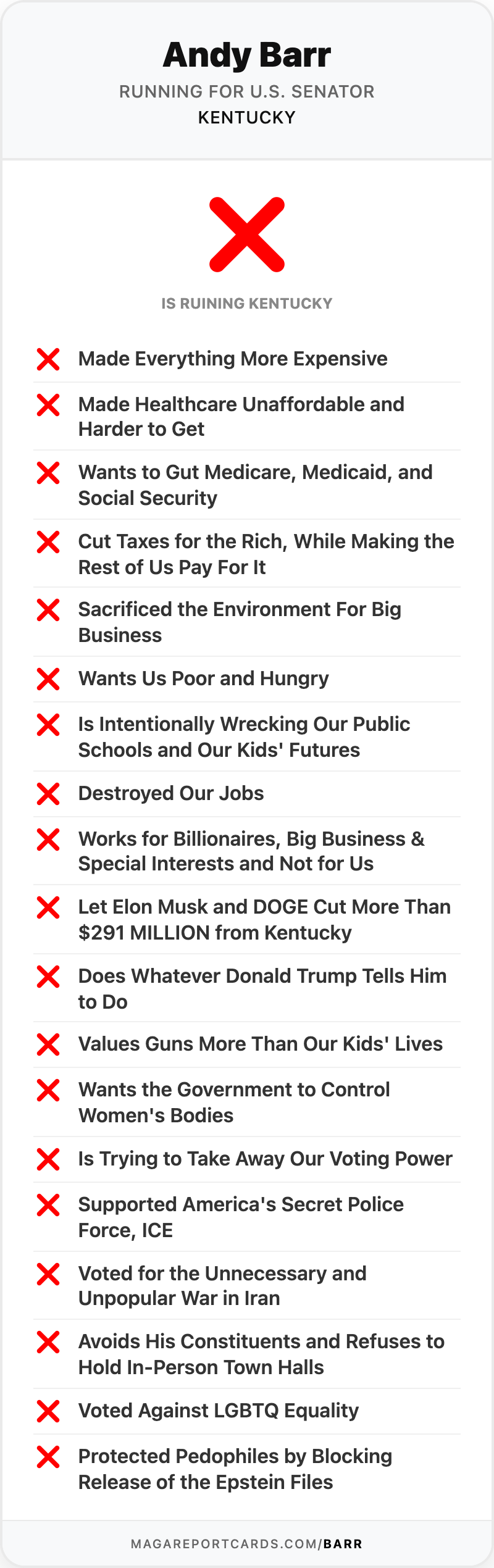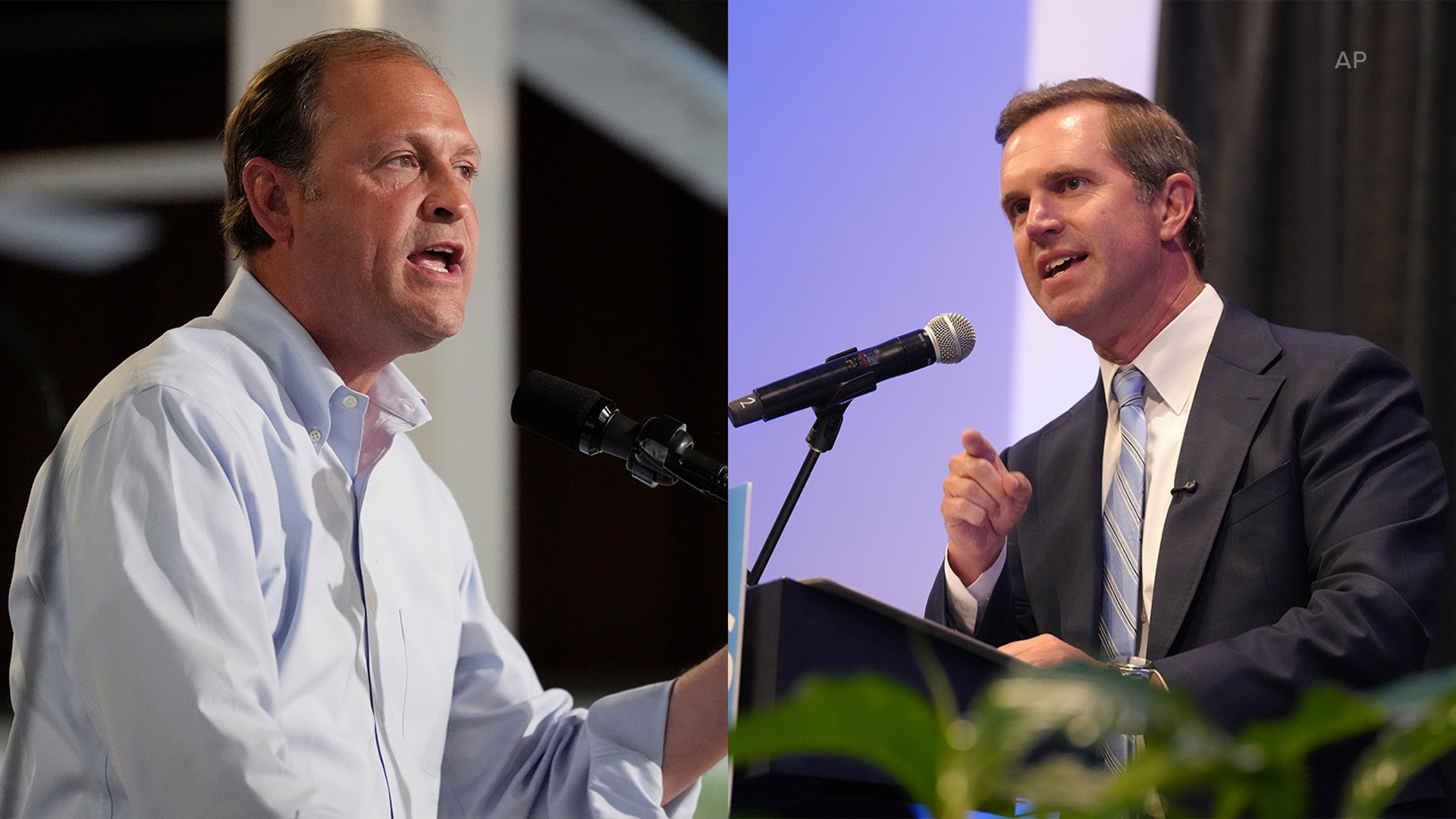
Andy Barr has represented central Kentucky in Congress since 2013. He is now running for the U.S. Senate.
Governor Andy Beshear has said for more than a year that 35 Kentucky rural hospitals are at risk of closing because of the budget bill Republicans passed in 2025. On August 25, 2026, Barr sent him a letter demanding that he produce his evidence. Barr wants the receipts, hospital by hospital, and wants Beshear to "publicly correct the record" if he can't produce them.
Two days later Beshear answered. He called the letter misleading and inaccurate, and then said the part Barr's letter never mentions.
The vote the letter leaves out
Barr's letter runs to a list of demands and several hundred words about what the governor should have to prove. It does not mention that Barr voted for the bill.
Beshear did mention it.
"Doing the president's bidding, [he] cut $21 billion over 10 years in Medicaid funding for Kentucky. Of course it's going to force closures where the margins are the smallest; that is just basic math."
Kentucky is not a random example. When the bill passed, KFF's analysis found it would hit Kentucky's rural health care harder than any other state in the country. The Kentucky Center for Economic Policy projects about 210,000 Kentuckians will lose Medicaid coverage, and rural Kentucky will lose $12.3 billion in Medicaid spending.
Barr's response to all of that, at the time, was that the law was "protecting and strengthening Medicaid for Kentuckians who truly need it — not ineligible recipients or illegal immigrants."
"They're still open"
Barr's central argument is that the warnings have not come true. He put it this way after Beshear responded:
"Medicaid spending is rising year-over-year, Kentucky's $212.9M is year-one funding, not five-year funding, and all 35 hospitals he said, 'will close' are still open."
Read that again. The cut Beshear describes runs over ten years. The law was signed a little over a year ago. Barr's evidence that a decade of cuts will not close hospitals is that the hospitals have not closed in the first year.
The other half of the argument does the same trick with a bigger number. Barr's letter notes that federal Medicaid and CHIP spending is projected to rise from $668 billion in 2026 to $892 billion in 2036. That is true, and it is beside the point. Health costs and enrollment both grow on their own. The cut is measured against what would otherwise have been spent — and in Kentucky that is $12.3 billion out of rural Medicaid and coverage gone for about 210,000 people. A budget that grows more slowly than the need it covers is still a cut to the person who loses coverage.
The fund he keeps pointing at
Barr's letter is built around $212.9 million Kentucky received from the Rural Health Transformation Program — the $50 billion fund Republicans created in the same bill. If hospitals are really in danger, Barr asks, why doesn't Beshear's plan spend the money on those 35 hospitals?
Beshear's answer is that he isn't allowed to.
He said Trump administration officials published an op-ed in USA Today when the program launched, telling states plainly that the fund was not for propping up struggling hospitals and that plans routing money to rural hospitals would not be approved. A Kentucky health official testified in June 2026 that the federal government had set strict rules demanding systemic change rather than more money for existing models.
"Next time before firing off letters, Barr should do a quick Google search," Beshear said. "Because you can find all of those statements, understand where money can and can't be sent from the administration that he supports."
This is not a Kentucky quirk. The fund covers roughly a third of the rural damage the same law does — $50 billion against $137 billion cut from rural Medicaid, by KFF's estimate — and the law never required the money to reach rural hospitals at all.
Barr is also not the first Republican to vote for the cuts and then campaign on the fund. Jake Ellzey of Texas announced a "historic investment" in rural health care from the same program he voted twice to pay for with Medicaid cuts. Mark Alford of Missouri voted for the bill and then, nearly eight months later, introduced legislation to keep rural hospitals open.
What the hospitals themselves say
Barr's letter attacks the source of the 35-hospital number, arguing that the Sheps Center analysis identified financially vulnerable hospitals nationally and never concluded that Kentucky's would close.
Beshear pointed him to the hospitals' own trade group. That group, Beshear said, "has been clear in their warnings, even stating that our state faces the highest number of rural hospitals at risk of shutting down [in] the country." Beshear said 350,000 Kentuckians would lose health coverage and 20,000 health care workers could lose their jobs.
A spokesperson for Barr said his office has talked with the association and continues to work with it, and that the group endorsed the House version of the bill — the version the Sheps Center analyzed. The spokesperson also said the association raised concerns about Senate changes, and that Barr's office helped preserve state-directed payment rates worth an additional $5.2 billion for Kentucky hospitals.
That is an admission, not a defense. The bill got worse for hospitals in the Senate. Barr voted for the final version anyway.
The short version
Andy Barr voted for a law that Governor Beshear says cuts $21 billion in Medicaid from Kentucky over ten years, in the state KFF found would be hit hardest in the country, with about 210,000 Kentuckians projected to lose coverage. More than a year later he wrote the governor demanding proof that rural hospitals are in danger, and offered as his own evidence that none of them have closed yet. His letter never mentions his vote.
Source
Margaret Vancampen, WHAS11: "Beshear, Barr trade barbs over Medicaid cuts to rural hospitals" (August 27, 2026). Photo credit AP/WHAS11 News.