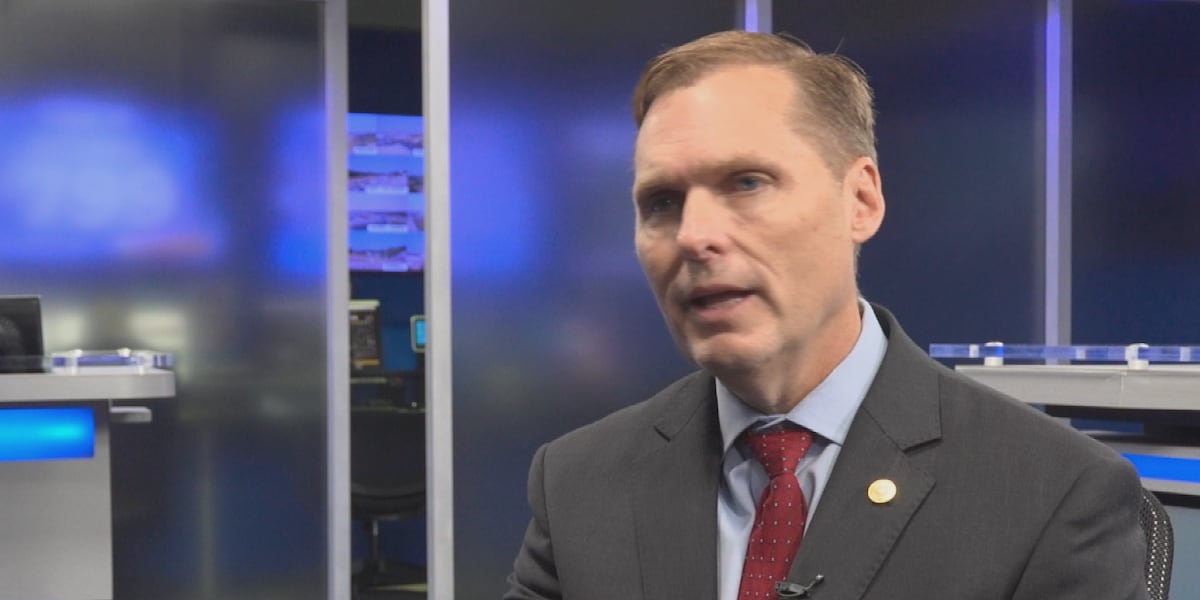
On August 7, 2026, during the House's August recess, Michael Guest was back home in Mississippi meeting with health care providers. The subject was money for rural hospitals.
He told WDAM that Mississippi is getting $206 million this year from a $50 billion federal rural hospital stabilization program, and that he wants to make sure local and rural hospitals know how to apply and that the program works the way it's supposed to.
That's a fine thing for a congressman to do. It's also worth knowing where that $50 billion came from, and what came with it.
The fund is a piece of the bill that cut the hospitals
The Rural Health Transformation Program was created by Trump's budget bill — the same law Guest voted for on July 3, 2025, and the same law he and Homeland Security Committee Chairman Mark Green put out a press release celebrating the day it passed.
It appropriates $10 billion a year for five years, 2026 through 2030.
Here is what the rest of that law does, according to KFF's analysis of it:
- $911 billion cut from federal Medicaid spending over ten years.
- $137 billion of that comes out of rural areas specifically.
- The $50 billion fund offsets about 37% of the rural cuts — a little over a third — and about 5% of the total.
So the program Guest is promoting replaces roughly one dollar in three of what the same bill takes out of rural health care. And it runs for five years, while the cuts run for ten.
And the money doesn't have to go to rural hospitals
This is the part that doesn't make the press release.
Half the $50 billion is split equally among every state with an approved application — the same amount to each, regardless of how many rural hospitals it has or how many people live in them. The other half goes out on an approach CMS determines, within broad requirements.
And KFF found that the law doesn't actually require the money to reach rural areas. States have to spend it on at least three of ten permitted purposes, and as KFF put it, "most of the permitted uses in the list above do not specify that the funds would need to go to rural areas" — meaning dollars can flow to urban and suburban regions with federal sign-off.
That is the program Guest is asking Mississippi's rural hospitals to apply to.
What Mississippi actually lost
Almost a quarter of this state — 714,600 people, 24.2% of the population — was on Medicaid in 2024. Mississippi is one of the four states with the lowest median household income in the country.
The budget bill Guest voted for is projected to cost Mississippi $2 to $4 billion in federal Medicaid funds over the next decade, and the Center for American Progress puts 115,000 more Mississippians without insurance by 2034 — a figure that counts both the law's own cuts and the enhanced ACA tax credits Congress let expire alongside it.
Against that: $206 million in year one.
People told him what would happen. Some of them were standing outside his office.
Nobody had to wait five years to find out. On July 3, 2025, the day of the vote, protesters gathered outside Guest's office in Brandon asking him to vote no. He voted yes that afternoon.
Mississippi's Bennie Thompson, the only member of the delegation to vote against it, said this about his own district:
"It's a bill that takes food out of children's mouths, strips health care from our seniors, and makes college unaffordable for working families, so the wealthy can get another tax break. In Mississippi's Second Congressional District, this means shuttered hospitals, empty grocery carts, rising bills, and dreams deferred."
Ten days after Trump signed it, faith leaders rallied outside Cindy Hyde-Smith's and Roger Wicker's Jackson offices, asking Mississippi's senators to take back the support they had already given. By then Guest had voted yes and the bill was law.
This is a pattern, not a Mississippi thing
We keep writing this same post about different Republicans, because they keep running the same play: vote for the cut, then campaign on the fund that partially offsets it.
Shelley Moore Capito cast one of the 50 Senate votes for the bill and then signed on to legislation to prevent rural hospital closures. Cindy Hyde-Smith — Guest's own senator — told Mississippi "Medicaid is not going anywhere," voted to cut it, and started cosponsoring rural hospital rescue bills.
The vote is the thing that changes people's lives. The follow-up is the thing that changes the headline.
What to ask him
If Guest comes to your town this August to talk about the $206 million, the questions write themselves:
- The fund covers about a third of what the same bill takes out of rural health care nationally. What happens to the other two-thirds?
- The fund runs five years. The cuts run ten. What's the plan for years six through ten?
- The law doesn't require this money to go to rural hospitals. Will you push for Mississippi's share to be spent on them?
- 115,000 more Mississippians are projected to be uninsured by 2034. Which part of the $206 million covers them?
He's been in Congress since 2019, and in the same WDAM interview he talked about the spending bills as his own committee's work — "we've been able to pass all 12 of the appropriations bills out of committee. A big accomplishment." He knew what was in the budget bill. He put out a statement celebrating it.
Handing out a fraction of what you took isn't relief. It's change from your own wallet.
Source
Rep. Guest visits Mississippi district, discusses Washington priorities — WDAM, August 7, 2026. Photo: WDAM.