In a press release the Picayune Item ran on August 3, 2026, Cindy Hyde-Smith announced she had cosponsored a new bipartisan bill to help rural hospitals stay open. It's called REH 2.0, and here's how she described it:
"We're trying every option we can to give rural hospitals a better chance to stay open."
Every option. Hold on to that phrase, because there was one option she had a year earlier, and she voted the other way.
April 2025: "Why is everyone's head exploding?"
In April 2025, Mississippians were hearing that Washington was about to cut Medicaid, and some of them went looking for their senator. Three of them found her at a Ridgeland Chamber of Commerce event.
Hyde-Smith did not appear to enjoy the conversation. According to people who watched the exchange, she told them:
"Medicaid is not going anywhere. Nothing is going to happen to Medicaid. Why is everyone's head exploding? I can't understand why everyone's head is exploding."
Then a staffer moved her along.
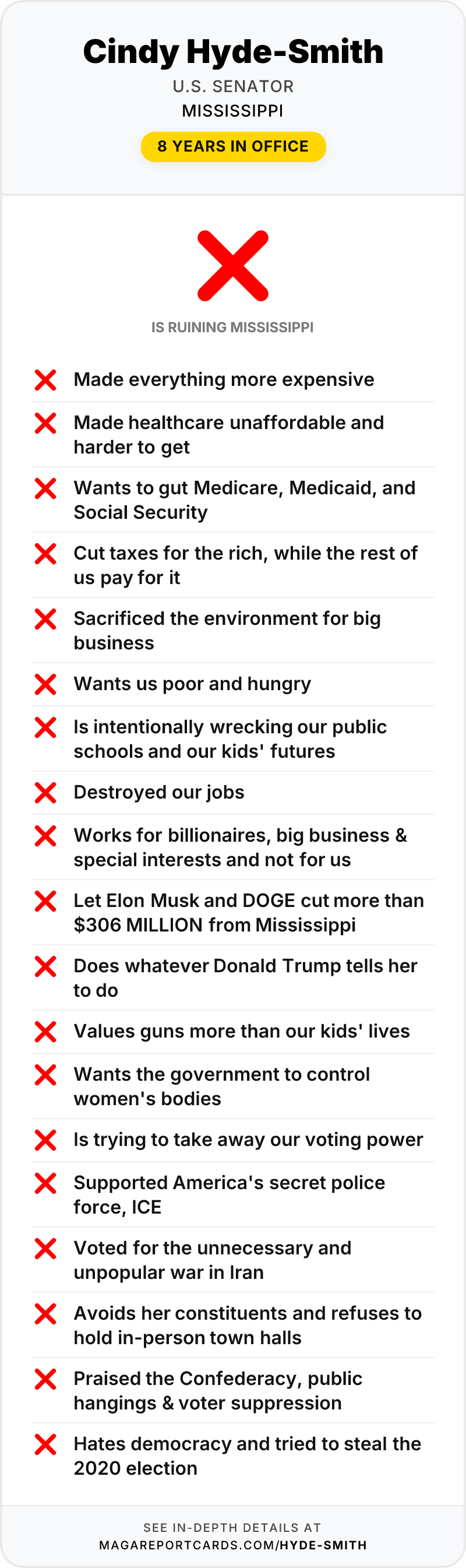
This was not a small question in Mississippi. About 714,600 Mississippians — 24.2% of the entire state — were on Medicaid in 2024. Nearly one in four people. When a Mississippi senator says nothing is going to happen to Medicaid, that is a promise to a quarter of the state.
July 2025: she voted to cut it
Two months later, the Senate passed Trump's budget bill — Medicaid cuts, food aid cuts, and tax breaks — on a 50-50 tie broken by Vice President JD Vance. Hyde-Smith voted for it.
Because that vote was 50-50, there is no hiding in the crowd. Any single senator switching would have killed it. She was one of the votes that made it law.
What it does to her state:
- Mississippi is projected to lose an estimated $2–$4 billion in federal Medicaid funds over the next decade.
- An estimated 115,000 more Mississippians are projected to be uninsured by 2034 — a figure that counts both the law's health provisions and the separate expiration of the enhanced ACA premium tax credits.
And the people who tried to tell her so in advance couldn't get to her. Constituent groups made three separate trips to her Jackson office in the months before the vote. Each time they were either locked out or given a few minutes with a staffer.
February 2026: the bill comes due for the hospitals
Rural hospitals run on thin margins. Medicaid reimbursements account for nearly 10% of net revenue at the typical rural hospital — about $3.9 million a year — while the national median operating margin for rural hospitals is 2.0%. When that money shrinks, the hospital is what closes.
In February 2026, the health care advisory firm Chartis published its annual Rural Health State of the State analysis. The findings:
- 417 rural hospitals nationwide are now vulnerable to closure.
- Twenty-four of them are in Mississippi.
- 41.2% of all rural hospitals are operating in the red. In states like Mississippi that never expanded Medicaid, it's 52.2% — more than half.
- Chartis estimates rural hospitals face nearly $140 billion in expected losses from Medicaid-related cuts.
Mississippi is already the extreme case. The state has the highest percentage of rural providers in the country that have stopped offering general surgery — 44%. When the surgery stops, the hospital is usually not far behind, and the next ambulance ride gets an hour longer.
March, May, August: the rescue bills
Now look at what Hyde-Smith has been doing since the cuts passed.
- March 2026 — she backed a bill to improve rural emergency care services at health centers and clinics.
- May 20, 2026 — the Senate passed Chuck Grassley's Rural Community Hospital Demonstration Reauthorization Act, which she cosponsored, extending a Medicare payment-model program for five more years. "This is an important bill to sustain a program that has a proven track record of helping steady the finances of rural hospitals so they can keep their doors open," she said.
- July 29, 2026 — REH 2.0, Jerry Moran's bill, which she cosponsored, widening eligibility for the Rural Emergency Hospital program so more hospitals can qualify, including some that already closed.
Six Mississippi hospitals are enrolled in that demonstration program: Greenwood Leflore Hospital, Magee General, Wayne General, Anderson Regional Medical Center in Meridian, Highland Community Hospital in Picayune, and Marion General in Columbia.
Nobody should sneer at those bills. Reauthorizing a payment demonstration is real, and the hospitals in it are real. But look at the scale honestly. On one side, a vote that pulls billions of federal dollars out of Mississippi health care over a decade and, together with the expiring ACA tax credits, is projected to leave 115,000 more people uninsured by 2034. On the other, tweaks to the eligibility rules of existing programs — worth having, nowhere near the size of the hole.
You cannot vote to drain the pool and then present yourself as the lifeguard.
The pattern
This is the shape of the whole thing. Vote for the cut in Washington, where the party is watching. Announce the patch back home, where the voters are.
She is not alone in it. Derrick Van Orden voted to cut Medicaid by $900 billion and then asked for credit for winning Wisconsin an exemption. Gabe Evans insisted the budget bill didn't cut Medicaid at all and called the warnings "fear mongering" — and a year later nurses named 12 Colorado hospitals at risk. Same script, three states.
What makes Mississippi's version worse is the arithmetic underneath it. This is the state that ranks 48th out of 50 on the measures we track, with a quarter of its people on Medicaid and more than half its rural hospitals losing money. It had as little room as any state to absorb a hit like this, and its senator cast a deciding vote for it two months after telling constituents to their faces that nothing was going to happen.
The next time a hospital in Mississippi closes its doors, the press release announcing a bill to help rural hospitals will already be written.
Source
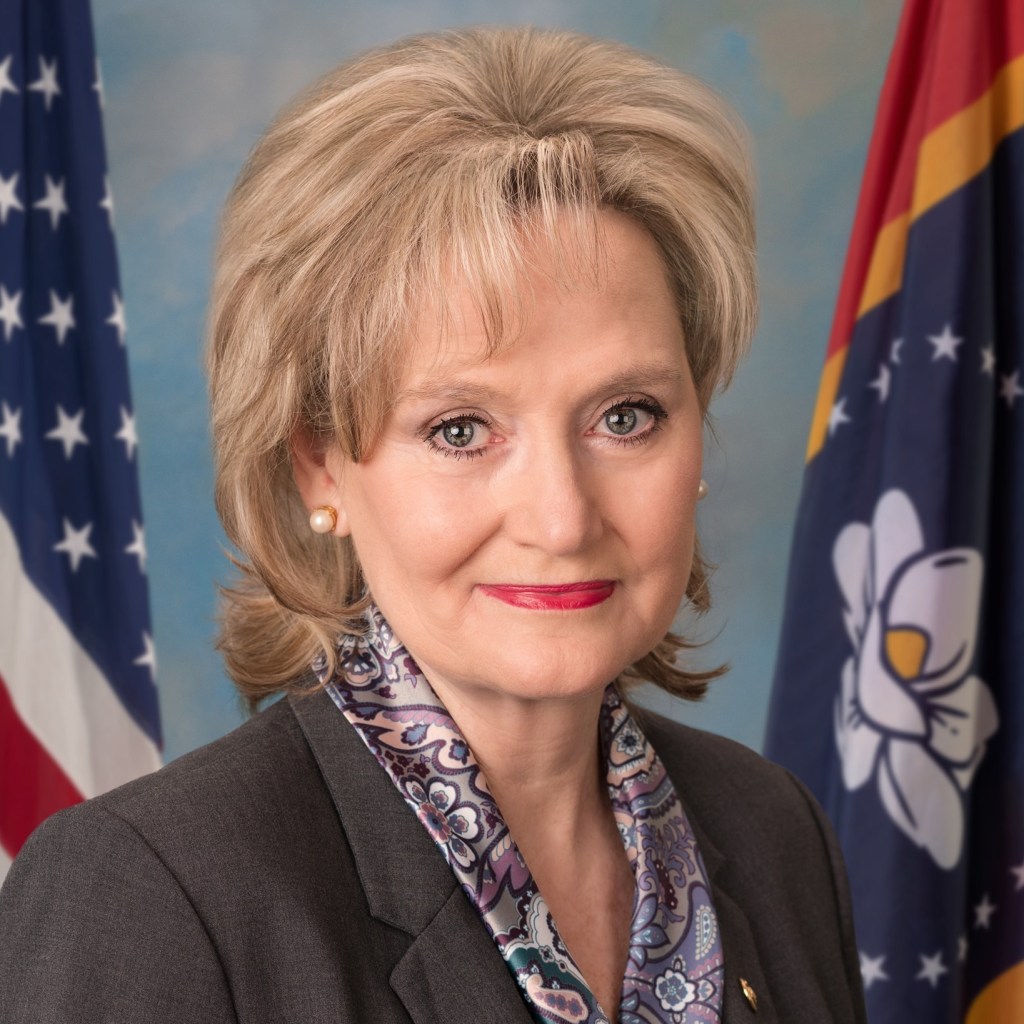
Hyde-Smith cosponsors new bipartisan legislation to strengthen rural hospitals — Picayune Item, August 3, 2026. Photo: official U.S. Senate portrait.