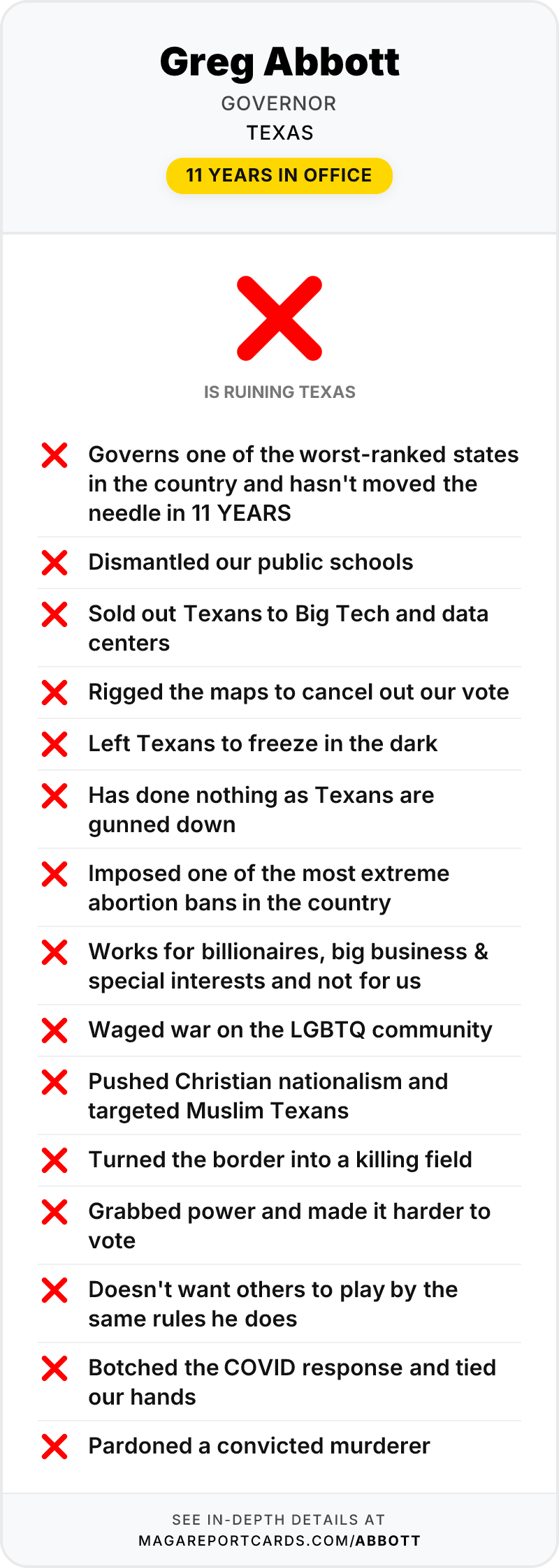
On August 24, 2026, Greg Abbott sent a letter to the Texas Department of Insurance ordering it to bring down what Texans pay to insure their homes. He explained why in a single sentence.
"The average annual homeowners' insurance premium in Texas has risen 79 percent in six years," Abbott said. "High insurance costs hit Texas families hard."
That is his number, not ours. Six years is 2020 through 2026. Abbott has been governor of Texas for every month of it, and for five years before that.
What Texans are actually paying
The Federal Reserve Bank of Dallas ran the comparison in April 2026. The median Texas homeowner paid 60% more for home insurance in 2024 than in 2019. Nationally, the increase over those same years was 30%. Texas homeowners absorbed twice the national rate of increase.
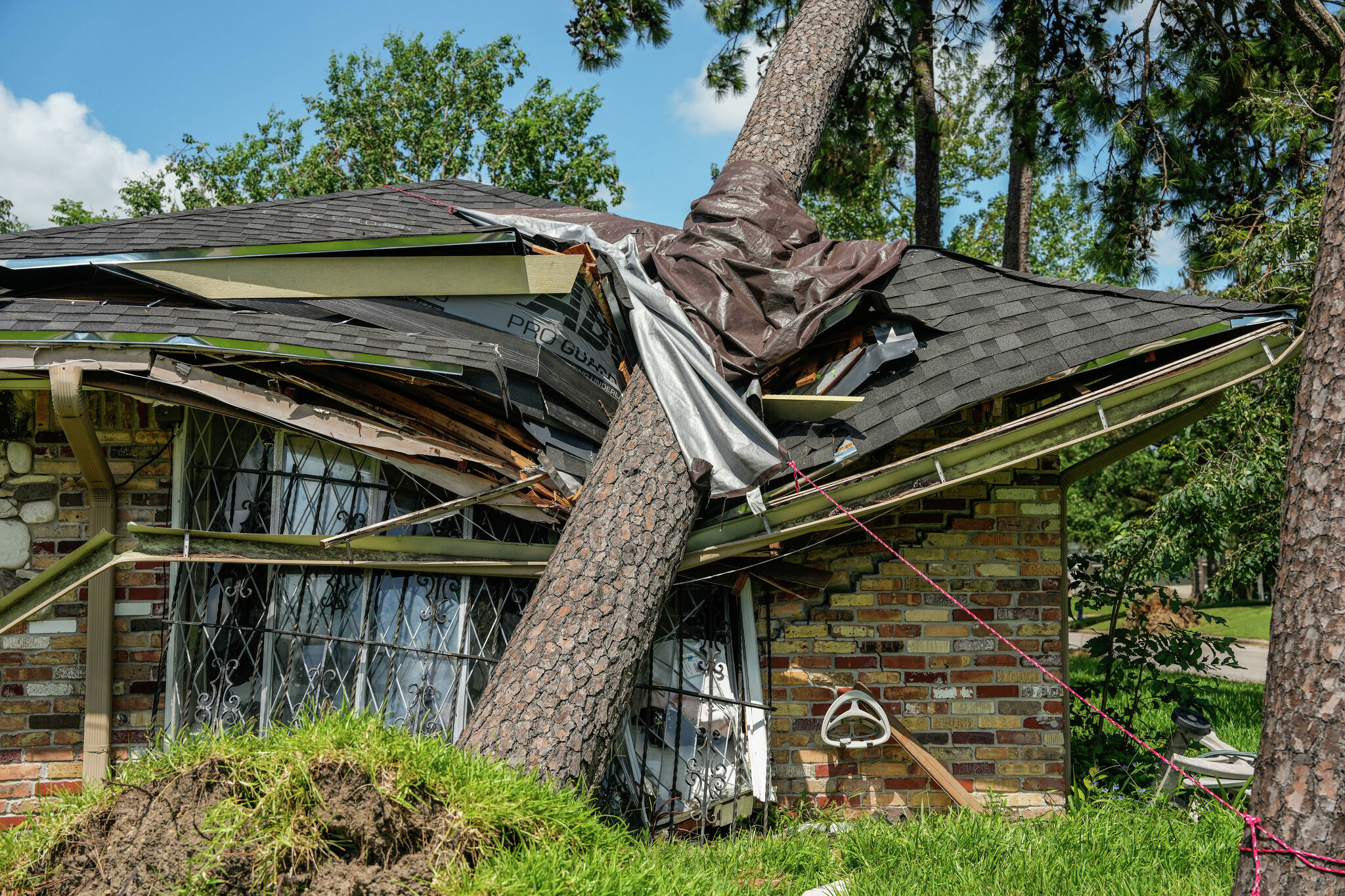
The Dallas Fed pointed at three causes, none of which are anybody's fault: construction costs after the pandemic, more severe weather, and the rising price insurers pay to insure themselves. Billion-dollar disasters in Texas grew 250% between 2017 and 2024.
So nobody is claiming a governor can stop hurricanes. The question is what the state did with the years in between, and there is a clear record of that, because in 2025 Texas lawmakers tried twice.
Both fixes died in 2025
Heading into the 2025 session, lawmakers said home insurance would be a priority. Two serious bills came out of it, one from each chamber, both authored by Republicans.
The roof bill. State Representative Tom Oliverson, a Cypress Republican, wrote House Bill 1576 to create a state grant program helping homeowners rebuild roofs to a national standard called Fortified, the kind that survives a storm instead of becoming a claim. The House passed it on April 30, 2025, by a tally Texas Policy Research recorded as 120-21. It went to the Senate Business and Commerce Committee the next day and never got a hearing. Oliverson asked budget writers for $500 million to start the program. They gave him nothing.
The insurance industry was not the obstacle. At the House hearing on Oliverson's bill, insurers overwhelmingly supported creating the program.
The rate bill. State Senator Charles Schwertner, a Georgetown Republican, wrote Senate Bill 1643 to require insurers to get approval before raising rates more than 10%. The bill's own subject line names what Texas does not currently require: prior approval of a rate increase. Schwertner also filed a bill to put the insurance department under a three-member commission that would include a consumer advocate, saying it would "return consumers to the forefront of their mission."
Both of Schwertner's bills passed the Senate over strong industry opposition. Both stalled in a House committee. His rate bill was left pending on May 20, 2025 and died there. The chairman of the House insurance committee, Representative Jay Dean, did not respond to the Houston Chronicle's interview request about it.
Oliverson, a Republican describing his own party's session, put it plainly: "I would argue that nothing was done to lower property and casualty rates for the average homeowner."
He went further. "I would think that people back home may look back on it and say that one of the major missed opportunities of this session is that we failed to act," he said. "And as a result, people got zero relief for the rising cost of insurance."
Insurance was not one of Abbott's seven emergencies
A Texas governor gets a specific power at the start of every session. He names emergency items, and lawmakers can pass those in the first sixty days, before anything else moves. It is the strongest signal a governor sends about what he actually wants done.
On February 2, 2025, Abbott named seven: property tax relief, education savings accounts, teacher pay, water infrastructure, bail reform, career training and a state cyber command.
Home insurance was not on the list. By then Texas premiums had already risen sharply, and the state was still paying for Hurricane Beryl, which had torn through Houston the previous July.
The session ended in June with both big bills dead. Lawmakers did pass smaller consumer changes, barring insurers from raising a widow's rates after a spouse's death and making them refresh a credit report used in underwriting. Neither touches what a rate can be. Abbott then called lawmakers back that summer, which is a power only he holds, and only he sets the agenda for. His July 9 call carried 18 items: flood warning systems, redistricting the state's congressional map in the middle of the decade, hemp THC regulation, a bathroom bill, abortion pill restrictions, property tax relief. Not one of the eighteen was about insurance. Lawmakers sat through two special sessions that summer on the agendas he set.
Texas is the only Gulf Coast state that doesn't do this
The Fortified idea Oliverson was pushing is not experimental, and Texas is the outlier for not having it. Every other Gulf Coast state offers homeowners some combination of grants and required insurance discounts for building to withstand storms. Texas offers neither, despite leading the country in losses from catastrophic weather.
Alabama pairs grants for stronger roofs with a legal requirement that insurers discount the policies on them. Experts credit that program with stabilizing Alabama's home insurance market.
Now it is an election year
Abbott's August 24 letter went to a commissioner he chose. Amanda Crawford was appointed Texas insurance commissioner by Abbott in January 2026; the governor names whoever runs that department. Nothing in the five directives he issued required a legislative session, a committee chairman or a vote. He asked the department to count Fortified roofs in rate calculations, stop insurers from denying policies over a home's age, ban the practice his own order calls "price optimization," which it defines as insurers using personal data unrelated to insured risk to set prices, start a fraud task force, and study inflated claims costs.
Eleven days later, on September 4 in Lubbock, he built it into a campaign platform. Alongside a plan to cut property taxes in half, Abbott pitched a fortified roof program and a good-driver discount as his answer to insurance costs.
The roof program is Oliverson's, the one the Senate killed. Abbott's version puts $400 million behind it and offers up to $10,000 per homeowner. The savings his own proposal claims are up to 8% on an annual premium.
Eight percent, against 79%.
The timing keeps repeating
This is the fourth time we have watched Abbott run the same sequence.
He spent years selling Texas to data centers, then announced a pause and an audit in August of an election year, with the findings due 37 days after Texans vote. He is running on cutting property taxes in half after eleven years in which statewide property tax levies rose from $51.2 billion to $89.4 billion. And he wants to break up the San Antonio utility that says it has the cheapest residential rates in Texas, while electricity companies and their PACs have given his campaign at least $230,000.
Each one arrives the same way. A problem builds for years while he holds the office that could act on it, and the action shows up in the campaign.
What the record shows
Greg Abbott says the average Texas homeowner's insurance premium has risen 79% in six years, all six of them on his watch. In 2025 his own party's legislators passed a roof-hardening bill through the House 120-21 and a rate-approval bill through the Senate, and both died in committee in the other chamber. Abbott named seven emergency items that February and eighteen special session items that July, and homeowners insurance was on neither list. In August of an election year he ordered the commissioner he appointed to act, and in September he began campaigning on a grant program his own Legislature had already killed, one his proposal says would save homeowners up to 8%.
Source
Mateo Rosiles, USA TODAY NETWORK, Texas Gov. Abbott pitches 50% property tax cut in affordability plan, September 8, 2026, and the Houston Chronicle's reporting on the 2025 session, Texas lawmakers push off big home insurance relief: 'Nothing was done'.