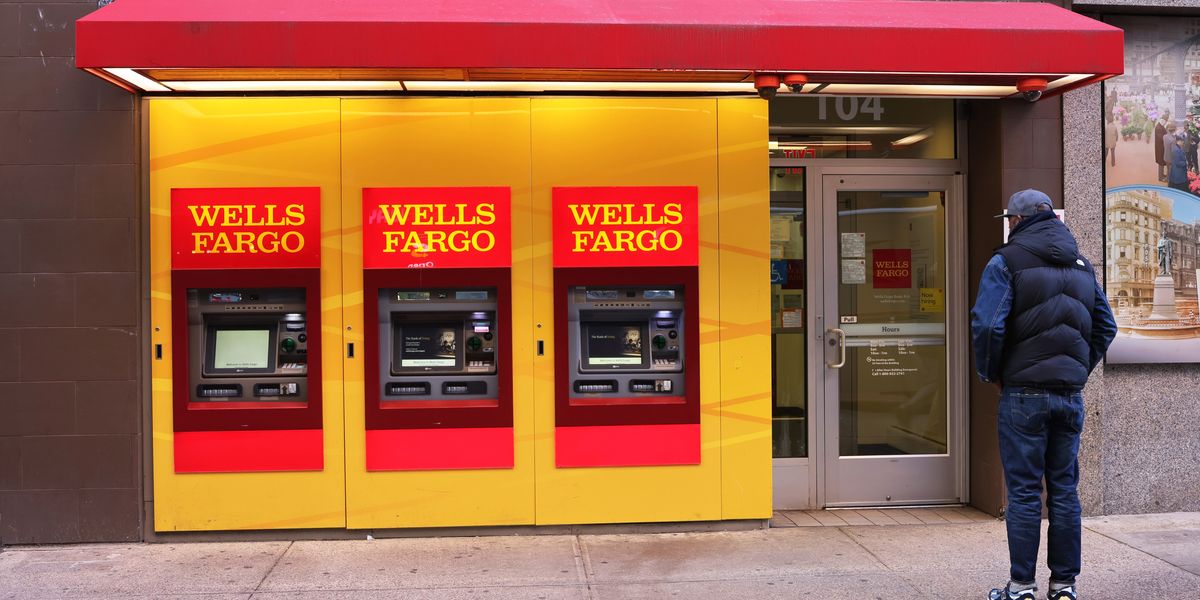
If a bank charged you a fee it shouldn't have, or a debt collector came after money you don't owe, or a credit report has something false on it that's costing you a mortgage rate, there has been one place to go since 2011: the Consumer Financial Protection Bureau's public complaint database.
You write down what happened. The company gets 15 days to respond — on the record, in public. Your complaint goes up once the company answers and confirms you were actually its customer, or after those 15 days, whichever comes first.
The bureau has published more than 17 million complaints filed since 2011 — the written stories since June 2015 — and consumer advocates say nearly 6 million consumers got something tangible out of it: money back, or a mistake on a credit report fixed.
On Friday, Trump's CFPB announced it will stop publishing the part that makes it work — the narratives. The stories. What people actually wrote.
The timing is the story
Complaints against financial companies have not been falling. They have been doubling every year for the last three years, reaching 6.6 million in 2025.
So the agency created to police financial companies is watching complaints against those companies explode — and its response is to make the complaints harder to read.
The CFPB's stated reason is that the narratives have "minimal" utility and present only one perspective on a transaction.
Erie Meyer, the bureau's former chief technologist, answered that directly:
"The CFPB confirms the person is a real customer of that company. The company gets two weeks to respond, on the record, in public."
That is the opposite of one-sided. It is a verified customer, a named company, and a documented reply. If a complaint were unfair, the company already had 15 days and a public microphone to say so.
What the narratives are actually for
Strip out the stories and you're left with a spreadsheet: counts by company, by product, by state. That's not nothing — but it's not what made the database matter.
The narratives are how anyone finds out what kind of thing is going wrong. Three hundred complaints filed under "problem with a credit report" could be three hundred unrelated errors, or it could be one company's software silently reporting closed accounts as delinquent. The only way to tell is to read what people wrote.
That's why the database has functioned as an early warning system. Adam Rust of the Consumer Federation of America says law enforcement agencies, Congress and the press have all been told by those narratives "on what problems are occurring in their communities".
Diane Thompson of the National Consumer Law Center named the obvious motive:
"Hiding the consumer narratives and concealing the wrongdoing of corporations and powerful interests — that's what you do if you're afraid of the truth."
Christine Hines of the National Association of Consumer Advocates pointed at what the system has actually delivered: nearly 6 million consumers getting real relief — refunds, credit report corrections — through the complaint process.
This is the plan, not an accident
This didn't come from nowhere. Republicans have been dismantling the CFPB in daylight and saying so.
At a July hearing, House Republicans didn't push back on the gutting of the agency — they asked how to make it permanent. The question on the table wasn't whether to shrink the bureau. It was how to make sure a future administration couldn't rebuild it.
Killing the public narratives is the version of that you can do without Congress. No vote. No bill. Just a decision to stop publishing.
Who this actually costs
Not banks. Banks have compliance departments and lawyers and their own data.
It costs the person who can't figure out whether the fee on their statement is a mistake or a policy. The person deciding which of two lenders to use. The state attorney general looking for a pattern before opening an investigation. The reporter who would have found the pattern first.
Financial companies have argued for years that the database is unfair to them. The American Financial Services Association, which says it has "pressed this issue with the bureau for a long time", puts it this way: "A complaint is a claim, not a finding." But the design already answers that: the company is named, and it gets its 15 days on the record.
What the companies actually object to is that it's searchable, and that it's theirs to answer.
They just got what they wanted — AFSA and the National Independent Automobile Dealers Association both welcomed the decision. Complaints hit 6.6 million, and the agency that's supposed to be on your side decided you don't need to read them.
Source
Julia Conley, "In Gift to Abusive Wall Street Firms, Trump CFPB Moves to Suppress Consumer Complaints," Common Dreams, Aug. 14, 2026.