More than 95,000 Arkansans signed a petition this spring. They signed it at churches, and at the No Kings march in Little Rock. They were asking for one thing: the right to keep putting measures on their own ballot.
The state of Arkansas counted zero of those signatures.
Not "some were bad." Zero. Secretary of State Cole Jester sent Protect AR Rights a letter on July 30 saying that all 19,924 petition pages they turned in had the wrong name printed across the top, so under state law, "you have submitted zero countable signatures."
The name the attorney general approved was "The Arkansas Ballot Measure Rights Amendment." The name on the sheets left off a word and added a year. That was enough to erase every signature on every page.
Here's what makes it sting: Arkansas requires 90,704 valid signatures to put an amendment on the ballot. Protect AR Rights turned in 95,111. Nobody ever checked whether those signatures belonged to real registered voters, because a heading disqualified every page before verification could start.
Jester did give a second reason in the same letter: after his own office's culling, only 83,211 would have counted — 7,493 short of the number that triggers a check. So everything turns on how that culling was done.
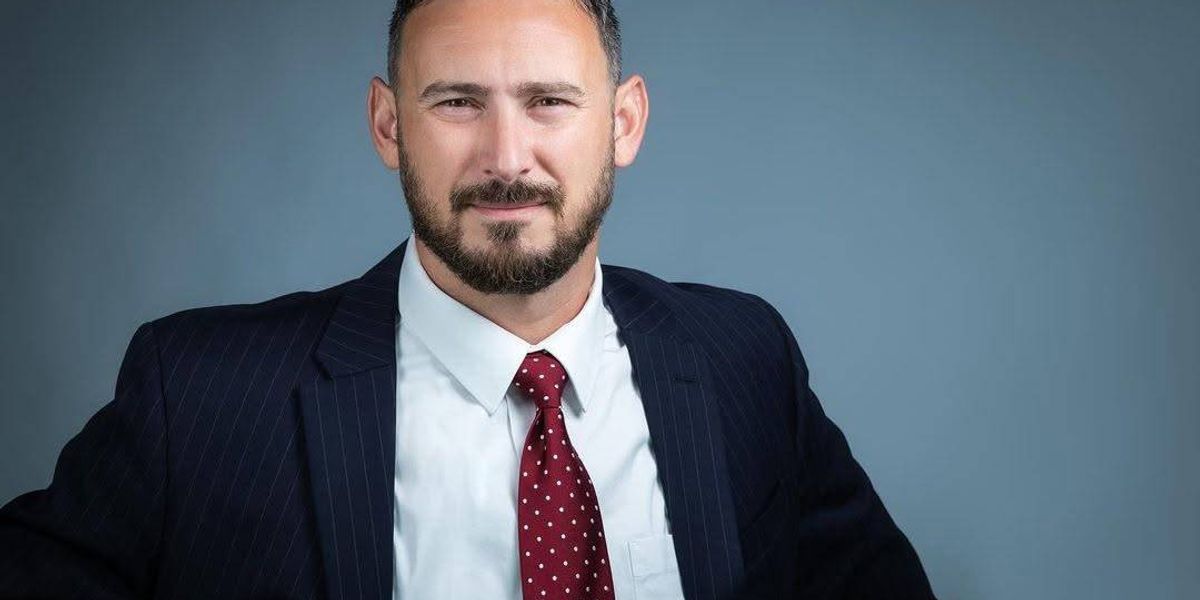
They culled a man's signature for being illegible. It's the one on his driver's license.
Arkansas Times reporter Matt Campbell pulled the 19,000+ pages from Jester's own office and went looking for his name. He found it on page 12,759 — flagged as illegible.
It's the same signature he's used for more than 20 years. The same one on his Arkansas driver's license. The same one on his voter registration form. His printed name sat right next to it, perfectly readable, with his correct birthdate and address. Flagged anyway. The signature directly above his, which he says is harder to read than his own, sailed through.
He wasn't alone. A law professor in Fayetteville. A Democratic congressional candidate. A newly elected county prosecutor. A former state senator. A newspaper reporter. All flagged. Meanwhile a signature reading just "Madison," with no last name at all, was fine.
Then there are the four people who signed with an X — voters who, because of age or disability, had a canvasser fill out the rest of the form for them. Arkansas law explicitly allows this, as long as the canvasser initials the sheet. Every one of those was thrown out too.
How does the state decide? Under oath in federal court this July, Leslie Bellamy, the secretary of state's own director of elections, explained how her office catches two entries supposedly written in the same handwriting:
"We literally are having to eyeball that."
That's the process. Temporary employees, eyeballing it, deciding whose voice counts.
Every lever that did this belongs to Sarah Sanders
Here's the part that doesn't make the headlines. Sarah Sanders didn't personally cull anyone's signature. She didn't have to. She built the machine and she hired the operator.
She signed the laws. In the 2025 legislative session, Sanders signed a package of bills rewriting how Arkansans petition their own government. Her office announced the signings in batches that spring — one, then another. Lawmakers attached emergency clauses so each took effect immediately:
- Act 218 — canvassers must announce that petition fraud is a crime before anyone signs.
- Act 240 — canvassers must view a photo ID first.
- Act 274 — the signer has to read the ballot title in front of the canvasser.
- Act 241 — canvassers must file a sworn affidavit before any signature counts.
- Act 273 — the Secretary of State can disqualify signatures if he decides a canvasser broke a rule.
Read that last one again, then look at what happened in July. Jester used exactly that power, writing that the petition "contains evidence of such laws being violated."
She picked the man holding the scissors. Cole Jester isn't a career elections official. He graduated from law school in 2022, clerked for six months, then spent two years as deputy chief attorney in Sanders' own governor's office. That's the whole résumé. Sanders appointed him Secretary of State in December 2024, describing him this way:
"If my team ever needs someone to do a deep dive on the law, prep for a court hearing, or craft a brilliant defense of conservative legal philosophy, one of the first people I always ask is Cole Jester."
Her lawyer now decides which Arkansans' signatures are real. A month after taking office, he held a Capitol press conference backing the very package of petition restrictions he would later use.
She picked judges on the court that heard the case. That same December announcement named Cody Hiland and Nicholas Bronni to the Arkansas Supreme Court — Hiland having already served, in Sanders' words, his "first 18 months on the Supreme Court." On August 5, seven Arkansans sued in that court, arguing the name change caused no "material confusion" and that Jester's decision "stifled Petitioners' voices."
They also point to a bipartisan law passed in 2025 that says the Secretary of State cannot rule signatures insufficient over a "failure of form." A heading printed across the top of a page is about as pure a question of form as there is.
"We're asking the Arkansas Supreme Court to let the voters decide this ballot measure, not Secretary Jester," said their attorney, Alexander Jones.
Arkansas' Supreme Court is officially nonpartisan. Republican-linked justices hold five of its seven seats.
Update, August 19: the court threw it out in one page, without explaining why
It took two weeks. Just after 6 p.m. on Wednesday, August 19, the Arkansas Supreme Court dismissed the case — Hanna v. Jester, No. CV-26-543 — and ended any chance the amendment had of reaching a ballot this year.
The court did not write an opinion. There is no reasoning to read, no vote to count, no dissent. The entire disposition is a single page from the clerk's office, and the operative sentences are these:
"Expedited consideration granted; respondent's motion to dismiss is granted. Petitioners' motion for temporary restraining order and preliminary injunction denied as moot. Motion of Bill Kopsky, individually and on behalf of Protect AR Rights, a ballot question committee, to intervene is moot."
That last line is the one to sit with. Protect AR Rights had filed to intervene precisely so it could put the individual culls in front of the court — several thousand questionable rejections, the driver's-license signature marked illegible, the four voters who signed with an X. Dismissing the case made that motion moot. The evidence of how the signatures were culled was never reached, because the case died at the heading on the page.
Protect AR Rights says it submitted 108,837 signatures on July 3, the deadline — the smaller 95,111 figure above came from the seven petitioners' complaint. Either raw number is larger than the 90,704 valid signatures the law requires. Neither was ever verified.
Jester put out a statement the same night:
"The rule of law is foundational in this country. As a constitutional lawyer and as the Secretary of State, I fight every day to make sure the law is followed as written. I am proud to announce that the Supreme Court has dismissed the lawsuit against my office, and our petition decision stands."
Protect AR Rights answered:
"We are deeply disappointed that the Arkansas Supreme Court dismissed this case without addressing the serious questions surrounding the Secretary of State's handling of more than 108,000 petition signatures. Those signatures represent Arkansans from across the state who acted in good faith because they believe the ballot initiative process belongs to the people. Signers deserve a complete and transparent review. Instead, the court's decision allows the Secretary of State to shut the door on the process without providing the public a clear explanation of why so many signatures were arbitrarily tossed."
They closed by invoking the Arkansas state motto — Regnat Populus, the people rule.
One more thing happened on August 19. Within the same hour that the docket entry landed, Sanders' office announced that she had appointed attorney Cory Cox as a special justice of the Arkansas Supreme Court, filling in for Justice Barbara Webb, who has been recovering from a fall since May. Cox was chief of staff to Leslie Rutledge, the Republican now serving as lieutenant governor, when she was attorney general, and deputy legal counsel to Sanders' father when he was governor. The state constitution requires the governor to make that appointment when a justice can't serve, and the one-page order in this case names no justices at all — there is no indication Cox took part in it. But this is not the first time the arrangement has drawn an objection: when Sanders named him to hear two special-election appeals earlier this year, the Democratic Party of Arkansas objected that she should not get to pick the justice in a case where she was the defendant.
That is the shape of the whole thing. She signed the laws. She appointed the official who applied them. She has appointed judges to the court that reviews him, and named another to it the evening it ruled. And the ruling itself explains nothing.
A federal judge already called most of it unconstitutional
On July 1, U.S. District Judge Timothy Brooks issued a 62-page order declaring a stack of these laws unconstitutional under the First Amendment — the photo ID requirement, the read-the-ballot-title requirement, the fraud-is-a-crime script, the affidavit rule, and a requirement that sponsors hand the state the home addresses of every paid canvasser.
That last one matters because those lists are public records. In 2024, an opposing group published the personal information of people gathering abortion-rights signatures. Brooks was blunt:
"Doxxing is a 21st Century heckler's veto, and the government should take care not to aid it. Arkansas has taken no such care here."
He was blunter about the fraud excuse. The state's own election director had testified that fraudulent signatures referred to their legal team were never actually pursued.
"Despite Defendant's hand wringing about fraud, the State of Arkansas remains stubbornly disinterested in investigating and prosecuting wrongdoers, instead opting to heap additional burdens on the sponsors and canvassers who do comply with the law."
A federal judge is saying the quiet part out loud: this was never about fraud. If it were, they'd prosecute fraud.
Instead, Jester's office hired a "petition fraud investigator" — a state employee named Patrick Hall who isn't a law enforcement officer and has no authority to arrest anyone. In February he showed up at a Unitarian Universalist church in Little Rock and asked canvassers to see their IDs.
Arkansas didn't invent that move. In 2024, Ron DeSantis sent state police to the homes of Floridians who had signed an abortion-rights petition, and defended it as part of an investigation that had already turned up fraud. Treating ordinary voters as suspects is a habit down there — Florida's attorney general at the time, Ashley Moody, once asked the FBI to investigate people who helped Floridians pay off court fines so they could register.
What Arkansans actually lose
Direct democracy is how Arkansas raised its own minimum wage over the business lobby's objection. It's how Arkansas got medical marijuana over the objection of the people running the state. It is, literally, the tool voters use when the legislature won't listen.
That's why it's being dismantled. The Fairness Project counts more than 200 bills attacking the ballot measure process nationwide since 2025 — and more than 65 in a single month at the start of 2026.
It doesn't have to go this way. In Missouri this month, voters were handed a constitutional amendment written to let any one congressional district veto a citizen-led initiative. They buried it 80% to 20%, and it lost in all eight districts. Missourians got to vote on it. Arkansans never did — their signatures were thrown out before the question could reach a ballot.
This is the third warning on our own about page: they come for your freedom to vote, your freedom to choose your politicians, and your freedom to make change. Arkansas is running all three at once.
The tell
Sanders' pattern here is not subtle. When her own Republican legislature killed her $750 million mega-prison, she recruited primary challengers against the Republicans who stopped her — and lost. When people tell her no, she goes looking for a different door.
And when someone does the job the way she wants it done, she says so out loud. Jester isn't even running to keep the office; he's running for land commissioner in November. Sanders gave him her full endorsement:
"Cole Jester did a fantastic job as my legal counsel, and he has been America's best secretary of state."
America's best secretary of state, in the same year his office threw out 95,111 signatures over a heading and flagged a reporter's driver's-license signature as unreadable.
Sarah Sanders is on the ballot this November. Jester's name will be there too, on a different line. The rest of it — the acts, the appointments, the eyeballing — was never put to a vote at all.
Source
Elizabeth L. Cline, "The ballot initiative process is rigged. Do liberals see that now?", Arkansas Times, August 18, 2026.
Updated August 20, 2026 with the Arkansas Supreme Court's dismissal of Hanna v. Jester:
- Matt Campbell, "Supreme Court dismisses lawsuit challenging rejection of direct democracy amendment", Arkansas Times, August 19, 2026.
- Arkansas Supreme Court, formal order in Hanna v. Jester, No. CV-26-543, August 19, 2026.
- "Arkansas Supreme Court dismisses lawsuit by Protect AR Rights representatives to have ballot initiative verified", KARK, August 19, 2026.
- Ainsley Platt, "Arkansas governor appoints temporary justice to state Supreme Court", Arkansas Advocate, August 19, 2026.