On February 25, 2025, Nick LaLota voted for the House Republican budget blueprint. It passed 217 to 215.
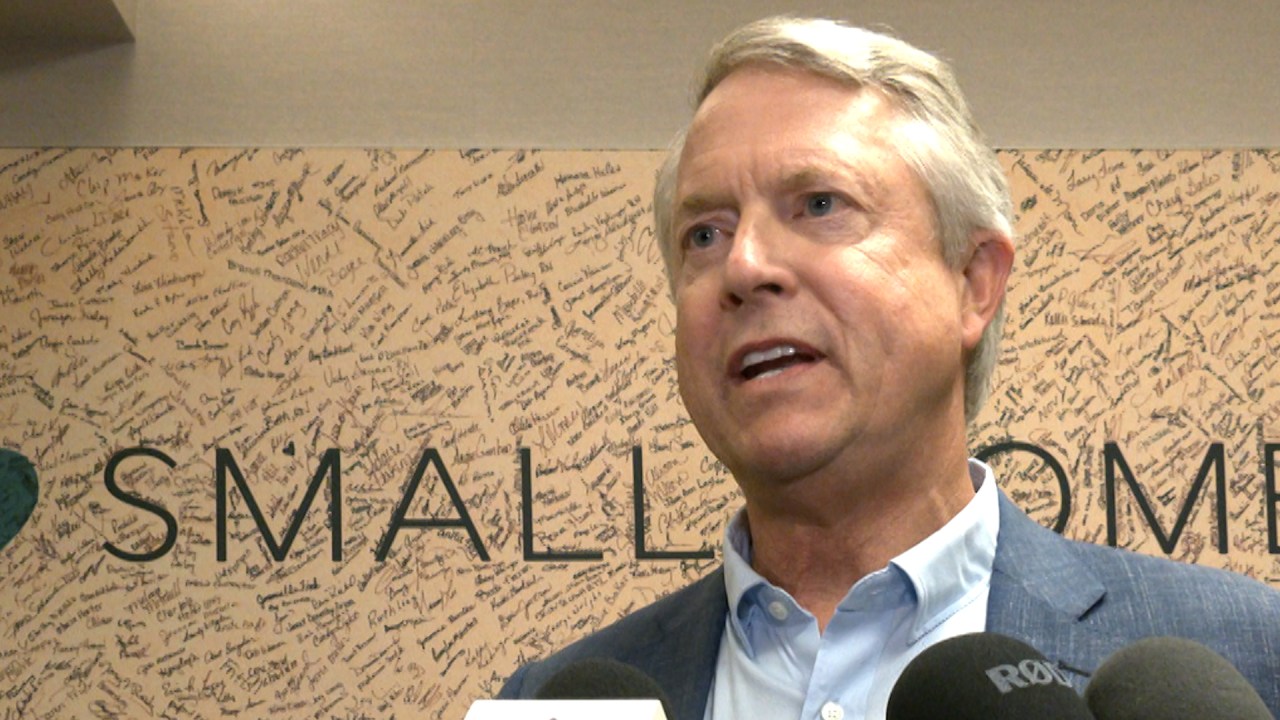
A week later he posted a video for his constituents explaining what he'd done:
"On Feb. 25, I voted yes on a budget resolution that protects Social Security, Medicare, and Medicaid while cutting some spending elsewhere."
In that same video, he told the people of the 1st District to get their information straight from him. His words: "I'll always be honest with you."
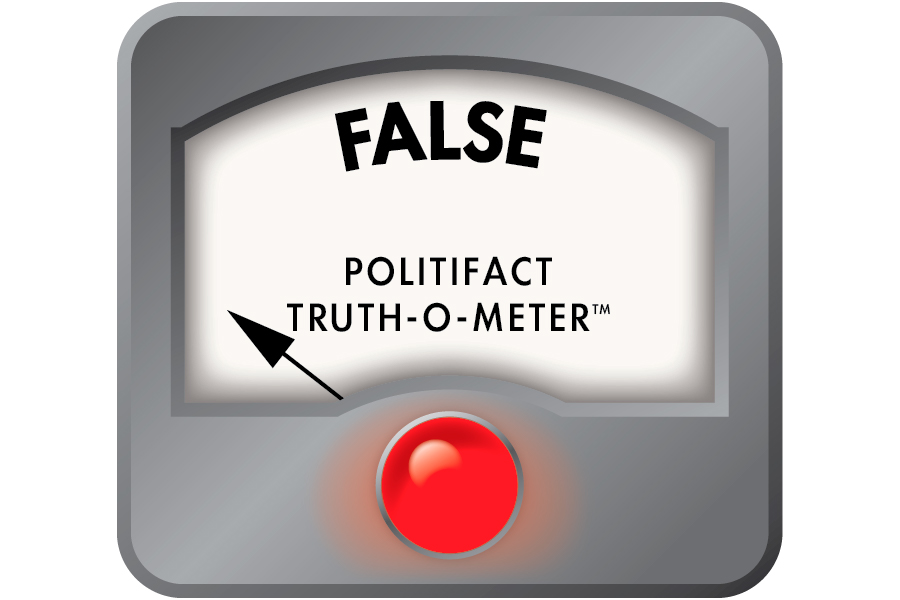
PolitiFact and KFF Health News checked it and rated the claim False. Their finding: the statement "is inaccurate and mischaracterizes laws and the language included in the budget resolution, creating a false impression of what his vote supported."
The word "Medicaid" is not in the document
Here is the entire mechanism of the thing LaLota said protects Medicaid.
The resolution instructs the House Committee on Energy and Commerce to submit proposals "to reduce the deficit by not less than $880,000,000,000 for the period of fiscal years 2025 through 2034."
That's it. As the fact-check put it:
"The 32-word sentence that directs the Energy and Commerce Committee to trim $880 billion over 10 years from programs it authorizes does not include any protections, guardrails, or specific directions for the panel to follow."
The word Medicaid appears nowhere in the resolution. It does not say Medicaid is protected. It does not prescribe any specific action on the program.
What it does is set a number. And the number is the problem.
Of the $8.8 trillion in projected spending under that committee's jurisdiction over ten years — a Congressional Budget Office count that already leaves Medicare out — Medicaid accounts for $8.2 trillion, 93% of it.
Alice Burns of KFF did the arithmetic:
"Even if the committee eliminated all of non-Medicare and non-Medicaid spending, they would still have to cut Medicaid by well over $700 billion."
You cannot take $880 billion out of that committee without gutting Medicaid. Everyone involved knew it. That is what made the sentence a Medicaid cut without ever using the word — and what made LaLota's description of it a false one.
What his office said when asked
PolitiFact asked LaLota's office for the evidence behind the claim. His communications aide emailed a statement saying the resolution makes no cuts to those programs. Instead, he wrote, it
"opens the door to protect Medicaid with common-sense solutions which ensure its availability for those Americans who qualify, including the removal of illegals from the rolls, work requirements for able-bodied adults, and the elimination of waste, fraud, and abuse."
Read that carefully. It is not a defense of what he said. It's a different claim: not that the resolution protects Medicaid, but that it opens the door to a set of policies he prefers.
And the leading item on his list doesn't exist. Federal Medicaid dollars already cannot be spent on undocumented immigrants. Some states, New York among them, cover certain people regardless of immigration status — with state money only.
Burns again: "States cannot use federal funding to cover undocumented immigrants," so removing them "won't do anything for the deficit reduction targets."
Work requirements don't get there either — most Medicaid recipients already have jobs, and the savings don't approach $880 billion.
So the "common-sense solutions" that were supposed to spare Medicaid produce almost none of the money the resolution demands. The rest has to come out of coverage.
Then he voted for the real thing
A budget resolution is a blueprint, not a law. The fair test of what LaLota meant is what he did when the actual bill arrived.
On July 3, 2025, he voted Aye on the last House vote on H.R. 1, Trump's budget bill. It went 218 to 214 — a four-vote margin — and went to the president's desk.
That law made the cuts real.
Using the Congressional Budget Office's analysis of the Medicaid and ACA cuts that were enacted, the Joint Economic Committee's House minority staff projects the district-level damage. For NY-01, LaLota's own district, the figure is 21,673 people losing health insurance by 2034 — 18,673 from the Medicaid provisions and 3,000 more from the marketplace changes.
Twenty-one thousand people on Long Island. From the vote he described as protecting Medicaid.
"I'll always be honest with you"
The reason this one is worth singling out isn't that a politician oversold a vote. It's the frame he chose.
LaLota didn't make this claim in a press release or a floor speech. He made it in a video addressed to his constituents, whose entire premise was that they should trust him over what they were hearing elsewhere — and he put an honesty pledge inside the same message that carried the false claim.
That's the transaction. Come to me directly, don't listen to the noise, I'll always be honest with you. Followed immediately by a characterization of his own vote that a fact-check found created a false impression of what he supported.
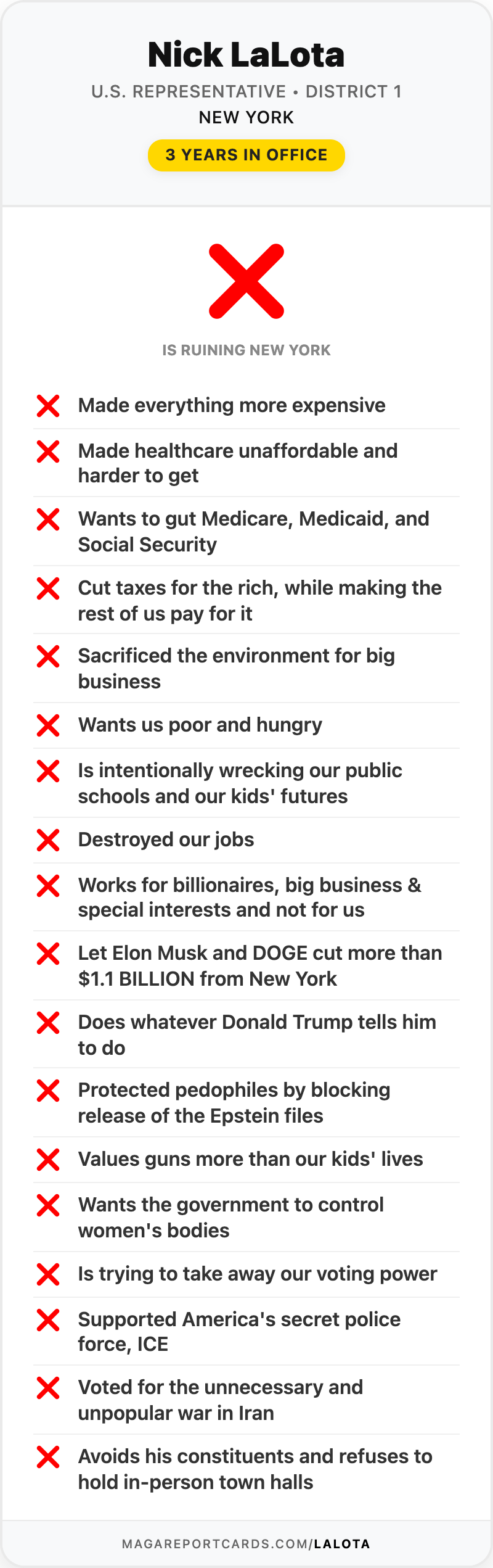
It also fits a habit. He is the congressman who has never held a public, in-person town hall since taking office in January 2023 — only telephone events, one of which took seven questions in under an hour, with the opening question submitted in advance and read aloud by his own staffer, and no follow-ups permitted.
A one-way video where you promise to be honest is a lot easier than a room where someone can ask you what "protects Medicaid" means.
He is not the only one who tried this
The "I voted to protect it" line went out across the party, because the vote was unpopular and the arithmetic was ugly.
In Colorado, Gabe Evans said his Medicaid vote would protect "the people who need it most" and called the warnings "fear mongering" — and a year later nurses had named 12 Colorado hospitals at risk, including in his district. In Maine, Susan Collins ran an ad saying she "stood up for Maine" on Medicaid, leaving out the procedural vote she cast that sent the Medicaid-cutting bill to the floor. We've collected the Republicans with the worst records on health care, and the pattern in every case is identical: vote for it, then tell the district it didn't happen.
LaLota's version came with a fact-checker's verdict attached, in writing, five months before the bill he'd go on to pass.
He had the finding. He voted for it anyway.
We deserve better.
Source
Bill That Congressman Says Protects Medicaid Doesn't — And Would Likely Require Cutting It — Julie Appleby, KFF Health News, published with PolitiFact, March 25, 2025. District figures from the Joint Economic Committee's fact sheet on district-level impacts of the health care cuts, September 2025. Image: PolitiFact Truth-O-Meter via KFF Health News.