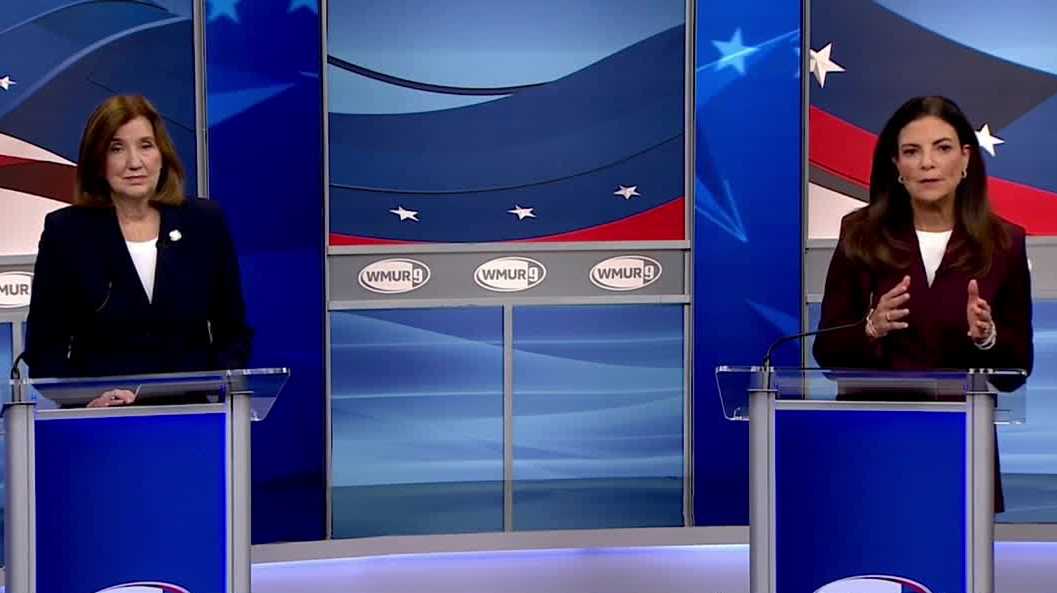
Two years ago, Iowa voted for Donald Trump by double digits. On Tuesday, it elected a Democratic governor, a Democratic U.S. senator and Democrats in three of its four U.S. House seats. Iowa's delegation in Washington goes from six Republicans and no Democrats to four Democrats and two Republicans.
Every Republican on this site who was on the ballot in Iowa lost. All five.
But Republicans still run the Legislature. And on the same ballot, a change to the state constitution passed that will follow the new governor into office.
Here's the good, the bad and the ugly.
The good: Republicans lost almost everything at the top of the ballot
The governor's office. Democrat Rob Sand beat Zach Lahn 55.5% to 44.5%, a margin of about 150,000 votes. Four years ago, Republican Kim Reynolds won with 58.0%. Sand is the first Democrat Iowans have elected governor since 2006.
This matters because it ends more than a decade of Republicans holding the governor's office and both chambers of the Legislature at once. They can't pass whatever they want anymore. Sand has promised to veto any "culture war" bills. Laura Belin of Bleeding Heartland, who has covered the Capitol for years, says that means no new abortion limits, anti-vaccine bills or library rules for the next few years.
Lahn ran as a plain Iowa farmer and a political outsider, but he voted in Kansas as recently as 2022. One of his own ads said "Iowa jobs are for Iowans." Sand kept pointing out that being governor is an Iowa job. By Belin's count, Sand carried 25 of Iowa's 99 counties. Fred Hubbell, the Democrat who nearly won in 2018, carried 11.
The U.S. Senate seat. Democrat Josh Turek beat Ashley Hinson 50.5% to 46.4%, by nearly 56,000 votes. Libertarian Thomas Laehn got 3.1%. Democrats hadn't won a Senate race in Iowa since 2008, and Turek's win helped give Democrats control of the Senate.
Hinson started her campaign promising to be Trump's "top ally" in the Senate. Almost a year later, her message was "Iowa's best bipartisan fighter." The trouble was her record. She voted six times against House resolutions to halt the Iran war, then posted that the war had to end, six days after her last no vote. A majority of Iowa voters saw her as "too supportive" of Trump, according to the AP's voter poll.
Three of four U.S. House seats.
- 1st District. Christina Bohannan beat Mariannette Miller-Meeks 52.8% to 43.6%, by nearly 32,000 votes. Two years ago, Miller-Meeks won this same matchup by 799 votes. Bohannan campaigned on protecting access to health care. Miller-Meeks said in August she hadn't had any business come to her complaining about health costs, after premiums for Iowans on the health care marketplace had gone up an average of 15.3%.
- 2nd District. Lindsay James beat Joe Mitchell 49.5% to 45.6% for the seat Hinson gave up, in a district Trump carried by 10 points. At a debate, Mitchell said he'd vote to repeal the Affordable Care Act and never named what would replace it. Trump rallied with him in Dubuque two days before the election. Dubuque County, which voted for Trump three times, then went for James by about 6.6 points, according to Belin.
- 3rd District. Sarah Trone Garriott beat Zach Nunn 53.6% to 46.4%. Nunn announced a resolution to protect Medicaid and food stamps, then voted for Trump's budget bill anyway. Trone Garriott says her priorities include undoing parts of that bill.
The attorney general. Democrat Nate Willems beat Republican Attorney General Brenna Bird 50.9% to 49.1%. Willems called her fines on polluters a "slap on the wrist." Democrat Taylor Wettach also held the state auditor's office for his party, beating Republican Lt. Gov. Chris Cournoyer with 50.2% of the vote.
The Legislature's supermajority. Republicans won 67 of the 100 seats in the Iowa House in 2024, exactly the two-thirds it takes to override a governor's veto. Democrats flipped 11 of them, so the House goes to 56–44. In the state Senate, they came out one seat ahead, for 32–18. Belin says that even if Democrats lose the special election for Trone Garriott's state Senate seat, Republicans still won't have the votes to override Sand there.
Here's where some of those wins came:
- The Des Moines suburbs. Five of the 11 House flips came here. In north Ankeny, Molly Buck beat Republican Rep. Ryan Weldon 54.7% to 45.2%. Heather Matson won an Ankeny state Senate seat that had been Republican, 56.3% to 43.6%.
- Mid-sized cities. The other six flips came in Marshalltown, Mason City, Clinton, Dubuque, Muscatine and Burlington. Nick Salazar beat three-term Republican Rep. Mark Cisneros in the Muscatine area by just under 500 votes. Belin, who follows these races closely, wrote of being "embarrassed not to recognize the name" on election night.
- Bettendorf. Nikhil Wagle beat Republican state Sen. Scott Webster by 151 votes.
- Council Bluffs. This one didn't flip, but it may be the night's strangest result. Democrat Eric Armstrong stopped campaigning in September because of health problems, and it was too late to replace him on the ballot. Trump carried the district by 8 points in 2024. Armstrong won by 10.
And more than 1.38 million Iowans voted, the most votes ever cast in an Iowa midterm.
The bad: they won, by less
No Republican on this site won in Iowa. But Republicans did not lose everything.
"There's still a red wall out there, and the red wall is called the Iowa legislature," state party chair Jeff Kaufmann told Republicans on election night. He's right that they kept both chambers. House Speaker Pat Grassley promised a "firm firewall" against what he called a "radical left agenda."
The wall has thin spots. Sand says 21 of the House Republicans sit in districts that also picked him for governor. Twenty legislative races were decided by 1,000 votes or less, and one Republican, Rep. Brent Siegrist, held on by 37 votes. Republicans did take one state Senate seat back: Joe Stutting beat Democratic Sen. Mike Zimmer around Clinton, 51.9% to 48.1%.
The Republicans who won statewide and in Congress mostly won by a lot less than last time:
- Chris McGowan kept the open 4th District with 59.1%. Randy Feenstra won that district 67–33 two years ago.
- Paul Pate, the secretary of state, won a fifth term 53.2% to 46.8%. Four years ago he won by 20 points. His opponent attacked him for voluntarily handing personal voter data to the U.S. Justice Department. Pate's read on the night his party lost the governor's office: "I don't think it was a Democrat wave or a Republican wave."
- Mike Naig, the agriculture secretary, won a third term 52.7% to 47.2% over Chris Jones, who ran on cleaning up Iowa's water. Four years ago Naig won by 22 points, and this year he far outspent Jones.
- Roby Smith, the state treasurer, leads Democrat John Norwood 50.3% to 49.6%, or about 9,200 votes in Belin's count. Belin counts Smith as the winner, but as of Wednesday afternoon, the AP hadn't called the race and Norwood hadn't conceded.
The ugly: the rule that follows Sand into office
Iowans ended Republican one-party control of state government on Tuesday. On the same ballot, they made Republican tax cuts much harder to undo.
What Amendment 1 does
Amendment 1 passed 56.3% to 43.7%. It changes the state constitution so that raising the income tax or the corporate tax, or creating a new income tax, takes two-thirds of each chamber: 67 House members and 34 senators. Until now it took 51 and 26.
The rule only runs one way. Lawmakers can still cut those taxes with a simple majority. They can raise the sales tax with a simple majority too.
Lawmakers passed the amendment in 2024 and again in 2026, which is what it takes to reach the ballot. Its supporters were mostly Republicans. Iowans for Tax Relief, a conservative group, spent over $1 million urging a yes vote, according to state records. A coalition of labor, teachers, farmers and anti-hunger groups fought it with a smaller campaign.
What it protects
After several rounds of Republican tax cuts, Iowa has a flat 3.8% income tax. The state is also spending more than it takes in. It has been using its savings to cover a deficit of more than $1 billion, which Republican lawmakers said was planned.
Opponents said the cuts largely helped the highest earners and that the amendment locks them in. "Essentially, they are only protecting the two taxes that can be structured in a way that makes sure that the wealthiest folks in our state and the most profitable corporations pay what they owe," said Anne Discher, who runs Common Good Iowa, the group that led the opposition.
She also warned that the money will get tighter, because the Trump budget bill cuts federal Medicaid funding and hands states more of the cost of running food stamps. Republicans put off the biggest Medicaid cut until after this election. Once the savings run out, she said, it's hard to see lawmakers raising the sales tax enough to fill the gap, "which means, then, they're left with cutting."
Chris Hagenow, the president of Iowans for Tax Relief, called those warnings "scare tactics" and said the budget works if lawmakers keep spending down.
What it means for the next governor
Sand says he'll propose a budget that cuts the deficit at least in half, with ideas like income limits on school vouchers, taxing marijuana and making data centers pay "all of their taxes." One door is now mostly shut. By our math, if all 44 House Democrats and all 18 Senate Democrats voted to raise the income tax on the very richest Iowans, they'd still need 23 House Republicans and 16 Republican senators.
Belin calls the amendment "a serious threat" to Sand and predicts the state budget "will crash sometime in the next three to four years," leaving only deep cuts to public services or a big sales tax increase. Both would be unpopular as he heads toward reelection in 2030. And voters can't go around lawmakers the way they can in most states with similar rules. Iowa has no citizen petition process, or as Discher put it, "no escape hatch."
Sand opposed the amendment, but Belin reports he didn't say how he'd vote until Election Day. Belin wonders whether it could have been beaten if he'd made the case against it.
Hagenow said out loud why his side wanted this. Putting it in the constitution, he told Iowa Public Radio before the election, can "provide that protection from what may happen from the political pendulum or whatever which way the political winds are blowing, and who might be leading that next year."
The rest of the ugly
- Republicans cut the governor's powers before they lost the job. This year, Reynolds signed a law that bars future governors from restricting private businesses or closing places of worship in an emergency, and makes them get the Legislature's approval for changes to election law and rules. Senate Republicans also proposed letting state funding keep flowing if a governor doesn't approve a budget by July 1. Democrats called that a "power grab," and House Republicans killed it. Speaker Grassley said Friday that a special session to limit Sand before he takes office is "not on the table."
- The next auditor starts with a weaker office. A 2023 Republican law took away the auditor's power to go to court to enforce subpoenas and made it easier for state agencies to hide documents from auditors, Belin writes. Wettach wants those powers back. Belin isn't sure this Legislature will give them to him.
- More than 2,000 ballots were left out of the count. An official in the Johnson County auditor's office found about 2,017 absentee ballots on Thursday that weren't in the unofficial results. An audit is due by Nov. 9. State and county officials say no race is expected to change.
- They say the fight isn't over. In his concession, Mitchell warned of winners who "believe in lawlessness" and "believe in socialism," and told supporters, "we're going to have the fight of our lifetime coming up." Lahn told the party, "Right now is when we fight," and closed with, "To the people of Iowa, we'll see you in four years."
What the results show
Iowa Republicans lost the governor's office, a U.S. Senate seat, three of the state's four U.S. House seats, the attorney general's office and 11 state House seats, and they won't have the votes to override Sand's vetoes. All five Republicans on this site lost, including two sitting members of Congress and a third who gave up her seat to run for Senate. Republicans kept both chambers of the Legislature, and Paul Pate and Mike Naig won by far less than four years ago. Voters also approved Amendment 1 with 56.3%, so raising income or corporate taxes now takes two-thirds of each chamber, while the state runs a deficit of more than $1 billion.
Source
First take on Iowa's 2026 election results — Laura Belin, Bleeding Heartland, November 6, 2026. Vote totals for governor, U.S. Senate, U.S. House and attorney general are from NBC News, using Associated Press data, as of November 6, and are unofficial until the state certifies them.