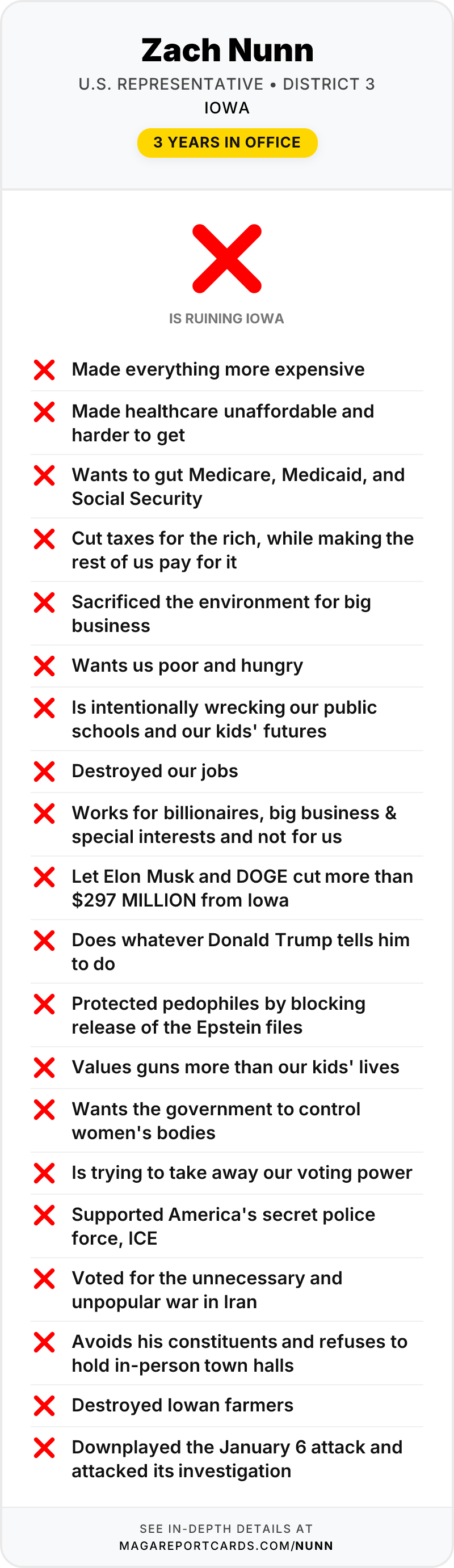
One year ago, on July 4, 2025, President Trump signed HR 1 — the bill he called the "One Big Beautiful Bill." Zach Nunn voted for it. This week, the DCCC marked the anniversary by adding up what that vote has cost Iowa: closed clinics, higher premiums, and thousands of families losing help buying groceries.
But to understand what Nunn did, you have to start two months before that vote — with a promise.
The promise
On May 2, 2025, Nunn stood inside MercyOne Medical Center in Des Moines and announced his "Defending Medicaid and SNAP Resolution." It would block the House from even considering any budget bill that cut Medicaid or SNAP enrollment or benefits for children, seniors, pregnant women, or people with disabilities.
His own words:
"Medicaid gives more than 150,000 people in our communities access to medical care, while SNAP ensures that 60,000 individuals know where their next meal is coming from... my legislation will ensure D.C. cuts do not impact vulnerable Iowans."
The vote
Twenty days later, on May 22, 2025, Nunn voted yes on the very kind of budget bill his resolution was written to block. On July 3, he voted yes again on final passage of a bill whose SNAP cut the Center on Budget and Policy Priorities calls the largest in history.
Three weeks after promising to block cuts like these, he voted for them — and then again in July.
Democrats on the congressional Joint Economic Committee estimate that about 26,300 people in Nunn's district will lose coverage by 2034 — 16,300 losing Medicaid and 10,000 losing ACA marketplace plans. Their figures for Iowa's four districts add up to more than 102,000 people.
"A myth"
When Iowans worried out loud that these cuts would close rural health care facilities, Nunn had an answer. Last July, he told WHO13 that rural hospital closures were a "myth."
Here's what's happened in his own district since:
- Ottumwa: MercyOne closed its Ottumwa clinic in February — seven months after Nunn's "myth" comment. Patients were told their records would go to MercyOne's clinic in Centerville or another facility of their choice.
- Centerville: Then Centerville got its own bad news. River Hills Community Health Center announced its Centerville clinic — women's health, pediatrics, behavioral health — will close on July 31, citing rising costs and "reimbursement challenges." So the town that was supposed to absorb Ottumwa's patients is losing a clinic of its own.
When Iowa Starting Line asked Nunn's campaign about the closures, it didn't immediately respond.
Meanwhile, health insurance keeps getting more expensive for the Iowans who buy their own. The Iowa Insurance Division says carriers filed 2026 rate increases from 12.6% to more than 25%, citing the changes to the enhanced subsidies that had kept premiums down, along with medical inflation and increased use of care.
The food assistance he promised to defend
Remember Nunn's number — SNAP "ensures that 60,000 individuals know where their next meal is coming from"?
Between June 2025 and May 2026, Iowa's SNAP enrollment fell by nearly 25,000, from 272,747 to 247,907 — some people losing eligibility under the new rules, others not enrolling because of the law's new paperwork. Food pantries are picking up the pieces: one Iowa pantry reports a 36% jump in households served since the law was signed — more demand than it saw during COVID-19.
Who actually won?
The Congressional Budget Office added up who gains and who loses from the law Nunn voted for. The poorest 10% of households lose about $1,200 a year — the health and food cuts take more than the tax cuts give back. The richest 10% gain about $13,600 a year.
A year later, voters know exactly what this was. Navigator Research's battleground polling finds the law still underwater by 11 points — unpopular even in districts Trump won by double digits.
And if Nunn's constituents want to ask him about any of this face to face? Good luck. He has declined to attend a constituent-organized town hall, and told the Des Moines Register he wants to avoid hosting "a taxpayer-funded protest event." At least one constituent traveled to Washington, D.C. just to speak with him.
Zach Nunn told Iowans his legislation would make sure "D.C. cuts do not impact vulnerable Iowans." Then he voted for the cuts, called the fallout a myth, and stopped answering questions. The clinics closing in his district aren't a myth. Neither is the drop of nearly 25,000 Iowans from SNAP.
We deserve better.
Source
This post is based on the DCCC release: "One Year Later: Mariannette Miller-Meeks and Zach Nunn's Big, Ugly Bill Remains Deeply Unpopular As Iowans Suffer" (July 2, 2026), with additional reporting from Iowa Public Radio, Radio Iowa, Iowa Starting Line, and federal data linked above.