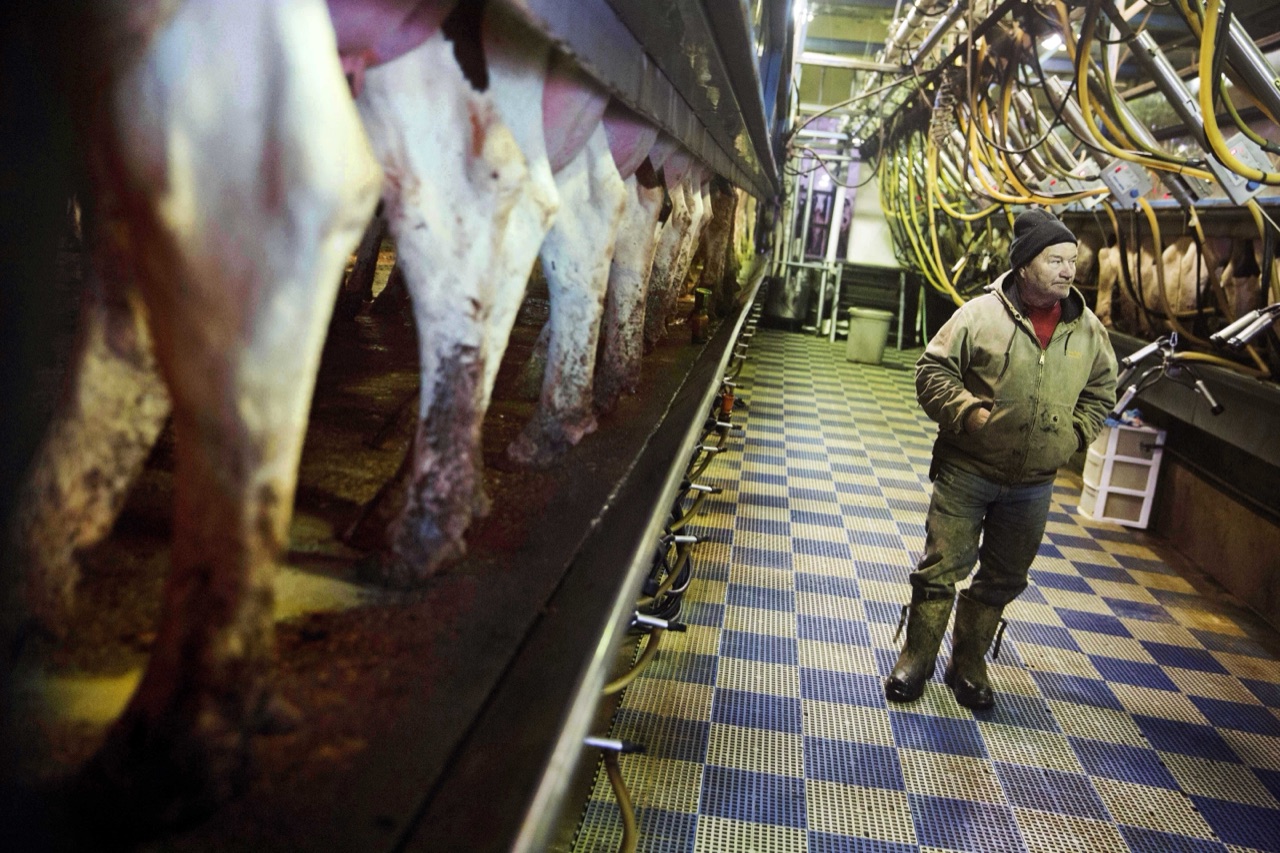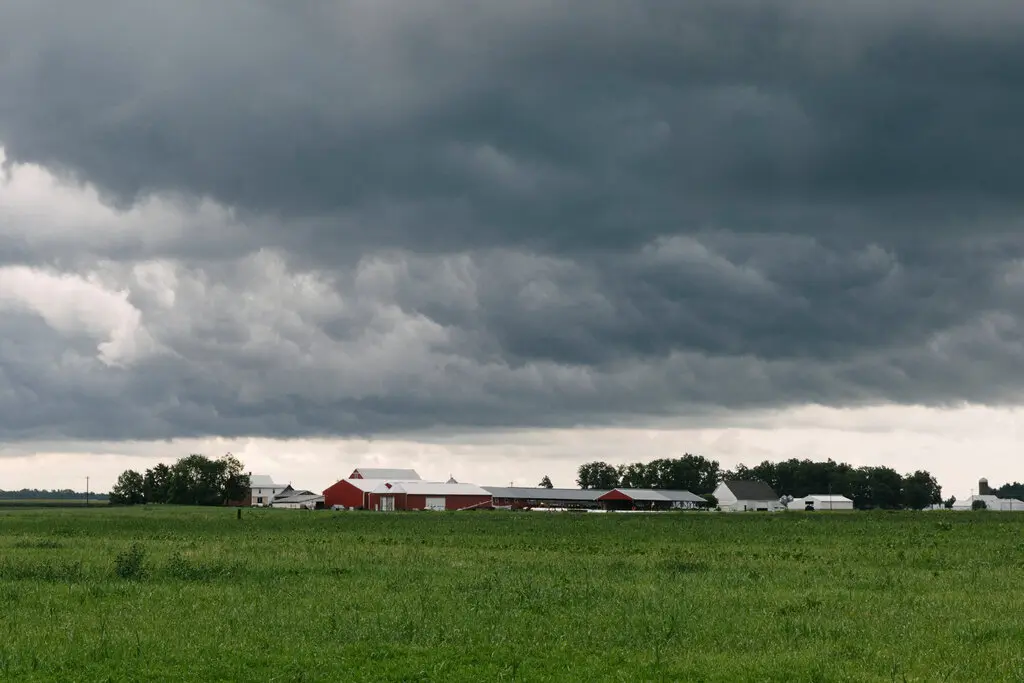
At the Mercer County fair last week, farmers loading cattle told a New York Times reporter that business conditions were getting scary. Fertilizer costs up. Machinery costs up. Few people in that deeply conservative corner of western Ohio were inclined to blame the president for any of it.
Then, on Friday, the president gave them one more thing to worry about.
On August 21, 2026, Trump announced he was waiving the tariff on imported ground beef that kicks in once foreign shipments pass a set limit — clearing the way for up to 300,000 metric tons of it over the next 90 days, with a promised discount of 25% off market price. Cattle futures dropped on the news that same morning.
So here is where Ohio's farmers stand. The tariffs that raised the price of nearly everything they buy are still in place. The one tariff that was holding cheap foreign beef out of the grocery case is off for 90 days.
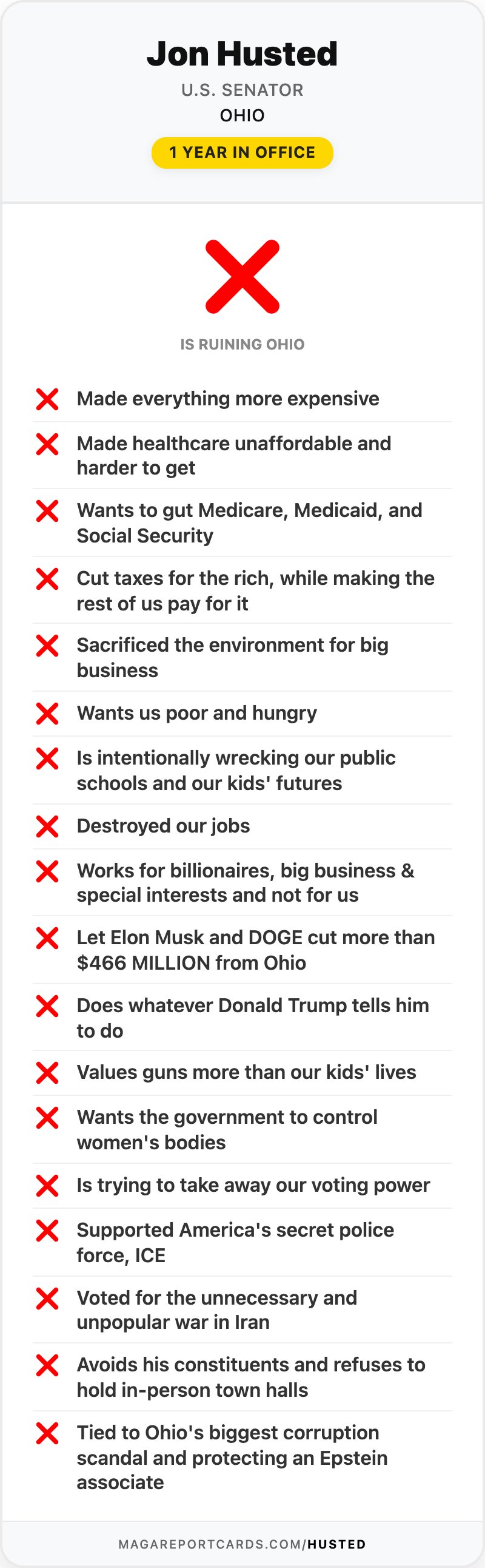
And Jon Husted, the senator who is supposed to be their voice in Washington, voted three separate times in October 2025 to keep the first set of tariffs exactly where they are.
Three votes, three days, three no's
This isn't a matter of interpretation. It's in the Senate's own roll call record, from three days running in October 2025:
- October 28, 2025 — S.J.Res. 81, to end the emergency declaration behind the tariffs on Brazil. Passed 52–48. Husted voted no.
- October 29, 2025 — S.J.Res. 77, to end the emergency declaration behind the tariffs on Canada. Passed 50–46. Husted voted no.
- October 30, 2025 — S.J.Res. 88, to end the emergency declaration behind the global tariffs. Passed 51–47. Husted voted no.
All three passed the Senate anyway. That chamber has a Republican majority, so none of those tallies happened without Republicans voting yes — which means Husted wasn't stuck with his party. He had a choice, and he made the same one three days running.
What the tariffs did to Ohio
Ohio is not a small farm state. According to USDA's 2025 state agriculture overview, Ohio has 73,600 farm operations, 1.23 million head of cattle as of January 1, 2026, and soybean and corn crops worth roughly $2.7 billion and $2.5 billion a year.
The soybeans are where the trade war landed hardest. China was a major customer for Ohio-grown soybeans. After a 20% tariff went on, China stopped buying U.S. soybeans — not fewer, none — and started buying from Argentina instead. Sherrod Brown, the Democrat running against Husted, asked the Statehouse News Bureau why the administration was giving Argentina $20 billion at the same time.
By harvest 2025, Shelby County farmer Chris Gibbs — a former chairman of his county GOP who quit the party in 2019 over Trump's first trade war — described Ohio's family farms as "in a hell of a mess". China had bought 54% of U.S. soybean exports the year before and none at all so far that year, while tariffs drove up the cost of fertilizer, steel and machinery at the same time.
That's the squeeze. Costs up on one side, markets gone on the other. It's the same story we've reported from Indiana, Michigan and southern Minnesota. Ohio's version is no different.
What Husted said when Ohio farmers spoke up
Husted's public line as the damage mounted was that the people complaining were mistaken. In a clip collected by the Ohio Democratic Party, he says the critics "are wrong," that the tariffs "haven't affected the economy negatively," and that "the policies are working."
In October 2025, the Statehouse News Bureau went to him about the tariffs and Ohio's farmers. His office said he was not available for an interview. It sent a written statement instead, which the newsroom quoted in part:
"My record shows that I support Ohio's farmers and consumers. I voted for the working family tax cuts, which allows farmers and job creators to immediately expense investments in new factories, capital investments in machinery and equipment, and in research and development—all of which Democrats opposed."
Read it twice. He was asked about tariffs. He answered about a tax deduction. A write-off for buying new equipment does nothing for a farmer who can't sell his crop, and it does not lower the price of the fertilizer he already bought.
Not being available is a pattern with Husted. He also didn't show up when Ohio's disability community held a forum about his Medicaid vote.
Now the tariff comes off — on the one product that competes with Ohio cattle
The beef waiver is the part that should sting most in Mercer County.
Most beef the United States imports is lean trimmings, according to USDA's report on beef import quotas — the grass-fed cuts that get blended with American beef to make ground beef. That is precisely the product now coming in without that tariff, up to 300,000 metric tons of it.
Cattle producers have spent years shrinking their herds through drought and high input costs. U.S. cattle inventory sits at its lowest level in about 75 years, and that tight supply is finally letting ranchers turn a profit. One market analyst quoted by the cattle trade publication Drovers put the incoming shipment at roughly 44 days' worth of American ground beef consumption.
The cattle industry did not read it as help. The National Cattlemen's Beef Association said that "flooding the market with government-subsidized, below-market beef is not the way to rebuild the American cattle herd." The United States Cattlemen's Association was blunter: "You don't put America first by putting U.S. cattle producers last."
Notice what the waiver concedes. Husted has said the tariffs "haven't affected the economy negatively." The administration just suspended one for 90 days for the stated purpose of bringing a grocery price down. Both of those cannot be true.
None of this is a defense of the beef tariff the president is now dropping. It's the direction that matters. When tariffs were raising Ohio farmers' costs, their senator voted three times to keep them. When a tariff was the thing standing between Ohio's cattle farmers and cheap imports, it came off in an afternoon, with no vote at all.
What the record shows
Jon Husted voted three times in three days to keep tariffs that had already pushed up Ohio's fertilizer, steel and machinery costs and cost U.S. soybean farmers their largest customer outright. He told Ohioans the critics "are wrong" and that "the policies are working," and when a public radio newsroom asked him about the damage, his office would not make him available and answered with a tax deduction. Ten months later the president waived the tariff on imported ground beef — up to 300,000 metric tons of it, about 44 days of the country's ground beef consumption — and cattle prices fell the same morning, with 1.23 million head of cattle standing in Ohio fields.
Source
Reporting from Millersport, Dayton, Celina, North Ridgeville and Akron by Campbell Robertson and Jessica Contrera, "Angry Ohio Voters Could Turn Their State Purple Again," The New York Times, August 23, 2026.