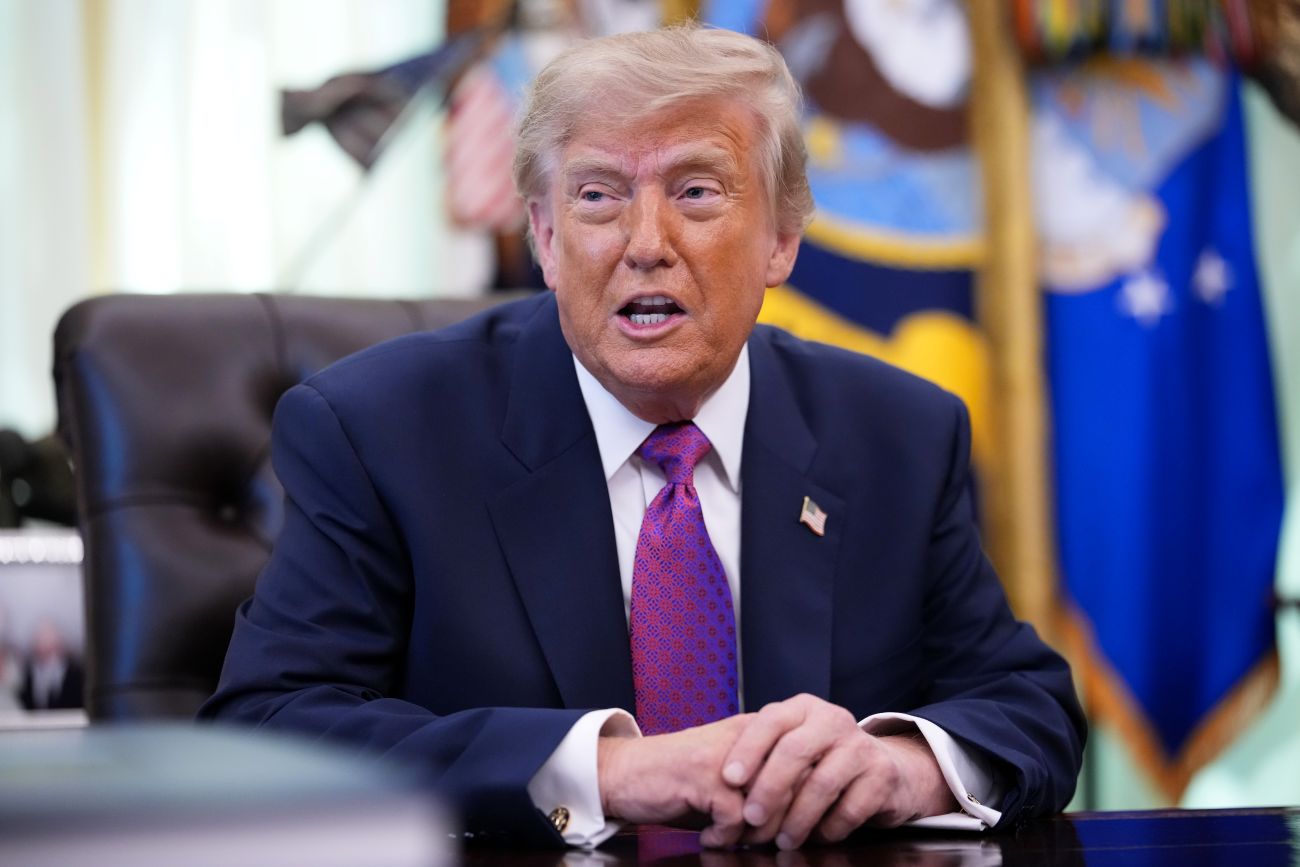
On Thursday, August 27, 2026, President Trump sent a letter to House Speaker Mike Johnson telling him that federal employees will not get a raise next year.
"I have therefore decided to set at zero the pay adjustment to be made for the 2027 pay year. This decision will maintain fiscal responsibility without harming the government's ability to recruit and retain well qualified employees."
In the very next paragraph, as Government Executive reported, he instructed the Office of Personnel Management to give federal law enforcement personnel a 3.8% raise — for the second year running — "to increase recruitment and retention."
So withholding a raise does not hurt recruitment and retention, but granting one increases it. Both claims are in the same letter, one paragraph apart.
The reason he gave is not true
Trump's stated justification, in the letter's own words: "Such a large raise for Federal employees while most Americans still struggle with the consequences of the Biden Administration's giant inflation spree is unacceptable and would be unfair."
Government Executive checked it in one line: inflation has risen from 2.8% when Biden left office to 3.3% as of last month.
That is the whole argument. Prices are higher now than when he took over, and the people being told to eat the difference are the ones who process Social Security claims, inspect meat, answer the VA phone line and forecast the weather.
A pay freeze while prices are rising 3.3% a year is not a freeze. It is a pay cut of about 3.3%, taken by everyone in the federal civilian workforce except law enforcement.
He did this last year and backed off. This year is different.
Trump proposed a freeze in his 2026 budget too, and in August 2025 he ended up granting a 1% across-the-board raise for non-law-enforcement workers instead.
The alternative pay plan is a routine, deadline-driven exercise under both parties: presidents have until the end of August to issue one, or much larger automatic locality-pay increases kick in under a 1990 law. Congress can override the president's plan, and has — in early 2019, a newly Democratic-led Congress overrode Trump's plan to freeze federal worker pay that year and delivered a 1.9% average raise retroactively.
Here is what has changed. The House's spending bills this year are silent on federal employee compensation — which, as Government Executive puts it, effectively endorses Trump's plan. Silence is the endorsement. The Senate has not released its draft.
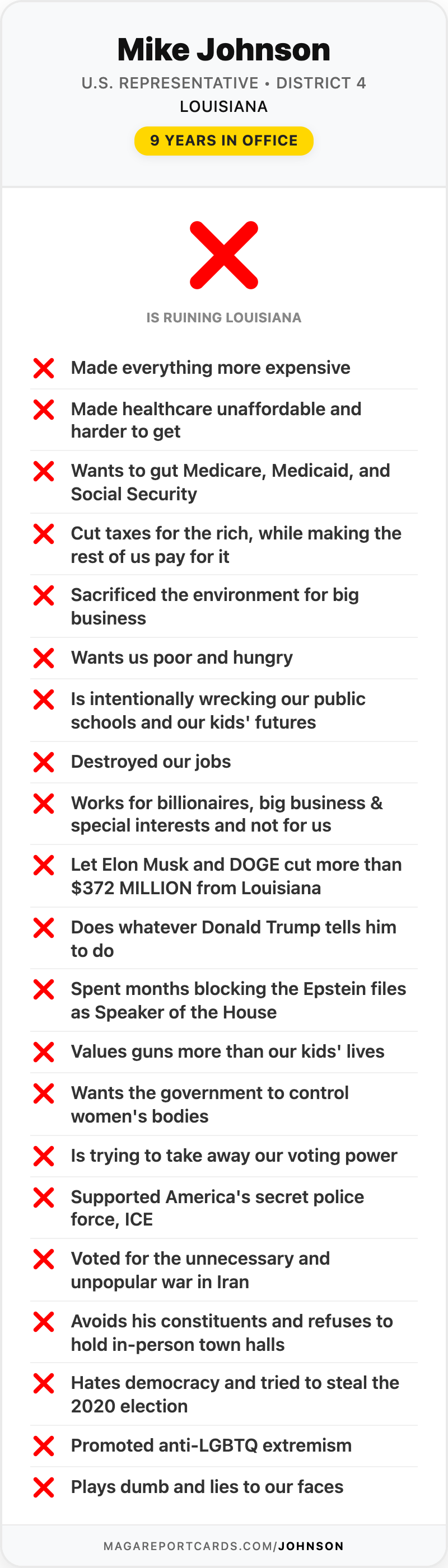
Mike Johnson runs the chamber that writes those bills. Nothing stops the House from putting a raise in one. It has not.
This is the same workforce, being hit the same way, for two years
The pay freeze is not the first thing done to these workers, and it is not the biggest.
- Two executive orders, plus an earlier move against TSA screeners, stripped collective bargaining from 84.4% of the unionized federal workforce. A bipartisan bill to restore it passed the House 231–195 — and 195 House Republicans voted to keep the contracts cancelled.
- The Agriculture Department told about 2,600 Washington-area employees to move across the country or quit, and lost 20,000 workers.
- Republicans in Congress asked for the cuts by name. Glenn Grothman went on public radio during the shutdown and asked Trump to fire up to 200,000 federal workers, saying "a lot of these people are not working very hard at all."
Take a worker who is still there after all of that. Their union contract is gone. Their office may have been told to relocate. Their colleagues were fired. And now their pay is frozen while prices are rising 3.3% a year.
What it adds up to
Trump has formally proposed a zero percent pay adjustment for most of the federal civilian workforce in 2027, while granting federal law enforcement a 3.8% raise for the second straight year. His stated reason is inflation left over from the Biden administration; inflation has risen from 2.8% to 3.3% since Biden left. Because prices keep rising, a freeze is a real pay cut of roughly that much. Congress can override it, and the House's own spending bills — written under Speaker Mike Johnson — say nothing at all, which lets it stand.
Source
Erich Wagner, Trump formally proposes pay freeze for most federal workers, 3.8% increase for law enforcement, Government Executive, August 28, 2026. See also Torrie Herrington, Trump Plans to Freeze Civilian Federal Worker Pay for Next Year, NOTUS, August 28, 2026.