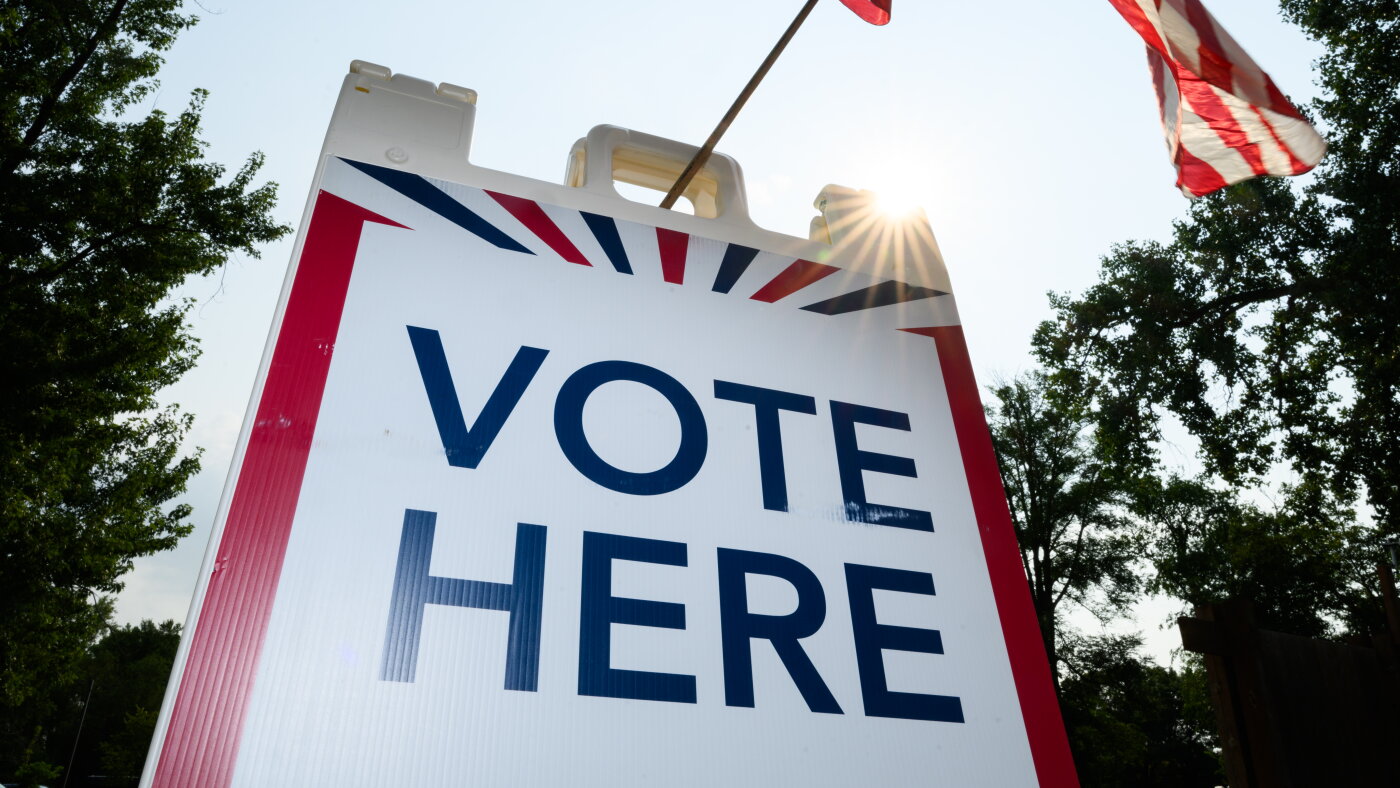
On Tuesday, August 11, South Carolina Republicans go to the polls in a special primary to choose a nominee for the full six-year Senate term that starts in January — the seat Lindsey Graham held until he died in July.
More than six weeks before that, Sheri Biggs put her name on a resolution that would make elections like that one illegal.
On June 25, 2026, Biggs became one of eight original cosponsors of H.J. Res. 198, introduced by Rep. Keith Self of Texas. Its stated purpose is one sentence: "Proposing an amendment to the Constitution of the United States to repeal the seventeenth article of amendment."
The 17th Amendment is the one that lets you vote for your senator.
What the 17th Amendment did
Before 1913, U.S. senators were not elected by the people. State legislatures picked them.
By the Senate's own official history, that system broke down over and over. Nine bribery cases came before the Senate between 1866 and 1906. Forty-five deadlocks happened in 20 states between 1891 and 1905, delaying the seating of senators. In one case, problems electing a senator in Delaware were so bad that the state legislature sent nobody to Washington for four years.
Reformers pushed for decades, and in 1913 the states ratified the 17th Amendment, which says senators shall be "elected by the people thereof."
H.J. Res. 198 would undo that. Senators would once again be chosen by state legislators, and voters would have no direct say.
The other original cosponsors are Eric Burlison, Andrew Clyde, Paul Gosar, Andy Harris, Scott Perry, Clay Higgins, and Michael Cloud. Victoria Spartz signed on four days later.
The timing, in South Carolina, is remarkable
Consider where Biggs's state actually is right now.
Lindsey Graham won the June 9 Republican primary and died on July 11. Gov. Henry McMaster appointed Graham's sister, Darline Graham, to hold the seat until January 2027. No South Carolina voter chose her. In her first opinion piece as a senator she wrote that "the first bill I co-sponsored was the SAVE America Act" — a bill that would make registering to vote harder.
So South Carolina at this moment has one senator that nobody elected — and a special primary on Tuesday to fill the seat properly.
Biggs's answer to that situation is a constitutional amendment that would make being chosen by politicians the permanent way it works. Under H.J. Res. 198, South Carolinians would never again cast a ballot for a U.S. senator. The choice would belong to the members of the South Carolina General Assembly.
Who this actually empowers
The argument for repeal is that it restores federalism — that senators would answer to their states rather than to national donors.
Look at what it does in practice.
Right now, to win a Senate seat in South Carolina you have to persuade a statewide electorate. Under H.J. Res. 198, you'd have to persuade a majority of South Carolina's 170 state legislators — people who run in districts drawn by their own colleagues, and many of whom face no serious general-election competition at all.
That is not a transfer of power from Washington to the people. It's a transfer from the people to the smallest, most gerrymandered, most lobbyable body in state government — the one where a handful of well-placed donors can reach every decision-maker in a single afternoon.
The historical record on this is not ambiguous. It is the reason the 17th Amendment exists.
It fits her record
This isn't an isolated signature. Biggs's approach to who gets to vote, and whose votes count, is consistent.
She is an original cosponsor of the SAVE Act, which would require documentary proof of citizenship — a passport or a birth certificate, presented in person — just to register to vote or update a registration. A driver's license doesn't count.
And in May 2026, appearing on Newsmax, Biggs argued South Carolina's congressional map should be redrawn to erase the state's only Democratic-held seat: "I think a 7 and 0 would definitely reflect our values."
Proof-of-citizenship to register. A map with no seats for the other side. And a constitutional amendment ending the direct election of senators.
Each one moves in the same direction: fewer people deciding, and the deciding done further from the voter.
Will it pass?
No. Repealing a constitutional amendment takes two-thirds of both chambers of Congress and ratification by 38 states. H.J. Res. 198 has nine cosponsors and sits in the House Judiciary Committee.
But a member of Congress doesn't become an original cosponsor of a constitutional amendment by accident. It's a deliberate, public statement of what she thinks the country should look like.
Sheri Biggs thinks South Carolinians should not get to vote for their senators.
South Carolinians get to vote on Tuesday. It's worth knowing what she'd do with that if she could.
Source
The resolution's official record, H.J. Res. 198 (119th Congress), introduced June 25, 2026 by Rep. Keith Self, with Rep. Sheri Biggs listed as an original cosponsor in the Library of Congress bill status record. Photo: official congressional portrait via Wikimedia Commons.