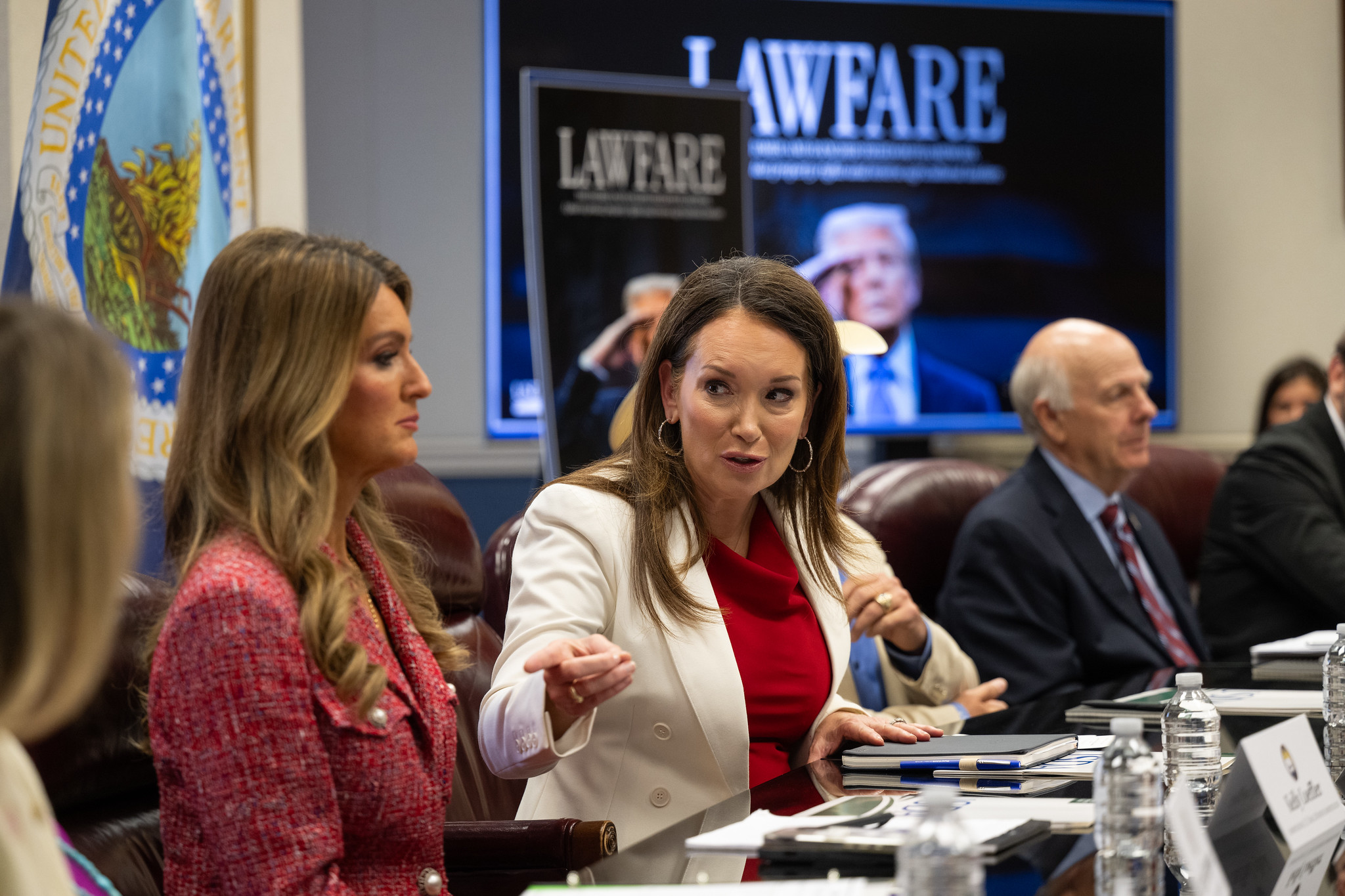
In July 2026, the U.S. Department of Agriculture announced it intends to scrap three rules written to protect chicken farmers and cattle ranchers from the giant meat companies they sell to. According to The New Lede, the rules on the chopping block are the Inclusive Competition and Market Integrity rule, the Transparency in Poultry Grower Contracting and Tournaments rule, and the Poultry Grower Payment Systems rule.
The biggest winners are four companies that between them control an estimated 85% of the beef market and 67% of the pork market. One of them is Tyson Foods, headquartered in Springdale, Arkansas — in Steve Womack's district.
Womack has said nothing about it. That's not surprising. He spent years helping to keep those protections from being enforced in the first place.
What the tournament system actually is
If you don't live near a chicken house, here's the deal that Arkansas poultry growers actually sign.
The farmer owns the long metal barn and the land it sits on, and takes out the loan to build it. The company owns the chickens — from egg to slaughter — and decides which chicks the farmer gets, what feed they eat, and what the farmer gets paid.
Then the company runs what's called a tournament. Growers are ranked against their neighbors on how much weight their birds put on. Farmers who come in above average get a bonus. That bonus money is taken out of the checks of the farmers who came in below average. As Food & Water Watch describes it, integrators "provide — and control — the chicks, the feed and the veterinary care," and then dock the below-average growers to pay the above-average ones: "The actual quality of a grower's work is not what determines their pay."
The Arkansas Times described the resulting bind in 2015: growers who spoke up said they were threatened with retaliation, and some said that if they complained, they got "scrawnier chicks to start with, which results in smaller chickens." OpenSecrets, writing up the same segment, noted that "according to a 2001 study, 71 percent of the farmers live below the poverty line."
The Obama administration wrote rules to fix this. They were finished. They were on the books.
They just weren't allowed to be enforced.
The rider
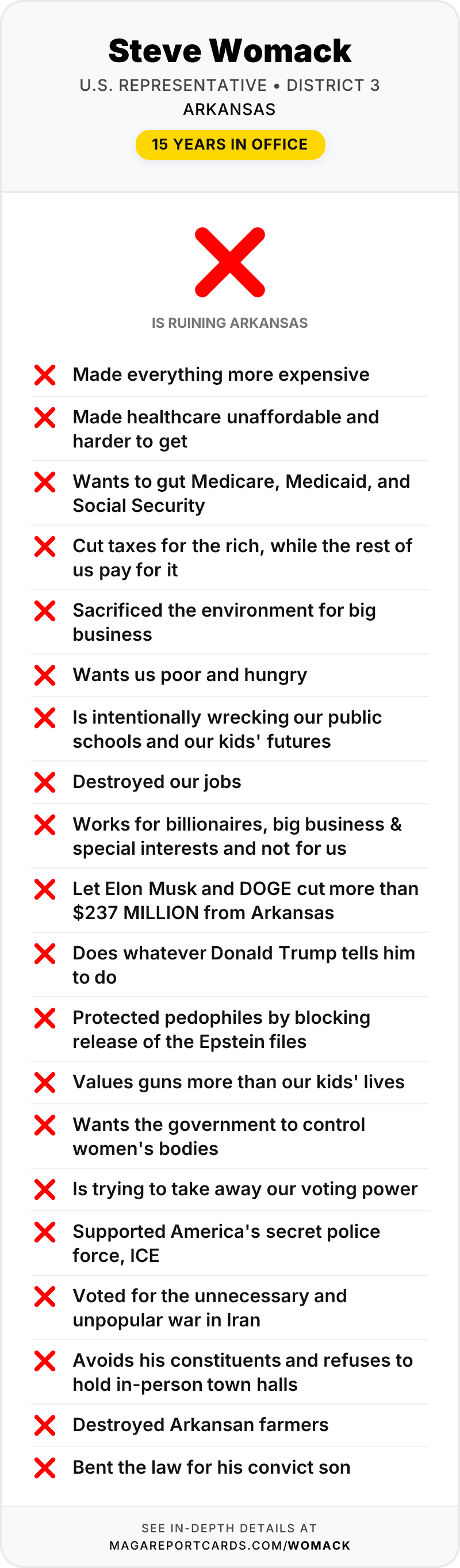
This is where Womack comes in.
For years, a small provision — known as the GIPSA rider, after the USDA's Grain Inspection, Packers and Stockyards Administration — was slipped into the annual House agriculture spending bill. As OpenSecrets explained, the rider "defunds the Agriculture Department's effort to finalize rules meant to protect the farmers." Congress didn't repeal the protections. It just refused to pay for anyone to enforce them.
The Arkansas Times reported that Womack placed "a rider on the agriculture appropriations bill that forbids the USDA from enforcing already-written protections for the nation's poultry farmers." The National Sustainable Agriculture Coalition, which watched the markups year after year, described Womack as "a strong supporter of the anti-farmer rider" — the congressman Democrats on the committee had to argue with when they tried to take it out.
Two members of Congress, Marcy Kaptur of Ohio and Chellie Pingree of Maine, tried repeatedly to strip the rider out. OpenSecrets reported they were "stymied repeatedly by colleagues like Rep. Steve Womack (R-Ark.)" — noting that Womack sat on the Appropriations Committee and came "from the district where Tyson is headquartered."
Then it got on television
On May 17, 2015, John Oliver spent a segment of Last Week Tonight on exactly this — the contract system, the retaliation, and the rider. He named Womack. The Arkansas Times noted the congressman "gets plucked at around the 13:20 mark."
Something unusual happened next. OpenSecrets reported that weeks later, the House Appropriations Committee approved the following year's agriculture bill and, for the first time in years, it did not include the GIPSA defunding rider. Its headline put a question mark on it — "John Oliver 1, Big Chicken 0?" — and its verdict was careful: "Oliver's beef with the chicken giants may have made a difference."
Two members of Congress had spent years trying and failing to strip that rider out. A comedian on HBO spent one Sunday night on it. That is a fact about how Washington works, and it is not a flattering one.
Follow the chicken money
Womack has never had to explain the rider to Arkansas voters. The last in-person town hall on his own congressional calendar was in Harrison on September 3, 2019 — seven years ago. Since then he has taken questions down a phone line instead.
But you can check who's paying him. OpenSecrets' tally of Federal Election Commission filings for the 2025–2026 cycle puts Tyson Foods second on his list of top contributors at $30,750 — $23,250 from people connected to the company, $7,500 from its PAC. Only Walmart, also headquartered in his district, gave more.
That is the arrangement in one line. The company whose contract terms he helped shield from federal enforcement is his second-largest source of campaign money.
Big poultry didn't stop at donations, either. OpenSecrets reported in 2015 that the National Chicken Council had spent over $2.5 million on lobbying in the previous five years, and Tyson over $9 million in recent lobbying — and that both had "lobbied against GIPSA reform in some capacity."
The same fight, eleven years later
The rules finally got finished under the Biden administration. The transparency rule took effect in 2024, requiring poultry companies to tell growers things like how many flocks they can expect in a year and what other growers actually earn. The payment rule, published in January 2025, would have stopped companies from using the tournament to dock farmers' pay — bonuses only, no penalties.
That payment rule was supposed to take effect on July 1, 2026. USDA has now pushed it to December 31, 2027, and proposed rescinding it and two others entirely.
So the same protections Womack helped keep from being enforced in 2015 are being killed outright in 2026. Contract growers in Arkansas — the ones with a mortgage on a chicken house and one buyer for their birds — go back to the tournament.
Womack is still in Congress. He is still on Appropriations. He has put out press releases titled "Womack Votes to Rein in EPA, Support America's Producers." He has not said a word in defense of the producers in his own district who raise chickens for a living.
What he says he cares about
Womack knows how to speak up when his district's companies are hurting. In August 2025 he told Talk Business & Politics that tariffs were "the single biggest issue that has come to me" from local employers and that "we'll engage the administration in trying to get some relief" for them. Back in March 2018 he put out a statement saying he was "extremely concerned" about Trump's steel and aluminum tariffs.
He can find his voice for what his district's job creators pay for steel. He can't find it for the farmer's paycheck.
This is the same pattern we've documented across the farm economy — from splitting the Farm Bill so food aid and farm aid could be cut separately to Republicans defending tariffs that are wrecking the people who grow things. The people who own the land and take the risk are always the ones asked to absorb the loss.
The bottom line
Contract chicken growers are in a bind with no good name for it. They aren't employees, so they get no labor protections. They aren't really independent businesses either, because one company sets the price, supplies the birds, and can cut them off.
The one federal rule written to give them a fair shake sat unenforced for years because of a rider on a spending bill — and the congressman who represents Tyson's headquarters was one of the people who kept it there.
We deserve a representative who works for the farmer, not the processor.
Source
The New Lede, "USDA to remove rules protecting livestock farmers from discrimination and deception", July 13, 2026. Photo: The New Lede.