When President Trump signed away protections for nearly 3 million acres of Utah in July, Utah's Republicans in Congress told everyone to calm down. It was normal. It was legal. It was, in their words, "a return to an appropriate application of the Antiquities Act as Congress intended."
Now we know exactly how normal it was.
A new investigation by The Emancipator went through every single time a president has pulled land out of national monument protection since the Antiquities Act passed in 1906. The reporters checked the National Park Service database, cross-checked it against the actual presidential proclamations and historical acreage records, and even found a pair of exclusions the government had miscoded.
The finding: Trump just removed more than five times as much protected land as every other president in American history combined.
Not five times more than the previous record-holder. Five times more than all of them, added together, across 120 years.
What "all of them combined" actually means
Here's the scale, from the investigation's numbers.
Only seven other presidents have ever done this — Taft, Wilson, Coolidge, Roosevelt, Truman, Eisenhower, and Kennedy. Put every one of their cuts in a pile and you get a little more than 550,000 acres. And while they were cutting, those same presidents added almost 10,000 acres of new land to the monuments they were trimming.
Trump took nearly 3 million acres and added nothing.
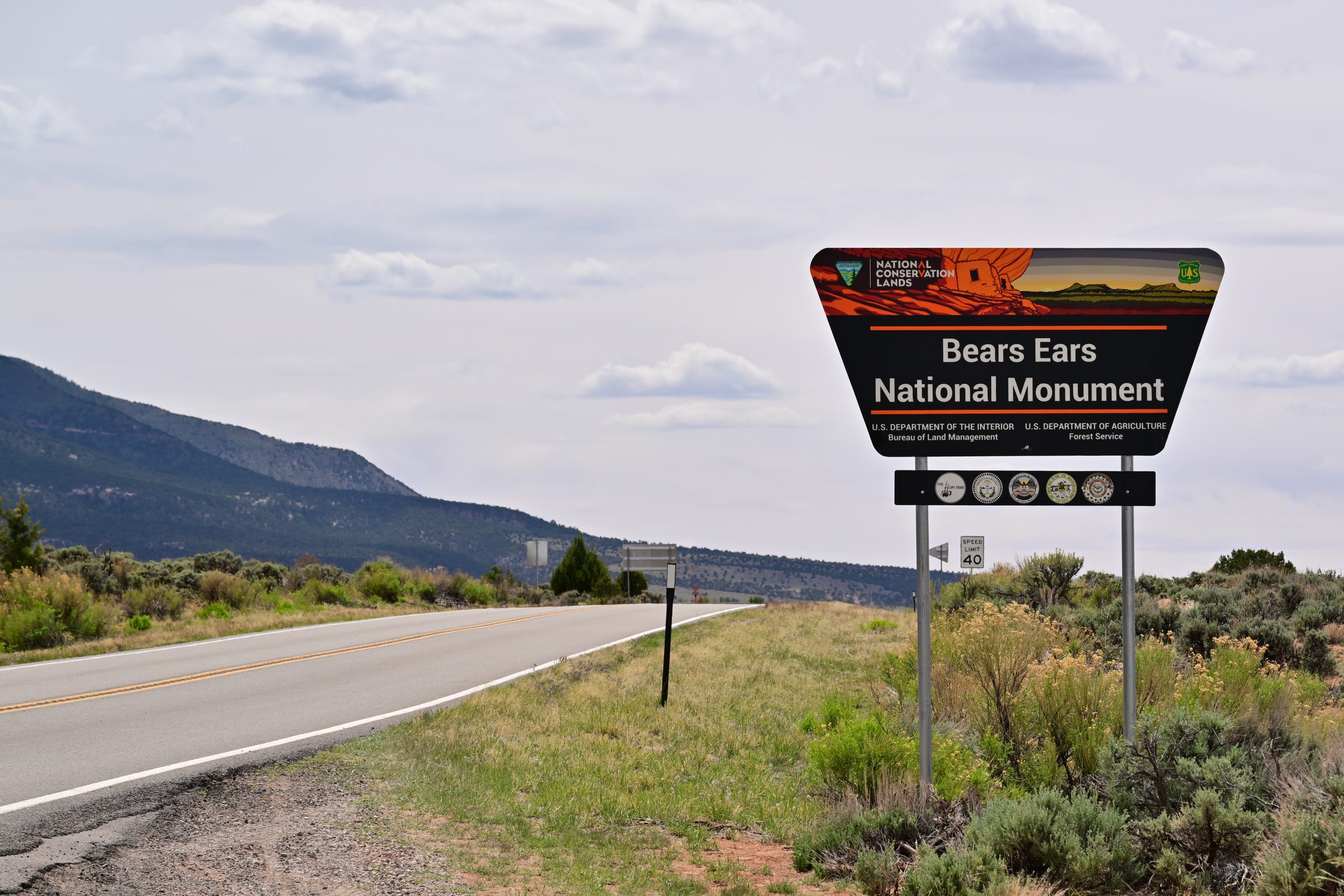
The old record was set in 1915, when Woodrow Wilson pulled a little more than 300,000 acres out of Olympic National Monument — land that later became Olympic National Park. It stood as the largest for more than a century — until Trump's own first-term proclamation in 2017, which excluded about 1.15 million acres from this same Bears Ears monument.
And before Trump came along, the last president to touch this power was John F. Kennedy, in 1963. He cut about 4,000 acres from Bandelier National Monument in New Mexico — and then handed back almost 3,000 acres of different land, so the monument shrank by only about a thousand acres, net.
That's the company Utah's delegation is describing as "appropriate." Six decades of presidents in both parties leaving this power alone, and the largest cut by any other president coming in at about one-tenth its size.
The statement Utah's delegation signed
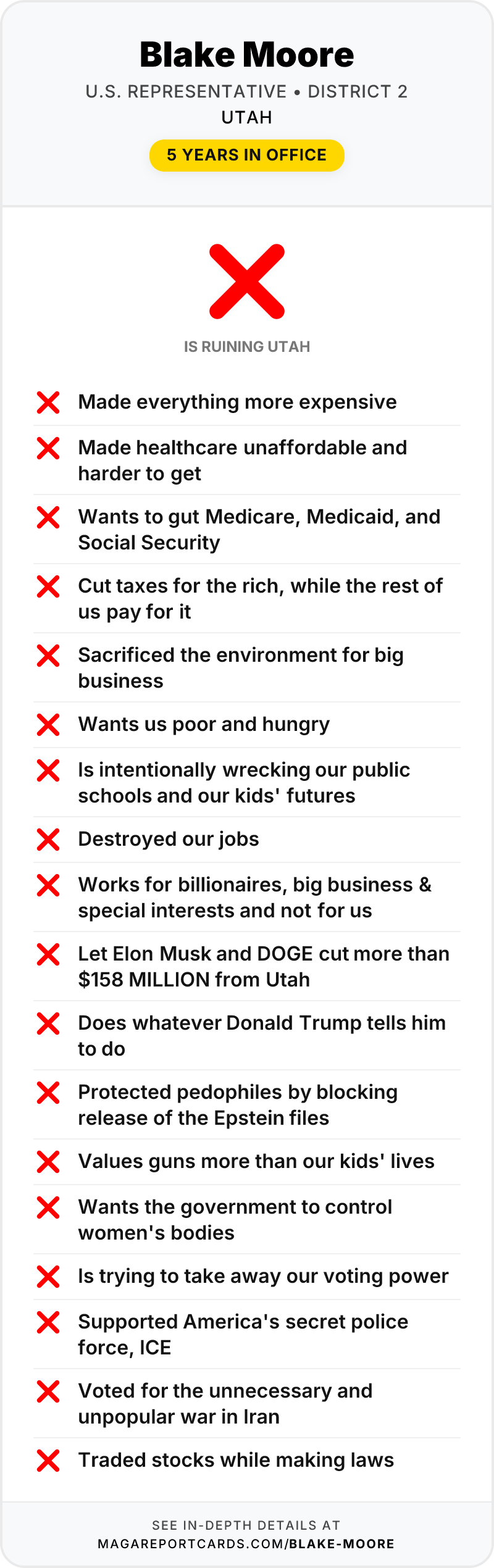
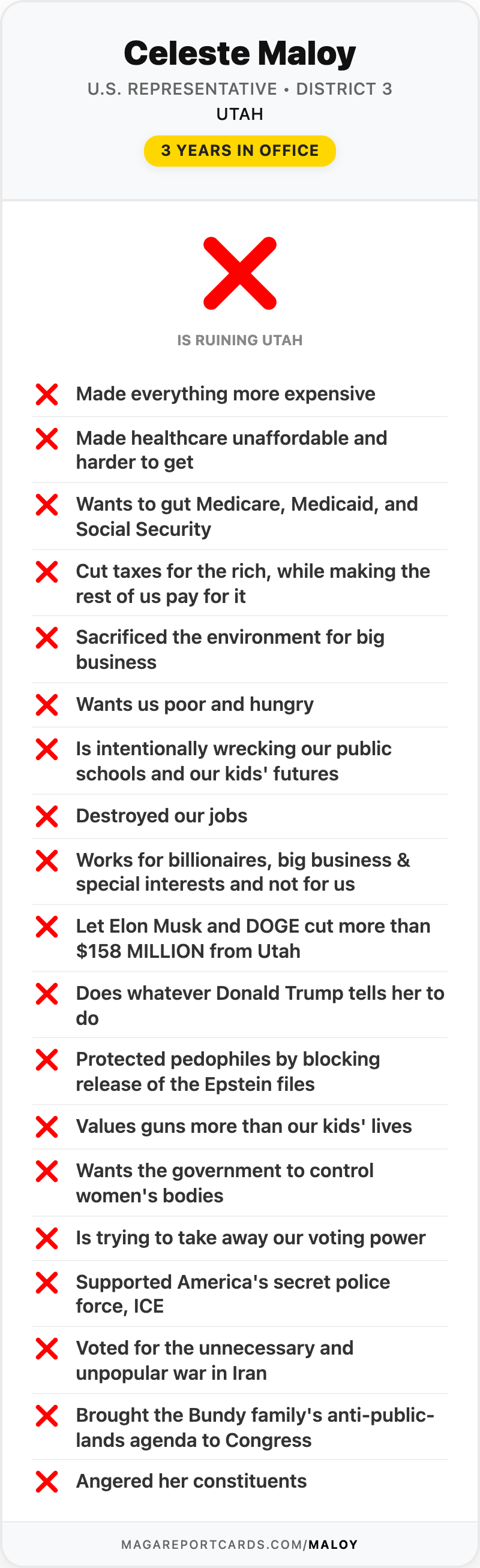
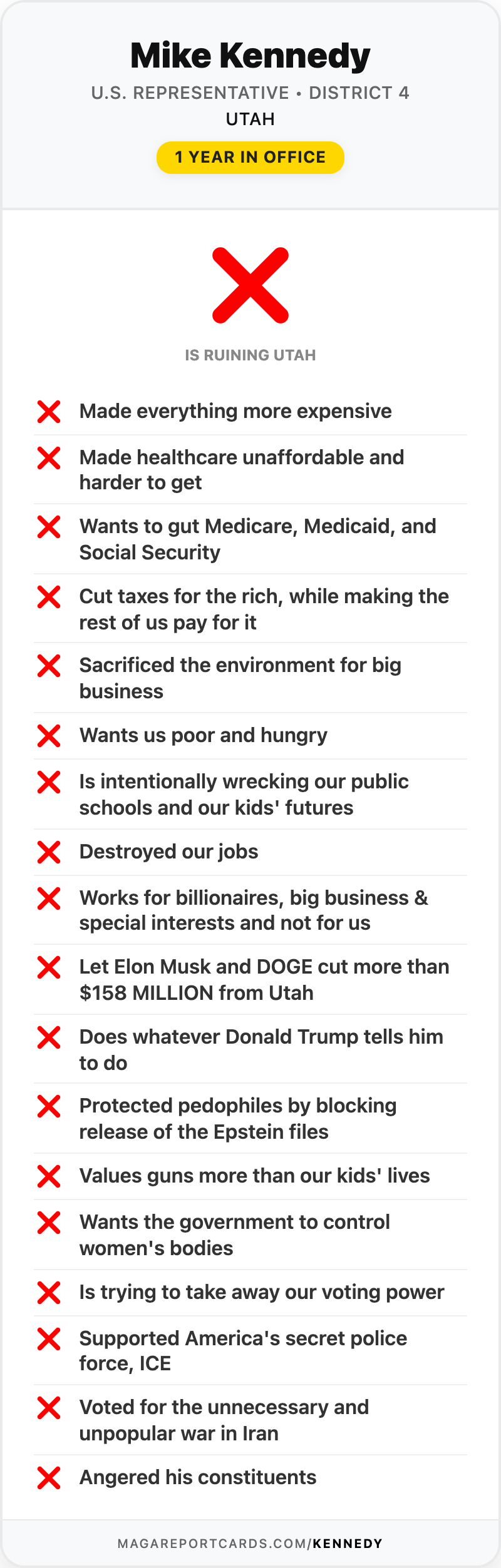
On the day it happened, the Utah federal delegation put out a joint press release welcoming the move. Four Utah House members are quoted in it, among them Blake Moore, Celeste Maloy, and Mike Kennedy.
The release makes a specific factual promise. Read it carefully:
"The lands outside the modified monument boundaries remain federal public lands and continue to be protected under existing federal laws. Today's action does not remove those protections."
That is misleading, and the White House's own fact sheet shows why.
The administration's own fact sheet on the same proclamations says the excluded land becomes "available for multiple-use, sustained-yield management," and then lists what that means: "grazing, timber harvest, fishing, hunting, resource development, infrastructure upgrades, and motorized recreation."
"Resource development" is the phrase to watch. Trump's own proclamation on Bears Ears is blunter about the point of the whole exercise, saying the Bears Ears region holds "critical minerals such as silver, copper, molybdenum, lead, uranium, vanadium, and zinc."
So the delegation told Utahns the land was still protected, on the same day the White House published a list of what is now allowed there, resource development included. Both documents came out July 13. They cannot both be right.
"The smallest area possible"
Moore's own quote in that release is the one that ages worst:
"If the Antiquities Act is going to be used, it needs to be on the smallest area possible—that's what we're doing here."
What they were doing there was the largest monument clawback ever recorded. You don't have to take a critic's word for the size of it — the administration published the numbers itself. Bears Ears went from about 1.36 million acres to about 121,100. Grand Staircase-Escalante went from about 1.87 million acres to about 181,500. That's a cut of roughly 91% and 90%. Calling what's left "the smallest area possible" is true only in the sense that almost nothing is left. The Grand Canyon Trust, which has worked on this land for decades, said that day that Trump "attempted to virtually eliminate Bears Ears and Grand Staircase-Escalante national monuments."
Kennedy's quote leaned on local control: "The people of Utah understand these lands better than any distant bureaucracy ever could." Four months earlier, Kennedy had introduced a bill with a name that says the quiet part out loud — the License to Drill Act, which passed the House in 2026.
Maloy said the action "honors that goal while following the law Congress passed." She had also spent the spring trying to get there without the president's help: in March 2026 she introduced a resolution to overturn the Bureau of Land Management's management plan for Grand Staircase-Escalante outright. That was four months before Trump signed. We've written before about how hard Maloy has worked to make these cuts permanent, including sponsoring a bill to gut the Antiquities Act itself.
There's also a real legal problem underneath all the confident talk about "following the law." The Antiquities Act lets a president create a monument. It never says a president can shrink or erase one. The administration is relying on a 2025 Justice Department memo asserting that power — a memo that contradicts the conclusion a previous U.S. Attorney General reached on the same question. Courts have not settled this.
Who was actually on that land
Bears Ears is not empty ground. Five tribal nations — the Hopi Tribe, Navajo Nation, Ute Indian Tribe, Ute Mountain Ute Tribe, and Pueblo of Zuni — came together to protect it. The Native American Rights Fund says all of them "hold the region as sacred," and that the tribes "continue to rely on Bears Ears for subsistence, hunting, and collecting plants and medicines found throughout the entire region."
Rebecca Nagle, a writer and member of the Cherokee Nation, pointed out that the area holds "over 100,000 archaeological and cultural sites — some dating back 10,000 to 13,000 years," and drew a comparison worth sitting with:
"The reverence for places like Mount Rushmore alongside the disregard for places like Bears Ears shows the racist double standard of what kind of history the current administration is willing to celebrate and protect."
That contrast isn't hypothetical. One Republican member of Congress thought Mount Rushmore was so important she filed a bill to carve Trump's face into it eight days into his second term. Utah's delegation has now cheered on the removal of protection from most of the land that holds those 100,000 sites.
Georgie Pongyesva of the Hopi Tribe answered the assumption that these sites are just "ruins":
"These places are not abandoned, nor are they ruined. These are living landscapes for which Tribes are the original stewards."
The record behind the statement
None of this is out of character for these three. Their environmental voting records are close to a straight line.
- Mike Kennedy — 0% from the League of Conservation Voters in 2025, and a 0% lifetime score. Every single vote against the environment.
- Blake Moore — 0% in 2025, 7% lifetime.
- Celeste Maloy — 3% in 2025, 5% lifetime.
It also fits a pattern that runs well past Utah. In Minnesota, Pete Stauber pushed through a resolution reopening mining near the Boundary Waters that legal experts warned could throw hundreds of forest plans into jeopardy. The playbook is the same: call the giveaway a restoration of balance, and hope nobody counts the acres.
Somebody counted. These three House Republicans represent a state that ranks 10th out of 50 on the measures we track — a state that is doing well in large part because of what hasn't been sold. They had a chance to say something honest about the biggest land protection rollback in the country's history. Instead they signed a statement saying the land was still protected, while the White House published the list of what could now be dug out of it.
The Emancipator asked the White House to comment on its findings. It didn't respond.
Source
This post was reported from The Emancipator's investigation by Kate Amistoso and Daniel Mollenkamp, published August 6, 2026, along with the Utah delegation's own press release and the White House fact sheet. Photo: Bears Ears National Monument welcome sign, G. Edward Johnson, CC BY 4.0 / Wikimedia Commons.