A United States senator has a staff. He has committee hearings, nonpartisan analysts at the Congressional Budget Office, the Congressional Research Service, and the actual text of every bill he votes on.
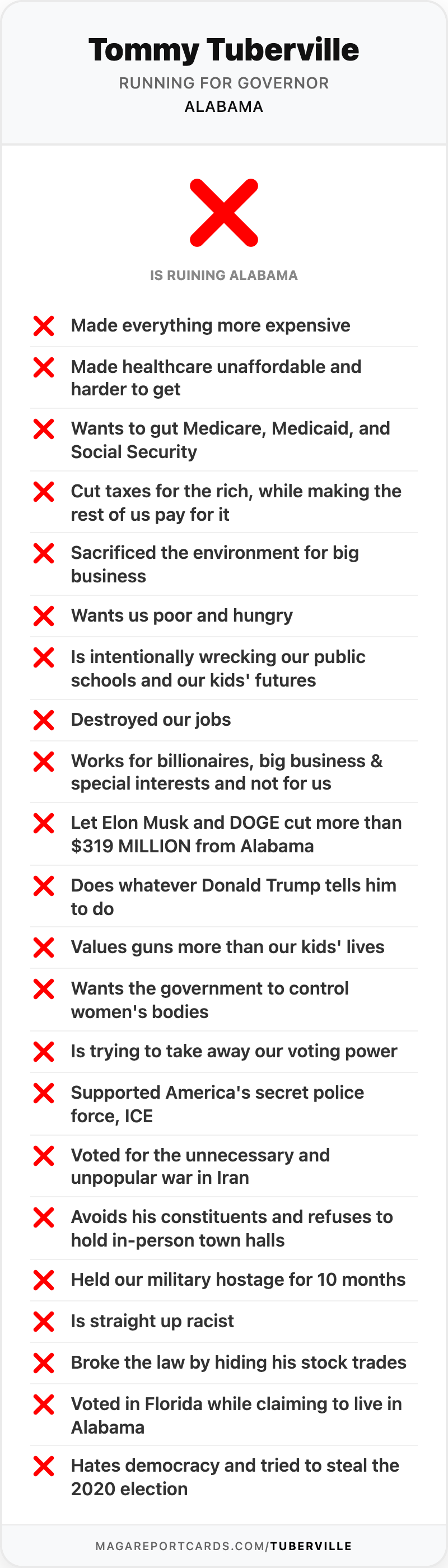
Tommy Tuberville has a different method for the drive home.
A Washington Post investigation published August 13, 2026 found that members of Congress and their staff are handing large parts of their jobs to AI chatbots — with almost no rules anyone can name and no real enforcement. Tuberville is one of the members who told the Post about it on the record.
He asks ChatGPT questions about Medicare and Medicaid while driving across Alabama.
"It's kind of like you can sit there and talk to an expert," Tuberville told the Post. "You don't know whether or not they're 100 percent correct. But they put you on the right path."
Read that second sentence again. He is describing a source he knows may be wrong, on the two programs that pay for his constituents' health care.
Alabama is not an abstraction here
Medicare and Medicaid are not hypothetical topics for a senator from Alabama. They are the topics.
Alabama is one of the ten states that still has not expanded Medicaid, which means the coverage gap there is already about as wide as it gets in America. When a senator from that state says he is asking a chatbot about Medicaid to get "on the right path," the path in question runs through hospitals deciding whether to keep a labor and delivery unit open.
This is also not the first time Tuberville has talked about a program he clearly hasn't studied. In July, he stood on the Senate floor and called Social Security a government-approved "Ponzi scheme" — a program he has personally drawn about $93,000 from in three years, on top of his Senate salary.
He is now running for governor of Alabama, on the strength of that judgment.
The staffer who fed his phone into a chatbot
The Post's findings go well past one senator's commute.
The House and Senate have cleared staffers to use ChatGPT, Microsoft Copilot and Google Gemini; the House also approved Claude. The House bought 6,000 Copilot licenses last year to push staff toward using them.
What staff are actually doing with them:
- Drafting speeches, press releases and questions for congressional hearings
- Managing constituent mail
- Drafting bill amendments
- One staffer fed years of his phone contacts and text messages into Claude and had it build a database of reporters — what he pitched, what they took, what went badly
- That same office has Claude running its communications budget, overseeing taxpayer-funded mailers and every ad sent to constituents
Congress does have rules. AI can't be used to make deepfakes, make personnel decisions, handle sensitive information like constituent data, or finalize legislation. A bot may help draft a bill, but a human has to do the final review. A bot may help draft a constituent reply, but it isn't supposed to be told who the constituent is.
Most staffers who talked to the Post didn't know those rules existed. Enforcement is left to staff policing themselves or turning in a colleague.
"You're still not supposed to put constituent data into AI," one staffer said. "There are weird things around where the rules are. I don't know all of them."
"Claude responded:"
We already know what happens when nobody checks, because it happened in public this summer.
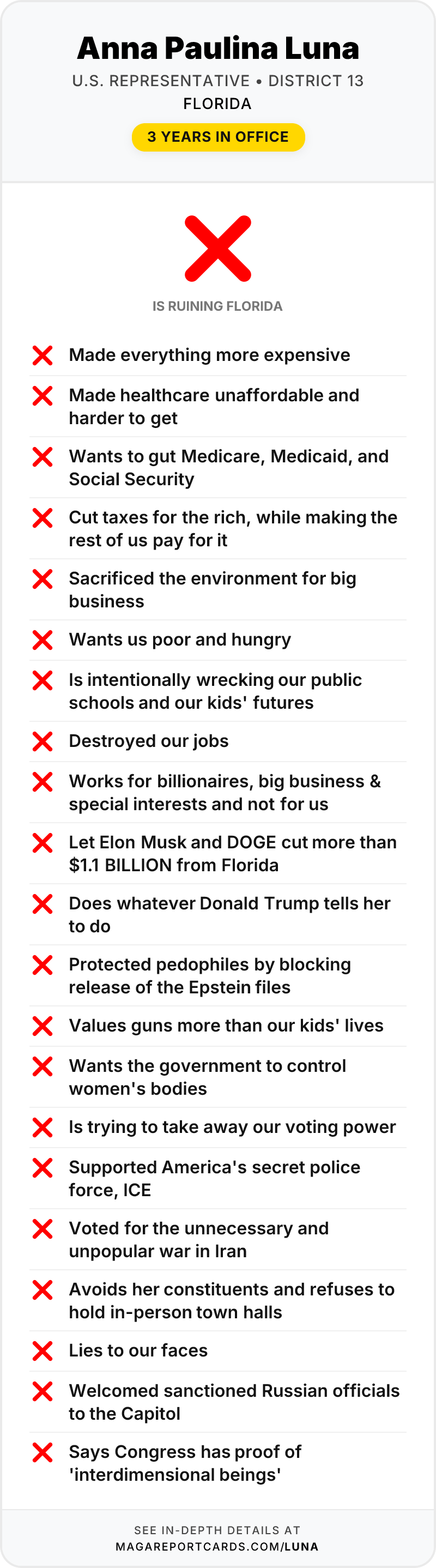
Anna Paulina Luna filed an amendment to the National Defense Authorization Act — the annual bill that sets Pentagon policy and spending levels — directing Defense Department resources to the southwest border. Her office posted a summary of it.
The summary began: "increasing example specific factors. Identical to H.R. 100 (118th Congress).11:25 AM???? Claude responded:"
Washington Post reporter John Hudson posted the screenshot. The site was quietly edited to remove the line. Luna defended the practice, saying her staff had used AI to spell- and grammar-check the summary rather than the amendment text, and that "most staff use it."
That defense is worth taking seriously, because of what it concedes. The chatbot output went out under a member of Congress's name, with the chatbot's own words still in it, and nobody in the office read it before it published. If that is the level of review a summary gets, the question of what review the amendment got answers itself.
The one who admitted he hadn't read the bill
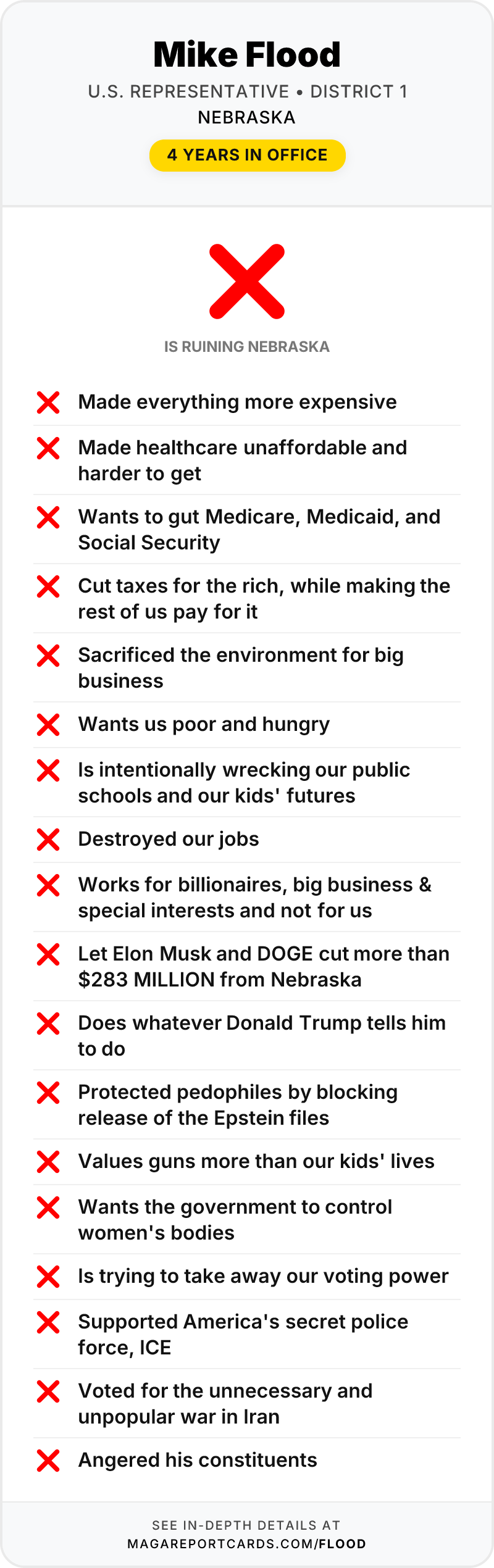
Mike Flood also turned up in the Post's reporting. He asked a chatbot where private equity firms were buying single-family homes while he worked on a bipartisan housing bill last year.
On its own that's the most defensible use on this list — a factual lookup, in an area where the answer is checkable.
But Flood is a specific case. In May 2025 he voted for Trump's budget bill, and five days later stood in front of constituents in Seward, Nebraska, and admitted that a provision stripping federal courts of the power to enforce their own orders "was unknown to me when I voted for that bill."
That's the worry in one sentence. The problem in Congress was never a shortage of information. It's that members vote on 1,100-page bills they haven't read. A tool that produces a confident-sounding paragraph in four seconds doesn't fix that. It makes not reading feel like reading.
Why this matters more than it sounds
It is easy to make this a joke about an old senator and a chatbot. It isn't one.
A chatbot will answer a question about Medicaid eligibility rules with total confidence whether or not it is right. It does not know which version of a bill passed. It cannot tell you that the CBO revised a number last month. It has no idea how many people in Alabama's 3rd District are on SNAP.
Tuberville knows that — he said so. "You don't know whether or not they're 100 percent correct."
He said it anyway, out loud, to a national newspaper, as a description of how he learns about the programs he votes on. The only account any of these three has given of checking the output is Luna's, after the fact: she said she had told her staff to double-check and be more thorough.
There is a version of this story where AI helps a small congressional office do more with less. There is also the version the Post actually found: no training, rules nobody has read, no enforcement, and a member of Congress deciding what he thinks about Medicare somewhere on I-65.
Source
The Wild—and Unregulated—Ways Lawmakers Are Using AI Chatbots — Hafiz Rashid, The New Republic, August 13, 2026, reporting on The Washington Post's investigation, also summarized by Raw Story.