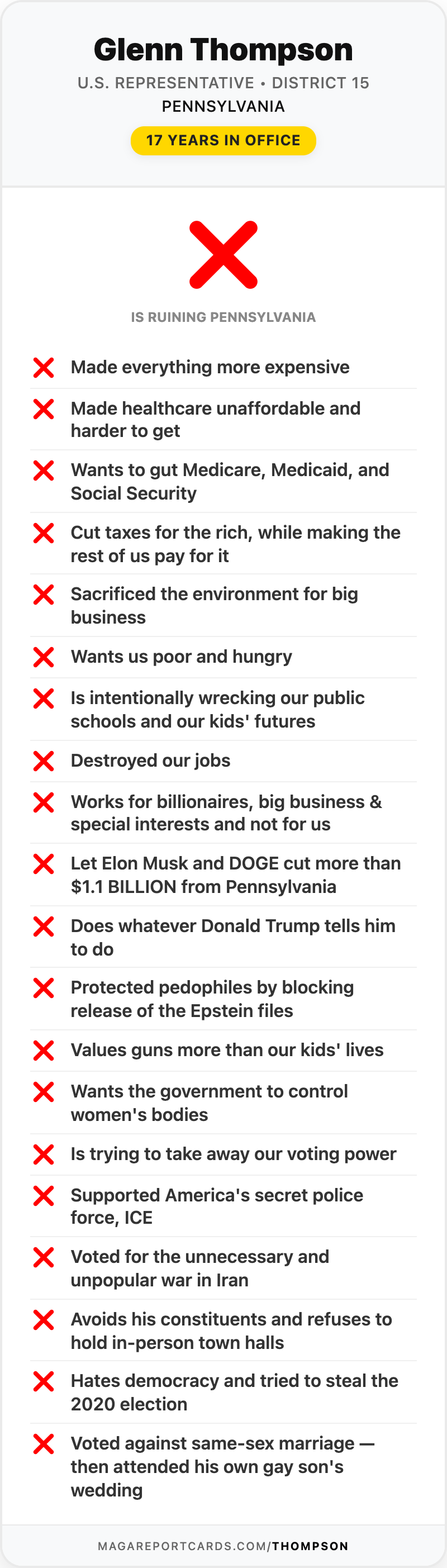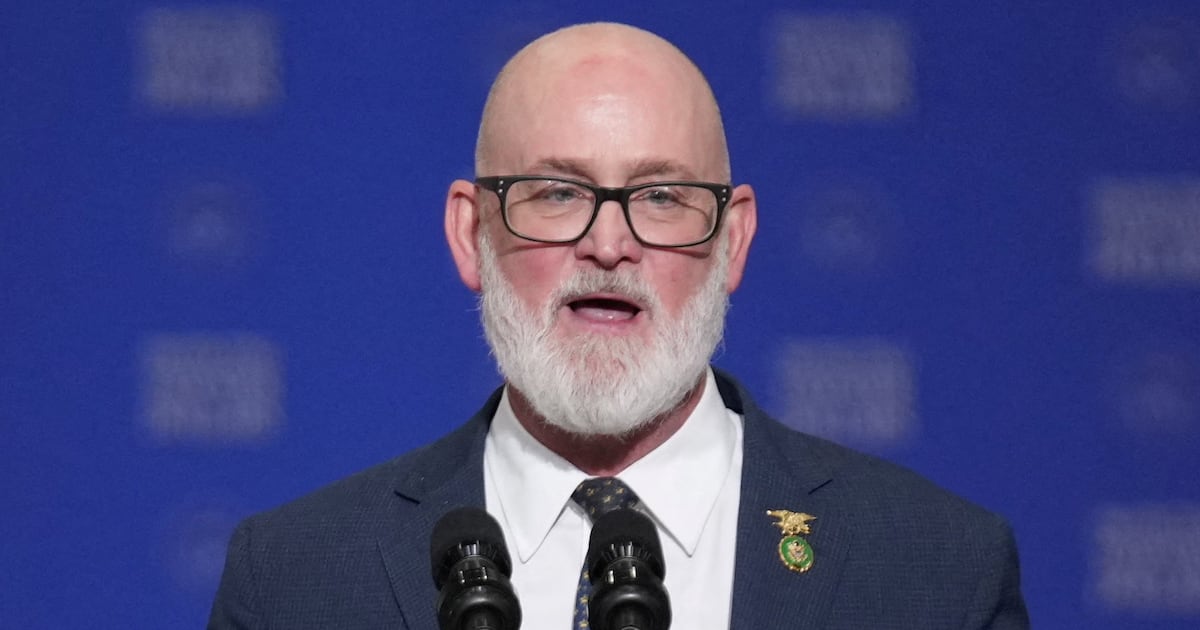
On a Friday night in July 2022, at a wedding southwest of Philadelphia, a man in a black tuxedo stood up next to his wife to toast the two grooms sitting in front of him in white blazers. One of them was his son.
Here is part of what he said, in a recording a guest gave to BuzzFeed News:
"As they grow and as they get a little older, we also hope and pray they're going to find that one true love so that they have the opportunity to experience that: Someone to grow old with. ... We love it when they find their one true love, especially when they become a part of our families then. That's what we're rooting for."
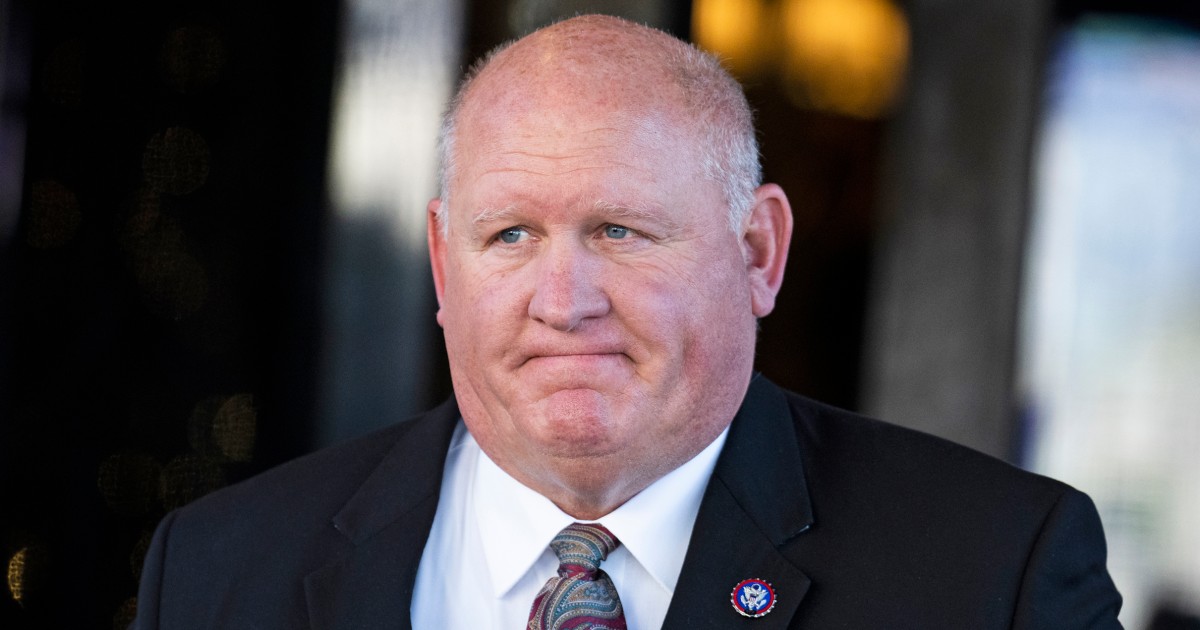
The man giving that toast was Glenn Thompson, the Republican congressman for Pennsylvania's 15th District. Three days earlier, he had gone to the House floor and voted against the bill that protects marriages exactly like the one he was toasting.
The vote
On July 19, 2022, the House passed the Respect for Marriage Act. The bill does one plain thing: it makes the federal government, and every state, recognize a legal marriage between two people of the same sex or of different races. It doesn't force any state to perform those weddings. It just says the government can't pretend an existing marriage never happened.
Forty-seven Republicans voted yes. Thompson was one of the 157 who voted no.
His office had already explained the vote to his hometown paper. Press secretary Maddison Stone called the bill "nothing more than an election-year messaging stunt for Democrats in Congress who have failed to address historic inflation and out of control prices at gas pumps and grocery stores."
Three days after the vote, Thompson was at the reception, telling the room how blessed he felt to welcome a new son into the family.
The story broke when Gawker noticed the timing the day before the ceremony. NBC News confirmed on the Monday that Thompson had gone. His son told NBC he "married the love of [his] life" and that his "father was there." Thompson's own office confirmed it too: the congressman and his wife were "thrilled to attend and celebrate their son's marriage," and were "very happy" to welcome their new son-in-law "into their family."
"It's not anybody's business"
Two months later, a reporter asked Thompson about it. He was not sorry about the vote. He was angry about the coverage.
"It was wrong, it was just absolutely wrong," Thompson told HuffPost in September 2022. "It's not anybody's business — bottom line."
He defended the no vote as a political calculation, not a moral one:
"It was the right vote because it was a political bill that was put on the floor by the Democrats for the purposes of ... getting political leverage, inappropriately, for this next election. No one's looking to step in the way of people choosing who they're going to marry. It was ridiculous."
Two things about that. First, "no one's looking to step in the way" was not true even when he said it. Congress took the bill up because the Supreme Court had just overturned Roe v. Wade, and Justice Clarence Thomas had written separately urging the court to reconsider other landmark rulings, including the 2015 decision that legalized same-sex marriage nationwide. Thompson's answer was that he didn't believe the court would actually do it.
Second, and more to the point: a vote is a vote. If a bill is a stunt, you can say so and still vote yes. Forty-seven of his colleagues did. Thompson chose to be counted against it, and then to be counted at the wedding, and he wanted the second thing kept private.
In the same interview he described what he wants for his kids: "From the time they're born, we have all kinds of hopes and aspirations for them. One of them is that they find that person that they want to grow old with and spend the rest of their life."
That is, almost word for word, the thing the bill he voted against protects.
He got a second chance. He voted no again.
Thompson told HuffPost in September that he'd take another look if the Senate changed the bill. The Senate did change it. A bipartisan group of senators added two entire new sections on religious liberty — protections saying churches, religious schools and faith-based charities can't be forced to take part in a wedding, can't be sued for refusing, and that the law can't be used to take away anyone's tax-exempt status. Twelve Senate Republicans voted for the amended version. The Church of Jesus Christ of Latter-day Saints publicly backed it.
The bill came back to the House on December 8, 2022. Thompson voted no again.
His official statement that day was two sentences long:
"Individuals have the freedom and the right to choose who to grow old with in life. However, the bill lacks the appropriate constitutional protections for religious liberties enshrined in the First Amendment."
He cited missing religious protections as his reason for voting against the only version of the bill that had any. The July bill he also voted against did not contain a single word about religion. The December bill did. He voted no on both.
Sen. Tammy Baldwin, who negotiated those added protections with Republican Sen. Susan Collins, seemed genuinely puzzled when she heard. "He wasn't convinced by the changes we made?" she asked a reporter.
Thompson said he gave his son a heads-up before that second vote, because he knew reporters would come asking. He said he "shared with him the rationality" for it. He would not say whether his son agreed.
"I love my son, my son loves me, and he knows that I'm a principled man," Thompson said.
Thompson has never said he opposes gay marriage. That's what makes this different from an ordinary bad vote. He isn't a man voting his conscience against something he believes is wrong. By his own account he has no objection to his son's marriage at all — he celebrated it in a tuxedo. He just wouldn't extend the same legal security to anybody else's family, twice, when it cost him nothing but a press release.
He wasn't the only Pennsylvania Republican playing games with this bill. Dan Meuser voted yes in July and then flipped to no in December, blaming the religious-liberty language that had just been added — a switch we walked through line by line. In Wisconsin, Tom Tiffany voted no and is now running for governor.
Why this still matters in the 15th District
Pennsylvania's own 1996 law defining marriage as one man and one woman is still sitting on the books. A federal judge struck it down in Whitewood v. Wolf on May 20, 2014 — but the legislature never repealed it. The state House finally passed a repeal on March 25, 2026, by 127–72, and it's now waiting in the Republican-controlled state Senate, where similar efforts have stalled before.
And people are still asking the Supreme Court to reopen the question. In 2025, former Kentucky clerk Kim Davis petitioned the court to overturn the 2015 marriage ruling outright. The justices turned her down on November 10, 2025, with no explanation. Someone will ask again.
So the federal law Thompson voted against twice is, right now, part of what keeps married couples in his district married — including couples in the same position as his own son. He also voted against the Equality Act in February 2021, the bill that would have barred discrimination against LGBTQ people in jobs, housing and public accommodations.
If you live in PA-15 and want to ask him about any of this in person, good luck. Thompson doesn't hold open town halls, and told the Centre Daily Times that going to one organized by county Democrats would be "not logical." His constituents have been standing outside his Bellefonte office every Tuesday since March 2025 trying to get a meeting.
He found the words at the wedding. He's had four years to find them for everybody else's family.
We deserve better.
Source
This post is built on NBC News's July 25, 2022 report that Thompson attended his gay son's wedding three days after voting against the Respect for Marriage Act, along with BuzzFeed News's recording of his toast, HuffPost's follow-up interviews, Thompson's own press release, and the official House roll calls for both votes on H.R. 8404. Photo: Tom Williams / CQ-Roll Call, Inc. via Getty Images.