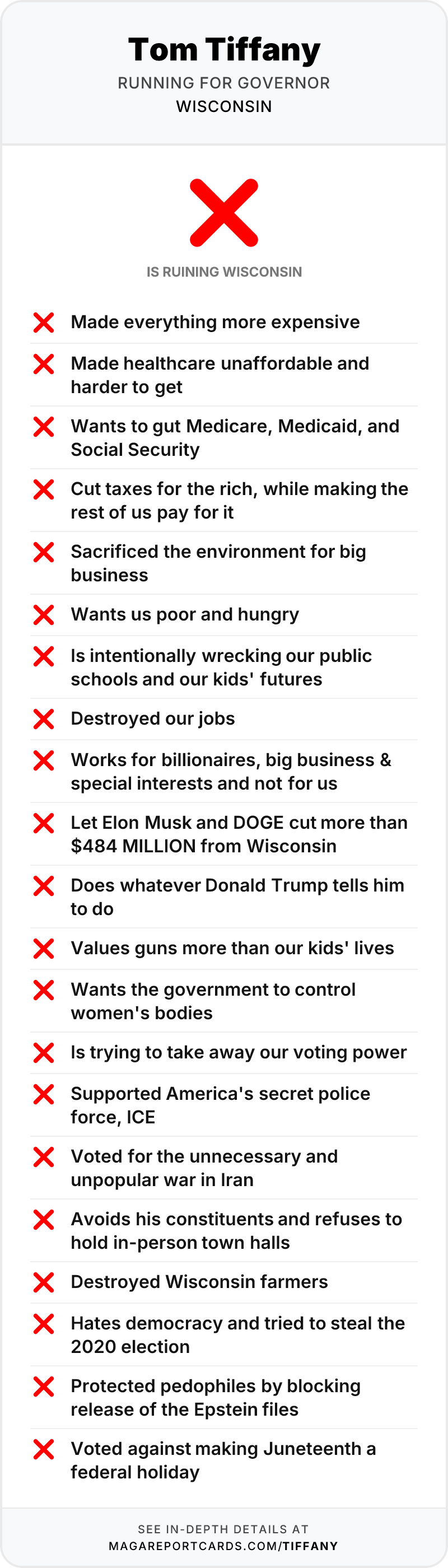
When Congress had the chance to protect marriage for same-sex and interracial couples, most members said yes. Tom Tiffany said no.
Now he's running to be Wisconsin's next governor — and a recent reminder of that vote is putting his record back in the spotlight. As the group A Better Wisconsin Together put it, Wisconsinites can "add marriage to the list of personal life decisions that Tom Tiffany wants politicians like himself in charge of."
What He Actually Voted On
In December 2022, the U.S. House passed the Respect for Marriage Act. The bill did one simple, popular thing: it made sure the federal government — and every state — has to recognize legal marriages between same-sex couples and interracial couples.
It wasn't a fringe idea. The bill was bipartisan, written in part by Wisconsin's own Senator Tammy Baldwin. Thirty-nine House Republicans crossed over to vote for it. It passed 258 to 169 and President Biden signed it into law.
Tom Tiffany was a No. According to the official House roll call, he voted against protecting marriage for his own constituents.
Think about who that vote affects. Married couples in Wisconsin who just want to know their marriage is safe. Kids being raised by same-sex parents. People who married someone of a different race. The law Tiffany voted against simply says the government can't tear those marriages apart. He still said no.
Why It Matters Now
This isn't ancient history. Five months before that vote, the Supreme Court overturned Roe v. Wade — and Justice Clarence Thomas openly suggested the court should "reconsider" its rulings protecting same-sex marriage and even contraception. That's exactly why Congress acted. The Respect for Marriage Act was a safety net in case the court came after marriage next.
Tiffany voted to leave that safety net out. If the court ever does revisit same-sex marriage, the protection he opposed is one of the only things standing in the way.
And remember what office he's running for. The governor of Wisconsin signs or vetoes state laws, appoints officials, and sets the tone for the whole state. A governor who wouldn't lift a finger to protect marriage rights in Congress isn't going to protect them from the governor's mansion either.
It Fits a Bigger Pattern
The marriage vote isn't a one-off. Tiffany has built a career out of putting politicians in charge of people's private decisions — and then trying to hide it when he runs for higher office.
Look at the record:
- Abortion. As a state senator he voted for Wisconsin's 20-week abortion ban, and in Congress he co-sponsored a six-week ban with no exceptions for rape or incest. Now that he's running for governor, he quietly erased abortion from his campaign website and won't say if he still supports that ban.
- Juneteenth. When the House voted to make Juneteenth — the day marking the end of slavery — a federal holiday, it passed 415 to 14. Tiffany was one of just 14 Republicans to vote no, and the only member of Wisconsin's delegation to do it.
- The 2020 election. Tiffany was the only Wisconsin House member to sign a brief supporting the Texas lawsuit asking the Supreme Court to throw out his own state's 2020 results — and hours after the January 6th attack, he voted to reject Pennsylvania's electoral votes.
See the theme? Over and over, Tiffany lands on the side of taking freedoms away — sometimes as the lone Wisconsin vote willing to do it. The marriage vote is just the latest example.
Wisconsin Deserves Better
Most Americans, and most Wisconsinites, settled the marriage question a long time ago. People should be free to marry who they love, and the government shouldn't be able to undo it. That's not a radical position — it's the law, passed with votes from both parties.
Tom Tiffany voted against it anyway. A man who wouldn't protect your marriage in Congress shouldn't be trusted to protect anything else as governor.
Source
This post was prompted by A Better Wisconsin Together's reminder of Tiffany's vote, and is built on the official House roll call for the Respect for Marriage Act.