For two years you paid more. More for coffee. More for shoes. More for a washing machine, a set of tires, a kid's video game console. You paid it at the register, a little at a time, and nobody handed you a receipt that said "tariff."
Then in February the Supreme Court ruled that the whole thing was illegal — that the 1977 emergency law President Trump used to tax nearly everything coming into the country never gave him that power in the first place. The government now has to give the money back.
$166 billion of it.
Here's the punchline: it isn't coming to you. It's going to Amazon, Apple, Ford, General Motors and Nike.
The refunds are real, and they're enormous
Because tariffs are technically paid by the company that brings the goods across the border, the company is the one legally owed the refund. And the checks are clearing. As of the end of June, Customs and Border Protection had authorized $104.29 billion in refunds and actually paid out $71.06 billion, according to the Cato Institute's tracking of the court filings.
Look at who's cashing in, as reported by Newsweek this week:
- Apple — up to $2.2 billion, which helped power what the company called its strongest June quarter ever
- Ford — $1.3 billion
- Nike — nearly $1 billion
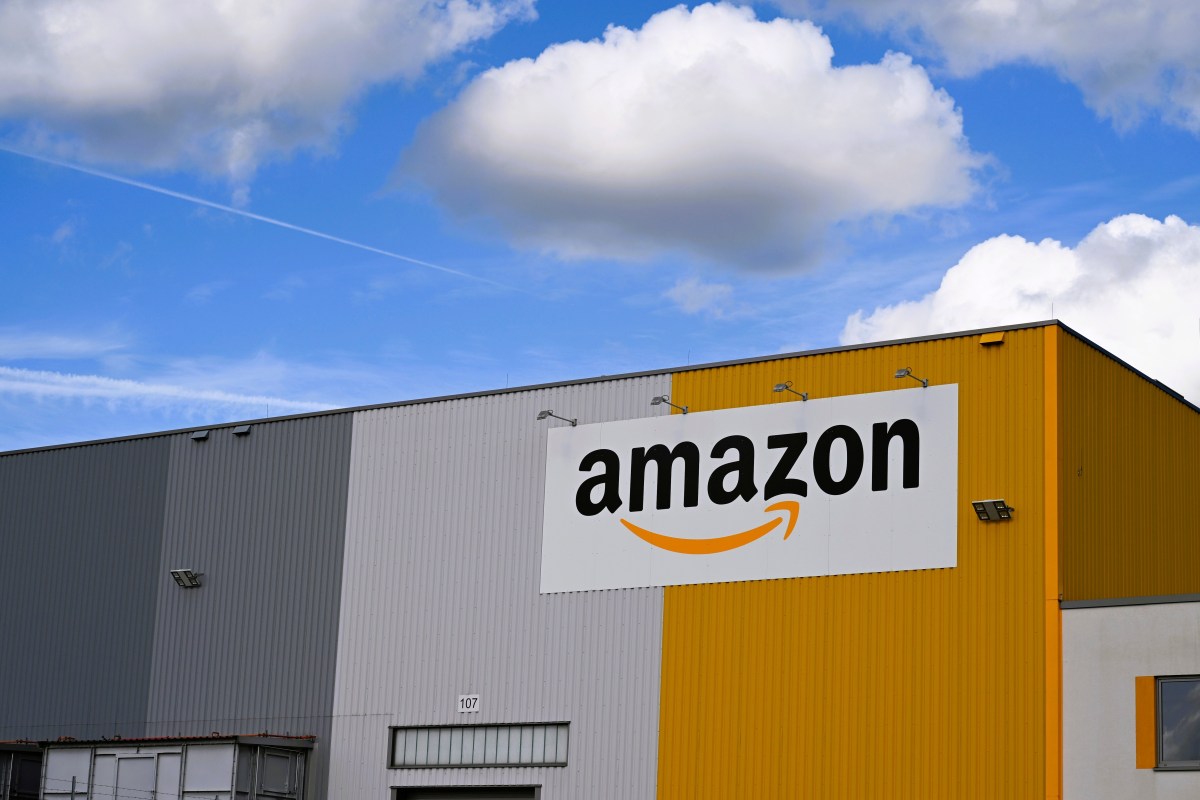
- Amazon — about $600 million in one quarter alone
- General Motors — $500 million
And it's not spread evenly, either. Cato found that while CBP had approved refunds covering nearly 60 percent of the total money owed, those approvals covered only 30 percent of the actual import entries. Translation: the giants got processed first. As Cato put it, "the deck is stacked against small firms that lack the resources to fight for and obtain what the government owes them."
The big guys have trade lawyers. The corner store had to close.
You paid it. That part isn't in dispute.
Nobody serious argues otherwise anymore. A study by the Kiel Institute that examined $4 trillion in shipments found foreign exporters absorbed only about 4 percent of the tariff burden — the other 96 percent got passed on to buyers here. The researchers described the roughly $200 billion collected in 2025 as "a tax paid almost entirely by Americans."
The nonpartisan Yale Budget Lab put the average effective tariff rate at 16.8 percent — the highest since 1935 — and estimated the price increases cost the typical household about $1,700 in 2025 alone.
So: you were charged. The charge was ruled illegal. The refund is going to somebody else.
Lorena Gonzalez Fletcher, president of the California Federation of Labor Unions, said it about as plainly as it can be said this weekend: "Corporations passed on the cost of Trump's tariffs to working people, consumers. They will pocket the refunds. More profits for corporate shareholders and we get screwed. Again."
Some companies are sharing. Most aren't.
Credit where it's due — a handful said they'd pass something back. Amazon CFO Brian Olsavsky said the company had identified a "limited set of circumstances" where it charged customers an import surcharge, and promised: "When we receive those refunds, we will proactively contact affected customers and automatically issue refunds to them." FedEx, UPS, Walmart and Costco have all said they'll return value to customers in some form. Costco CEO Ron Vachris told investors in March that "our commitment will be to find the best way to return this value to our members."
Notice what pushed Amazon there, though. It wasn't conscience. It was class-action lawsuits and public pressure.
Now the other side. Apple says the refund will go toward its investment projects and hasn't committed to sharing a dime with customers. And Nintendo argued last month that when you paid the higher price, you agreed to it — so you're "not entitled" to any of the rebate.
Read that again. You paid an unconstitutional tax through a higher sticker price, and the company's position is that the checkout screen was a contract.
Congress could fix this in an afternoon. It won't.
There is a bill. Rep. Rosa DeLauro and Rep. Frank Mrvan introduced the Tariff Relief for Consumers Act in March. It's simple: any company collecting more than $5 million in tariff refunds has to pass an equal amount back to consumers as discounts or rebates on things like groceries, infant formula and hygiene products — and can't shovel the refund into stock buybacks and dividends until it does. Small businesses under $10 million in revenue are exempt so they can recover in full.
Its status, five months later: referred to the House Ways and Means Committee on March 5, and nothing since. One action on the docket. Three cosponsors. Republicans run that committee and they have not moved it an inch.
And before anyone says this is just Democrats writing press releases — the same thing happened to the Republican version. Sen. Josh Hawley's American Worker Rebate Act, which would send tariff money back to families as rebate checks, was introduced on July 28, 2025 and referred to the Senate Finance Committee. More than a year later, the bill's record shows exactly one action, zero cosponsors, and nothing since. Republicans control that committee too.
A Republican senator's own bill to give this money to workers has been sitting untouched in a Republican committee for over a year. That's not gridlock. That's a choice.
Remember the $2,000 check?
In November, Trump posted on Truth Social: "A dividend of at least $2000 a person (not including high income people!) will be paid to everyone." It got wall-to-wall coverage. People planned around it.
It doesn't exist. There's no law, no appropriation, no check. Yale ran the numbers and found a $2,000-per-person rebate would cost about $450 billion — roughly twice all the tariff revenue expected in 2026. Trump also claimed the government took in "more than 600 Billion Dollars in Tariffs." The Bipartisan Policy Center put 2025 gross tariff revenue at $289 billion; CBP's own number was closer to $200 billion.
Columbia Business School economist Brett House was blunt about the whole framing: "It's not a dividend when you give money back to people that they paid earlier."
He's right — and it's worse than that. They're not even giving it back to the people who paid it.
How we got here
None of this was an accident, and Congress was not a bystander. When the tariffs were in force, House Republicans didn't just decline to stop them — they rewrote the rules so nobody could vote on them. On September 16, 2025, on a 213–211 vote, they passed House Resolution 707, which switched off the section of the National Emergencies Act that lets Congress force a vote to end a president's emergency — all the way through March 31, 2026. It was the second time they'd pulled that lever. Only three Republicans voted no: Thomas Massie, Kevin Kiley and Victoria Spartz. Rep. Suzan DelBene, who voted against it, called it "capitulating to the largest tax increase on Americans in history."
That's the pattern, and we've written about it before. Congress holds the tariff power under the Constitution. Republicans hold Congress. Every time there was a chance to protect their own constituents from this tax, they used the rulebook to make sure the vote never happened.
Meanwhile the administration is now in court fighting parts of the refund order, which Cato — a libertarian think tank, not exactly a left-wing outfit — warns could let the government "end up keeping tens of billions of dollars that it unlawfully confiscated."
The bottom line
Strip away the trade jargon and here's what happened to you:
- Republicans in Washington let a president levy a tax that Congress alone had the power to levy.
- You paid it — about $1,700 a year — every time you checked out.
- The Supreme Court said it was illegal.
- The refund is going to Apple, Ford, Nike, GM and Amazon.
- The bills to send some of it back to you are sitting in Republican-run committees, untouched.
- The $2,000 check you were promised was never real.
We all got screwed. Big business cashed in. And the people who could have stopped it at any of those six steps are the same people asking for your vote in November.
Source
- "Tariff refunds split companies as consumers demand share of $166B," Newsweek, August 3, 2026. Photo: Wolf von Dewitz/picture-alliance/dpa/AP.