On June 12, 2016, a gunman walked into Pulse in Orlando during Latin night and murdered 49 people. At the time, it was the deadliest mass shooting in the country's history. Pulse described itself on its website as "the hottest gay bar in Orlando." Everyone knew what it was.
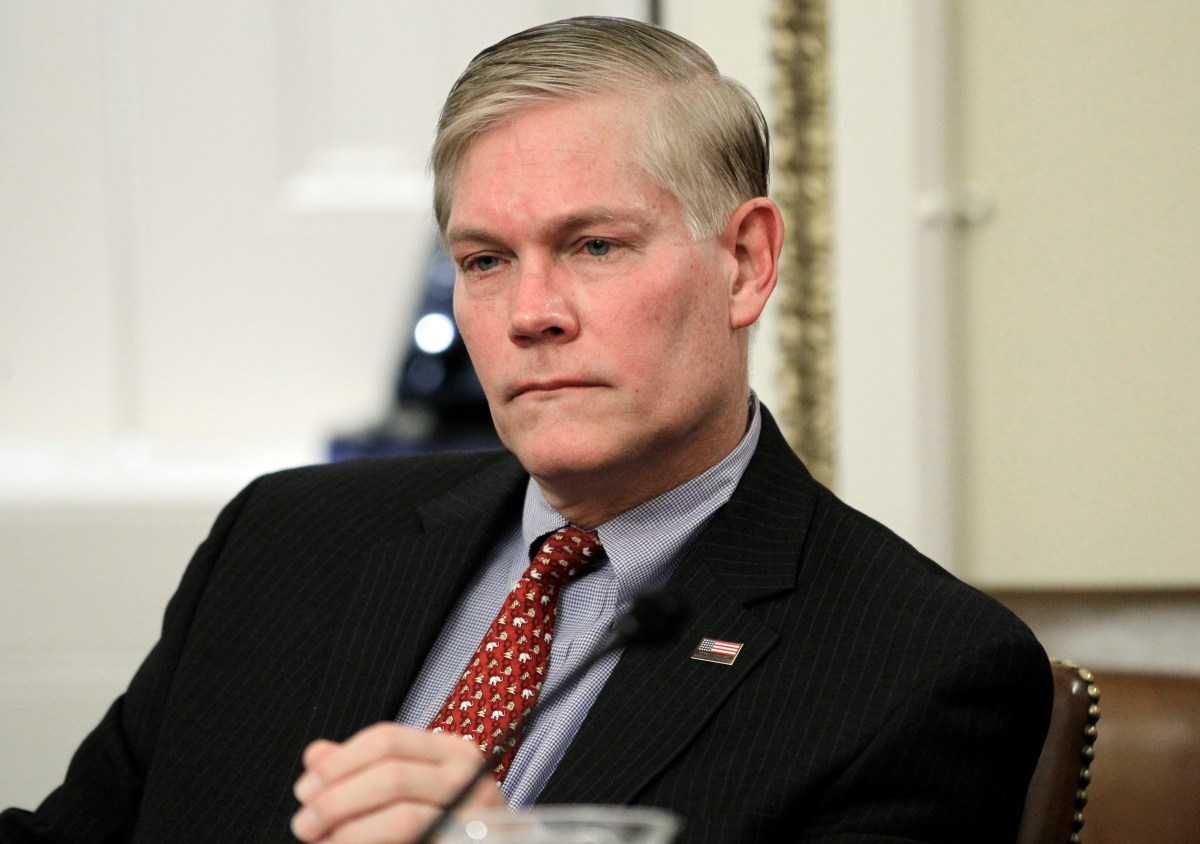
Two days later, a reporter for National Journal asked Pete Sessions — then the chairman of the powerful House Rules Committee — whether the massacre changed his position on a measure barring federal contractors from discriminating against LGBTQ people.
This is what Sessions said:
"It was a young person's nightclub, I'm told. And there were some [LGBT people] there, but it was mostly Latinos."
The remark was reported by Daniel Newhauser of National Journal and picked up nationally within hours. Faced with the obvious problem — that Pulse was, in fact, a gay club — Sessions's communications director offered this: the congressman's words had been "taken out of context," and what he meant was that "there weren't only gay individuals at the club but people from all walks of life were present."
It didn't hold up. The Rules Committee's own chairman had been asked a direct question about the massacre and answered by disputing that the victims were the people they were.
That Same Week, His Committee Blocked the Vote
The question wasn't hypothetical. There was a real amendment, sitting in Sessions's committee, waiting on him.
Rep. Sean Patrick Maloney had filed an amendment to a Defense Department spending bill that would have enforced President Obama's 2014 executive order barring companies that contract with the federal government from discriminating against LGBTQ people. It was not a radical measure. It had Republican cosponsors — Ileana Ros-Lehtinen of Florida and Richard Hanna of New York.
The House Rules Committee decides which amendments get a floor vote and which ones die without one. Sessions ran that committee.
Days after the Orlando massacre, the committee blocked the amendment from getting a vote. It was the third time in weeks House Republicans had stopped a version of it.
Maloney's reaction at the time:
"It's hard to imagine that any act that is so horrific could lead to anything positive. But if we were going to do anything, it would be a very positive step to say that discrimination has no place in our law and to reaffirm the president's actions in this area."
On Monday, Speaker Paul Ryan led the House in a moment of silence for the Orlando victims. The next evening, the Rules Committee met and made sure an amendment protecting LGBTQ workers never reached the floor.
The Votes Since
Sessions lost his Dallas seat in 2018 and came back in 2021 representing Waco. His record since has been consistent with what he said in 2016.
- On February 25, 2021, the House passed the Equality Act, which would write protections against discrimination in employment, housing and public accommodations into federal civil rights law. Sessions voted no. It would have covered the kind of job discrimination he'd been asked about after Pulse, five years earlier.
- On December 8, 2022, the House gave final passage to the Respect for Marriage Act, which protects existing same-sex and interracial marriages if the Supreme Court reverses course. Thirty-nine House Republicans voted for it. Sessions voted no.
Same-sex marriage has been the law for more than a decade. A large bloc of his own party voted to leave those marriages alone. Sessions wouldn't.
Why an Old Quote Still Matters
Some politicians say something ugly, apologize, and change. That's not what happened here.
Sessions's office first said his words had been taken out of context, then, as Metro Weekly reported, clarified that he had been mistaken. But on both of the big House votes on these protections since, he voted no. The Pulse comment wasn't a slip that contradicted his record. It was his record, said out loud, at the worst possible moment.
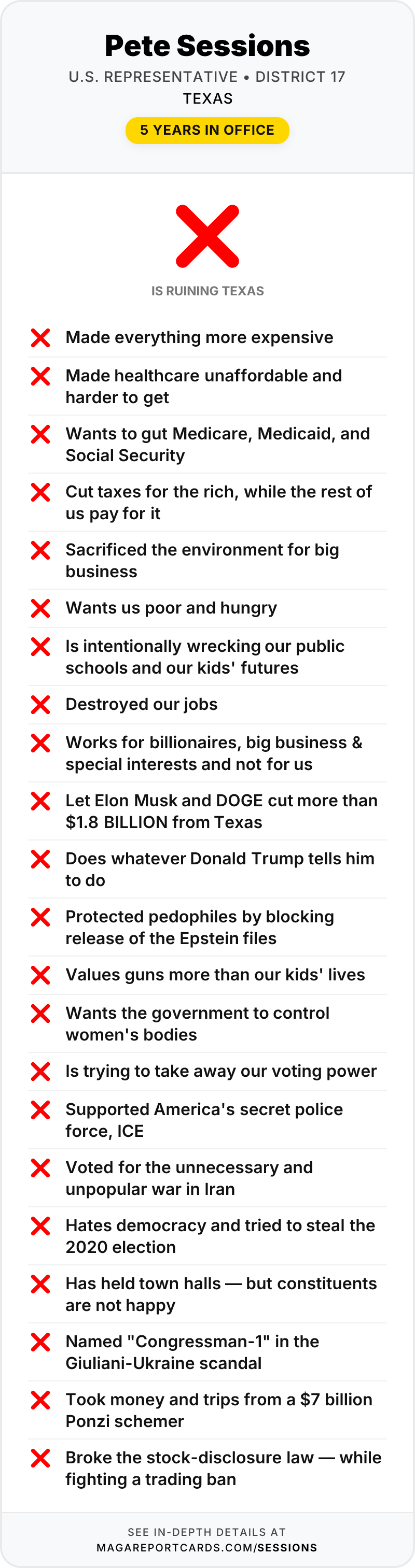
This is a man who has spent about 27 years in Congress and now sits on the Financial Services and Oversight Committees. He is asking Texas's 17th District for a fifteenth term. His pattern of standing by the wrong people is well documented — he wrote a letter vouching for the "character" of a man running a $7 billion Ponzi scheme, and he testified for the defense of a former congressman convicted of secretly working for Nicolás Maduro's government. What he would not do, on the worst week in the modern history of LGBTQ Americans, was let his colleagues vote on whether those Americans could be fired for who they are.
Forty-nine people were killed. Sessions was asked one question about it. He used his answer to argue about who the dead were, and then he used his gavel to make sure nothing changed.
We deserve better.
Source
- GOPer Suggests Site Of Orlando Attack Wasn't Gay Club: 'It Was Mostly Latinos' — Talking Points Memo. Photo: AP Photo/Charles Dharapak, via Talking Points Memo.