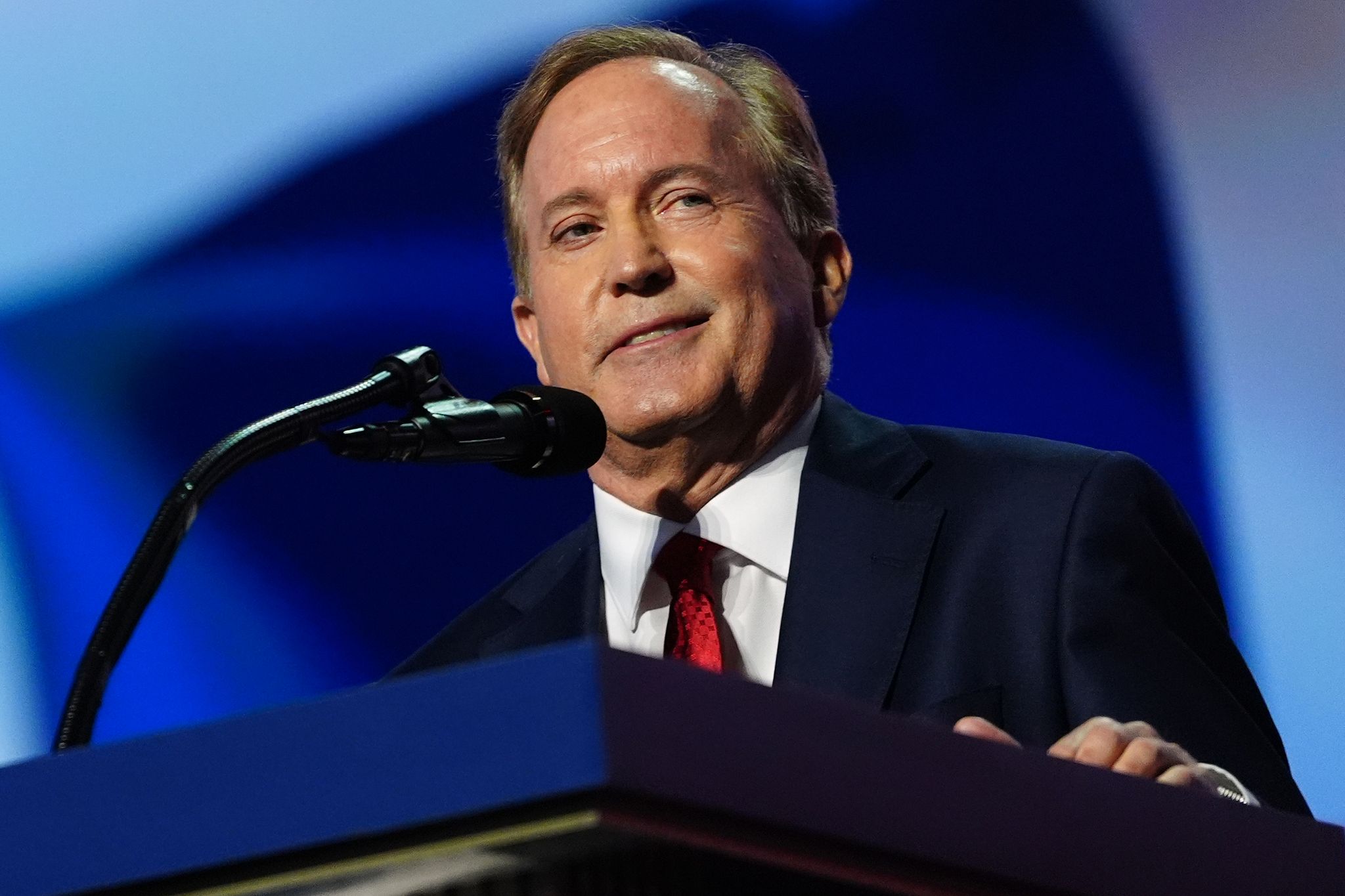
On Monday, April 27, 2026, a sitting member of Congress walked into a federal courthouse in Miami and took the witness stand — for the defense.
Pete Sessions, the Republican who represents Waco and Texas's 17th District, was there to help former Congressman David Rivera beat a federal charge of secretly working for the government of Venezuelan dictator Nicolás Maduro. On the stand, Sessions talked about his own meetings with Venezuelan official Delcy Rodríguez in New York in 2017, and with Maduro himself in Caracas. He said the conversations were about a path forward for Venezuela without Maduro in power. He said it was Rodríguez, not Rivera, who raised the idea of bringing Exxon back to Venezuela.
The jury did not buy it. Days later, Rivera and consultant Esther Nuhfer were found guilty on all counts — including failing to register as a foreign agent and conspiracy to commit money laundering. Prosecutors alleged that Rivera and Nuhfer had manipulated their influential friends, including Sessions and Secretary of State Marco Rubio, "like pawns on a chess board."
Here's the thing about being called a pawn. Nobody made Pete Sessions get on that plane.
He Went to Caracas in Secret, and Asked American Diplomats to Stay Away
In April 2018, while he was still a sitting congressman from Dallas, Sessions took a private two-day trip to Caracas to meet Maduro. The Associated Press laid out how it happened in June 2020.
The State Department played no role in organizing the trip. Two U.S. officials told the AP that Sessions had asked U.S. diplomats not to accompany him to the presidential palace. He went in alone — well, not quite alone. Also in the room was Raúl Gorrín, a Venezuelan media mogul. David Rivera served as the translator.
Afterward, U.S. Embassy staff saw Sessions at a small reception thrown for him at Gorrín's mansion in Caracas.
A member of the United States Congress met a dictator, on that dictator's turf, and specifically asked his own country's diplomats not to come with him. Whatever that is, it isn't diplomacy. Diplomacy has witnesses.
The Man Who Set It Up Was Indicted Months Later
Raúl Gorrín, the businessman who urged Sessions to make the trip and hosted his reception, was not a neutral party. Gorrín and Delcy Rodríguez organized Sessions's visit to Caracas — and who steered the lobbying contract to Rivera's firm, according to the AP's sources.
A few months after introducing Sessions to Maduro, Gorrín was charged in Miami federal court with conspiring to violate the Foreign Corrupt Practices Act and with money laundering, in a currency-exchange scheme in which Venezuela's former national treasurer admitted taking more than $1 billion in bribes. The AP reported that the allegations against him included helping embezzle $200 million out of Venezuela's state oil company on behalf of Maduro's stepsons. Gorrín never faced a U.S. jury. He spent years as a fugitive, and in 2026 the Miami Herald reported that Venezuelan authorities were holding him in the intelligence service's underground cells known as La Tumba — with no word on whether he would ever be sent to Miami.
That is the man who arranged Pete Sessions's audience with Maduro.
The $50 Million Contract
The reason any of this ended up in a courtroom is the money.
While all this was happening, Rivera's one-man firm, Interamerican Consulting, was collecting on a $50 million contract for three months of work for an American unit of Venezuela's state oil company, PDVSA. At least $15 million of it was actually paid. The stated goal, according to a copy of the contract the AP reviewed, was to improve PDVSA's "long-term reputation" and "standing" among "targeted stakeholders" in the United States.
For scale: Citgo, PDVSA's Houston subsidiary, had long paid two established Washington lobbying firms about $70,000 a month combined. Spread over three months, Rivera's deal worked out to about $16.7 million a month — more than 200 times that rate.
Rivera never registered as a foreign agent. That is among the charges he was convicted on.
Sessions Was the Target of the Charm Offensive
Sessions wasn't a bystander who wandered into this. Venezuela went looking for him.
On June 8, 2017, an official at PDVSA emailed Sessions's personal email address asking for his help setting up a meeting between Venezuela's oil minister and Darren Woods, the CEO of Exxon Mobil. The idea was to lure Exxon back into Venezuela after a decade away. Two people familiar with the federal investigation told the AP that the person who allegedly instructed the PDVSA official to send that email was David Rivera.
"We thank you for your commitment to making this meeting happen," the email concluded.
Sessions was chosen for a reason. Exxon is headquartered in the Dallas district he represented at the time, and he had close ties to then-Secretary of State Rex Tillerson, Exxon's former CEO — the two men had both held leadership positions in the Boy Scouts of America. Sessions didn't reply to the email directly, and Exxon turned the meeting down.
But he kept going. Over the next 15 months he stayed involved. He flew to Caracas. And a few months after that, he got on the phone with Maduro alongside Rudy Giuliani, Trump's personal lawyer — at the same time the two of them were involved in the other shadow-diplomacy effort, the one to get the U.S. ambassador to Ukraine fired.
According to John Bolton's book about his time as national security adviser, Sessions's push for a Trump–Maduro meeting came as a surprise to him. The president's own national security adviser did not know a congressman was freelancing with Caracas.
This Is a Pattern, Not an Accident
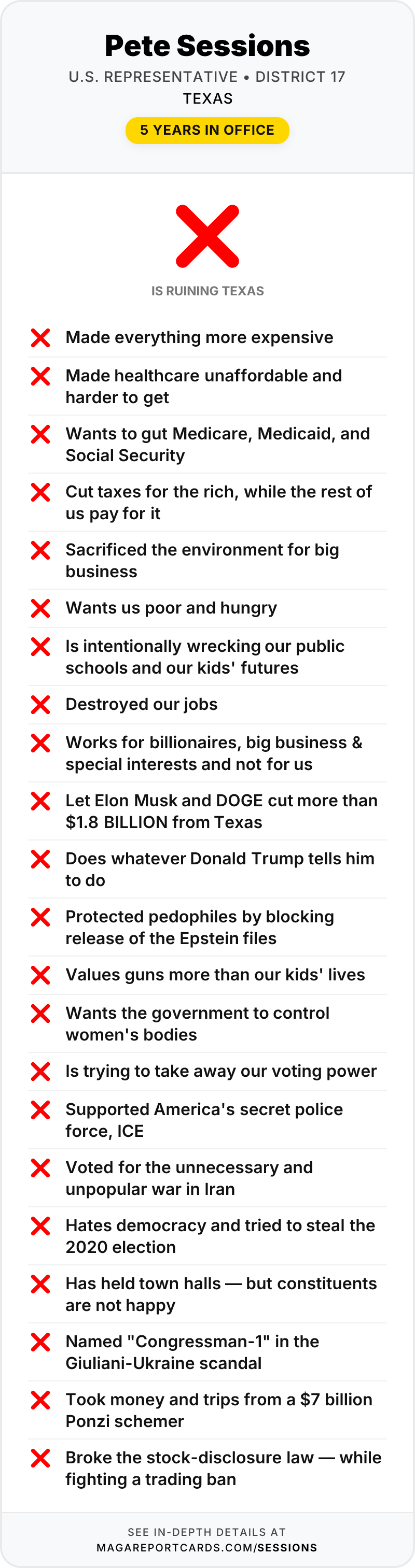
Sessions's own report card already documents the Ukraine half of that story. NBC News and other outlets identified him as the unnamed "Congressman-1" in the 2019 indictment of Giuliani associates Lev Parnas and Igor Fruman, who pledged to raise at least $20,000 for him while seeking his help removing Ambassador Marie Yovanovitch. As chairman of the House Rules Committee, Sessions wrote the letter calling for her ouster.
And before Venezuela, before Ukraine, there was Allen Stanford. U.S. officials had long been suspicious of Sessions's Venezuela activity. His only obvious prior link to the country was a letter he wrote in 2004 to Venezuelan banking regulators, vouching for Stanford — the financier later convicted of running a Ponzi scheme worth more than $7 billion and sentenced to 110 years in prison.
Sessions also helped put David Rivera in Congress in the first place. As chairman of the National Republican Congressional Committee, he helped elect Rivera in 2010 despite domestic abuse allegations that nearly sank Rivera's campaign, and in 2012 he hosted a Washington fundraising reception for him.
Three separate times, across two decades, Pete Sessions lent his office and his name to men who turned out to be running criminal schemes. Each time, his explanation is that he didn't know.
What He Said When Asked
When the AP came to him with detailed questions about all of it, Sessions declined to answer. His spokesman said this:
"The U.S. Department of State would be your best resource for any information regarding contacts made with Venezuela."
The State Department, of course, had nothing to do with the trip. That was the whole point of it.
Two years earlier, when the AP first reported the Caracas visit, Sessions's then-spokeswoman said her boss had spent the past year trying to "resolve issues" in Venezuela at the request of a friend she didn't identify, and that Sessions paid for his own travel.
There is no indication Sessions personally made money from Rivera's contract. That isn't the point. The point is that a congressman from Texas made himself useful to a regime the United States was sanctioning, in private, at the urging of a man under federal indictment in Miami since 2018, on behalf of a friend who has now been convicted of being that regime's secret agent — and eight years later he showed up in Miami to testify for him.
It's worth remembering what Sessions says about transparency when the subject is his own conduct. Explaining why he opposes banning members of Congress from trading stocks, he offered this: "If you have nothing to hide, then transparency is your friend." He is one of 45 Republicans on this site who broke the STOCK Act, the law that requires members to disclose their trades.
Transparency is a friend he keeps at a distance.
Waco Deserves an Answer
Sessions has been in Congress for about 27 years across two stints. He sits on the Financial Services Committee and the Oversight Committee, and he co-chairs the House DOGE Caucus, where he presents himself as the man rooting out waste and fraud in the federal government.
The voters of Texas's 17th District have never gotten a straight account of what he was doing in Caracas, who asked him to go, what he offered Maduro, or why he told American diplomats to stay behind. He has now testified about it under oath — for the defense, in a case the government won.
We deserve better.
Source
- Rep. Pete Sessions testifies during ex-Rep. David Rivera's federal trial in Miami — Local 10 News (WPLG), April 27, 2026. Photo: WPLG Local 10.