Vivek Ramaswamy, the Republican running for governor of Ohio, founded the drug company Roivant Sciences. His opponent, Amy Acton, has been attacking him over it — specifically over intepirdine, the Alzheimer's drug his company bet on and lost.
Ramaswamy's campaign answered with a new ad. It features a man with prostate cancer who says Acton is lying about Ramaswamy and that Ramaswamy's work got him the medicine he needed.
On October 7, 2026, cleveland.com fact-checked the ad. It found three of its claims are lies — "not supported by the facts or by the sources the ad cites as evidence."
Lie No. 1: "I know she's lying about him because I lived the truth firsthand."
The patient says his own experience proves Acton is lying about Ramaswamy's drug record.
But his experience is with a different drug. The ad even shows the cleveland.com article about Acton's attack on screen — and that article makes clear the attack is about intepirdine, the failed Alzheimer's drug. The patient is talking about a prostate-cancer medicine the ad never names. Cleveland.com says it is most likely relugolix, which Ramaswamy's company, Roivant Sciences, helped develop.
A man's good experience with one drug says nothing about whether another drug failed. Intepirdine failed. We've written about how Ramaswamy hired his own mother to re-crunch its numbers — and how, three weeks before it failed again, SoftBank made him whole.
Lie No. 2: "When Big Pharma overlooked a promising treatment, he took a risk."
This is the story Ramaswamy likes to tell: the big drug companies ignored a good medicine, and he rescued it.
Cleveland.com says that's not what happened. Takeda Pharmaceutical Company had already tested relugolix through Phase 2 trials. Then it licensed the drug to Myovant Sciences, a company set up with Roivant to keep developing it. Takeda itself called the drug promising.
Big Pharma didn't overlook it. Big Pharma developed it, and then licensed it out.
Lie No. 3: "(Ramaswamy) got that medicine to patients like me."
Roivant did help move relugolix forward through Myovant. But cleveland.com says the ad overstates Ramaswamy's role in getting it to patients.
Here's the timeline: Roivant transferred its entire ownership stake to Sumitomo in 2019. The FDA approved the drug, sold as Orgovyx, for advanced prostate cancer in 2020. It reached U.S. patients in 2021.
By the time the drug was approved, Ramaswamy's company no longer owned any of it.
A pattern of false attacks on Acton
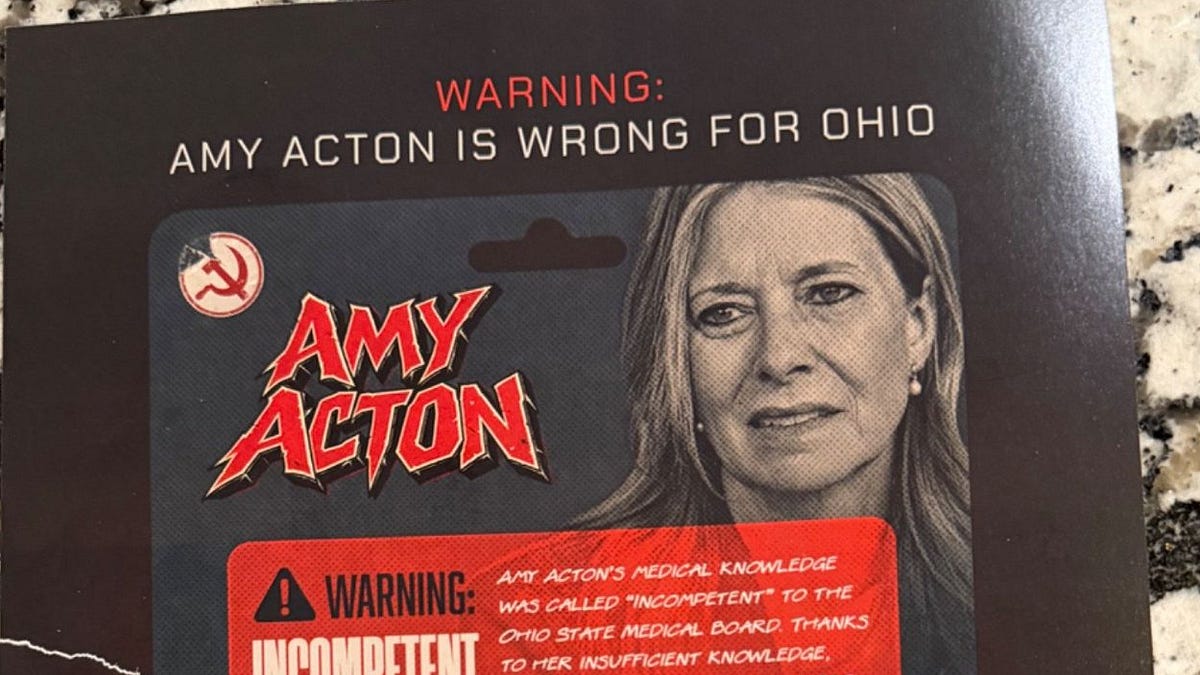
This isn't the first time Ramaswamy's side has gone after Acton with claims that don't hold up. A billionaire-funded super PAC backing him mailed Ohioans a flyer calling Acton "incompetent" — and its own spokesman later admitted nobody had ever said that.
To be fair to the fact-checkers: cleveland.com, which grades ads from both parties, also found two lies in the Acton ad that started this fight. That's how fact-checks are supposed to work. But Ramaswamy's answer wasn't to correct the record on intepirdine. It was to put a cancer patient on camera and make three more false claims.
What the fact-check found
Vivek Ramaswamy's ad features a prostate-cancer patient who says Amy Acton is lying about Ramaswamy's drug record. Cleveland.com found three of the ad's claims are lies: the patient is talking about a different drug from the failed Alzheimer's drug Acton criticized; the big drug company Takeda had already tested his drug and called it promising before licensing it out; and Ramaswamy's company had handed off its entire stake before the FDA approved it.