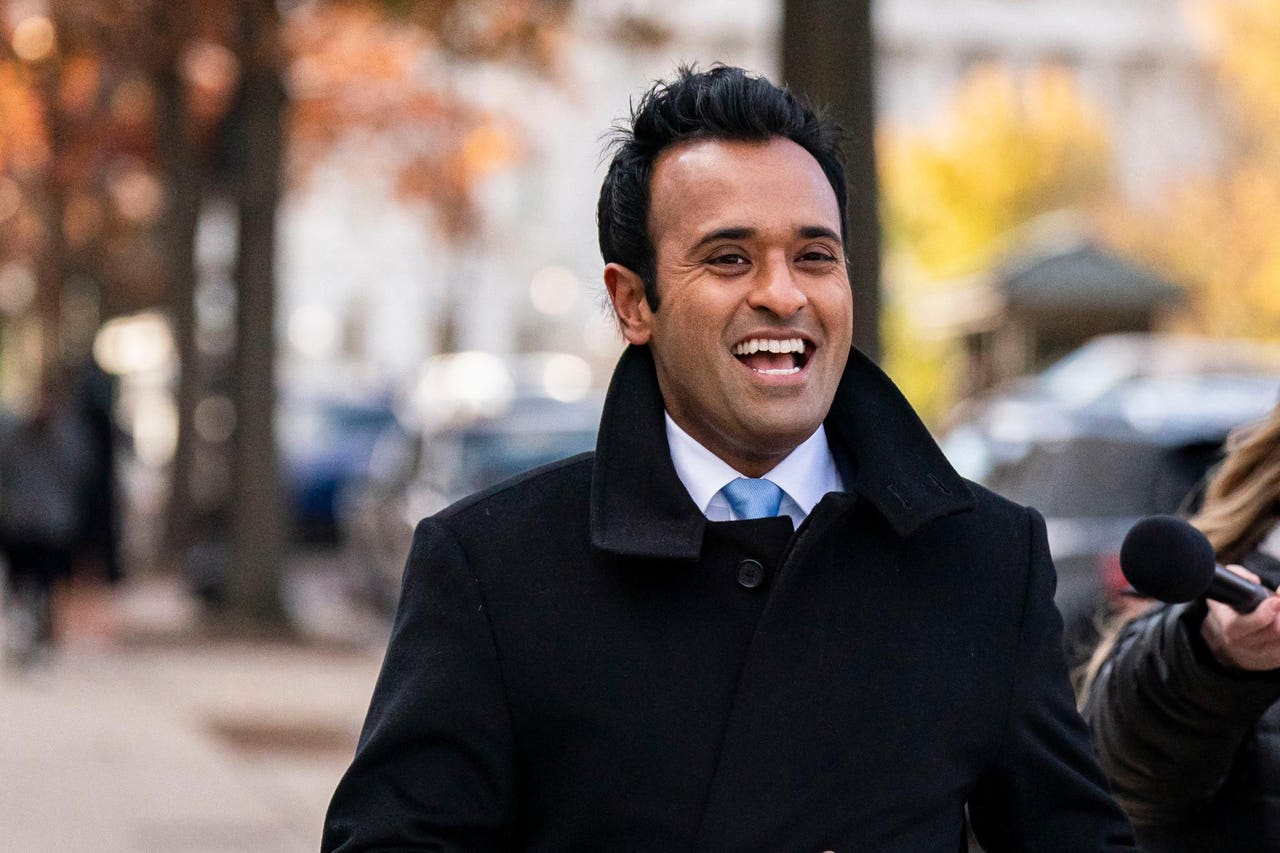
Vivek Ramaswamy says that if Ohio stops taxing capital gains, "founders will flock to Ohio in droves." He would know. A new Forbes analysis shows how much his own move to Ohio was worth to him — at exactly the right moment.
Forbes reported on October 2 that Ramaswamy's move from New York to Ohio in late 2019 came just before one of the largest windfalls of his career. CPAs, tax lawyers and tax professionals who reviewed the public record told Forbes the move likely saved him about $12 million in state and city taxes.
The timeline
Here is what Forbes laid out, in order:
- December 2019: Ramaswamy's company, Roivant Sciences, was preparing to close a previously announced $3 billion deal with the Japanese drugmaker Sumitomo.
- That same month, he put his Manhattan condo up for sale, bought a newly built home in West Chester Township outside Cincinnati for $420,000, moved in, and registered to vote in Ohio.
- December 27, 2019: The Sumitomo deal closed. Tied to it, Roivant's board approved a $1 billion share buyback, which began in February 2020.
- 2020: Ramaswamy reported $176.7 million in total income — nearly three times what he'd made in his whole career up to then. Of that, $174.5 million was a capital gain, apparently from the buyback.
What New York would have charged
Forbes estimated that if Ramaswamy had stayed in New York, that 2020 income would have generated about $14.4 million in New York State tax and about $6.3 million in New York City tax — roughly $20.8 million combined. Forbes's headline estimate of what the move likely saved him is about $12 million.
Forbes was careful to say it has not seen his state tax returns, and that the New York figures are estimates. But the dates are public, and they line up neatly: a house bought and a voter registration filed in the weeks before a payday nearly three times larger than everything he had earned before.
Now he wants to cut his tax bill again
Ramaswamy is running for governor on a plan to eliminate Ohio's tax on capital gains starting next year, then phase out the state income tax over a decade.
We've already done the math on that plan. Ohio's own Legislative Service Commission found that most of the benefit goes to Ohioans making more than $200,000 a year, while people earning under $100,000 split a small sliver. Applied to the gains on his own released tax returns, Ohio's current rate works out to roughly $5.8 million — an illustrative measure of the kind of income his plan would shield.
So the pitch is this: a billionaire whose move to Ohio likely spared him New York's taxes on a nine-figure gain now wants to stop Ohio from taxing gains like that at all. Forbes put it politely — Ramaswamy is "one politician who puts his money where his mouth is." The other way to read it is that his policy and his personal finances point in the same direction.
What the filings show
Vivek Ramaswamy bought a $420,000 Ohio house and registered to vote there in December 2019, the same month his company closed a $3 billion deal. The next year he reported a $174.5 million capital gain. Tax experts told Forbes staying in New York would have cost him an estimated $20.8 million in state and city tax, and the move likely saved him about $12 million. He is now running on a plan to stop Ohio from taxing capital gains at all.