There is a rare thing in health policy: a reform that saves the government money and cuts what patients pay, and that Medicare's own advisory commission has recommended Congress adopt.
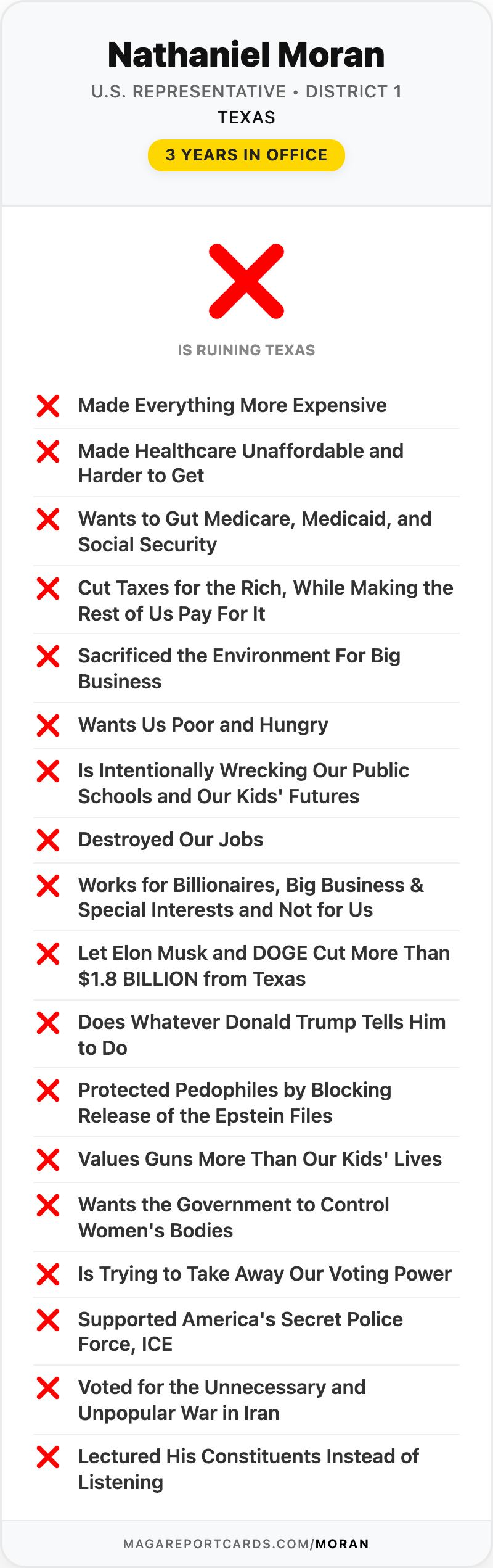
It's called site-neutral payment. And on Tuesday, April 28, 2026, at a House Ways and Means Committee meeting, Nathaniel Moran spoke against it.
What site-neutral payment actually is
Right now Medicare pays wildly different prices for the identical service depending on the building it happens in. Same doctor, same procedure, same 20 minutes — different bill, because one room is owned by a hospital system and the other isn't.
- An initial preventive exam cost 51% more in a hospital outpatient department than in a freestanding physician's office.
- Drug administration services ran 129% to 211% higher in hospital outpatient departments.
- On the commercial side the spread gets absurd: clinic visits 31% higher, chest x-rays 238% higher, prostate biopsies 563% higher.
Site-neutral payment says Medicare should pay the same rate for the same service, whether it's done in a hospital outpatient department, a surgery center, or a doctor's office.
Here's the part that matters at your kitchen table. In traditional Medicare you pay 20% of the bill. When the bill is inflated because the exam room technically belongs to a hospital, your 20% is inflated too. MedPAC estimated that aligning payments for selected outpatient services would have cut beneficiary cost sharing by $1.5 billion in a single year. For the beneficiaries with the greatest chemotherapy use, at off-campus hospital outpatient departments still exempt from existing site-neutral rules, one study put the saving at about $1,055 in a year — against about $1 for the average beneficiary.
The federal savings are big too. CBO has estimated $39 billion over ten years for aligning all services in off-campus hospital outpatient departments, and $102 billion for aligning on-campus payments for services commonly provided outside hospitals.
Money out of the health care system's pocket. Money back in the patient's.
Who fights it, and what they've given Moran
KFF names the opposition plainly: hospital industry representatives, who point to lost revenue, and who argue that cuts would disrupt access — especially in rural and low-income areas — because hospitals carry emergency capacity and regulatory costs that a doctor's office doesn't.
That is a real argument, and East Texas is a real place where rural hospitals are fragile. We are not going to pretend otherwise.
But we are going to look at who's paying the congressman making it. From his FEC-derived donor record:
- American Hospital Association PAC — $20,000. The hospital lobby itself. This is the single loudest voice against site-neutral payment in Washington.
- Texas Spine and Joint PAC — $20,000.
- Health Care Service Corporation PAC — $15,000. The Blue Cross parent company.
- American Optometric Association PAC — $13,000.
Moran sits on the Ways and Means Committee, which writes Medicare payment policy. Only 6% of his money comes from small grassroots donors, while 33% comes from PACs.
When a member of a tax-writing committee takes $20,000 from the hospital lobby and then speaks against the reform the hospital lobby most wants killed, constituents are allowed to notice the sequence.
The rural-hospital argument cuts the other way
If Moran's concern is that rural hospitals can't absorb a payment cut, there's a much larger problem he already voted for.
Moran didn't just support Trump's budget law — he sits on the committee that wrote it, a point his own page on this site makes plainly. KFF's allocation of the Congressional Budget Office's estimates projects that 480,000 more Texans will be uninsured by 2034 because of it, and that Texas will lose $27.9 billion in federal Medicaid funding over ten years.
Nearly $28 billion out of Texas Medicaid, delivered by a law he helped write. Then a public defense of the pricing rule that keeps hospital revenue high — the one whose repeal would lower what seniors pay out of pocket.
That's not a rural hospital policy. That's a hospital revenue policy, and the people covering the difference are patients.
We laid out the full bill for the state here: what Texas's Republicans in Congress are costing you.
The test
Site-neutral payment is one of the cleanest tests in health care of who a member works for, because the two sides are so easy to name: the institutions that bill, and the patients who pay 20% of whatever the bill says.
Moran picked a side in a committee room in April. His donor list picked it first.
We deserve better.
Sources
- "U.S. Rep. Nathaniel Moran speaks out against medical site-neutral billing," Texarkana Gazette, April 29, 2026.
- "Five Things to Know About Medicare Site-Neutral Payment Reforms," KFF.
- Donor totals: Who Bought My Rep, built from Federal Election Commission filings.