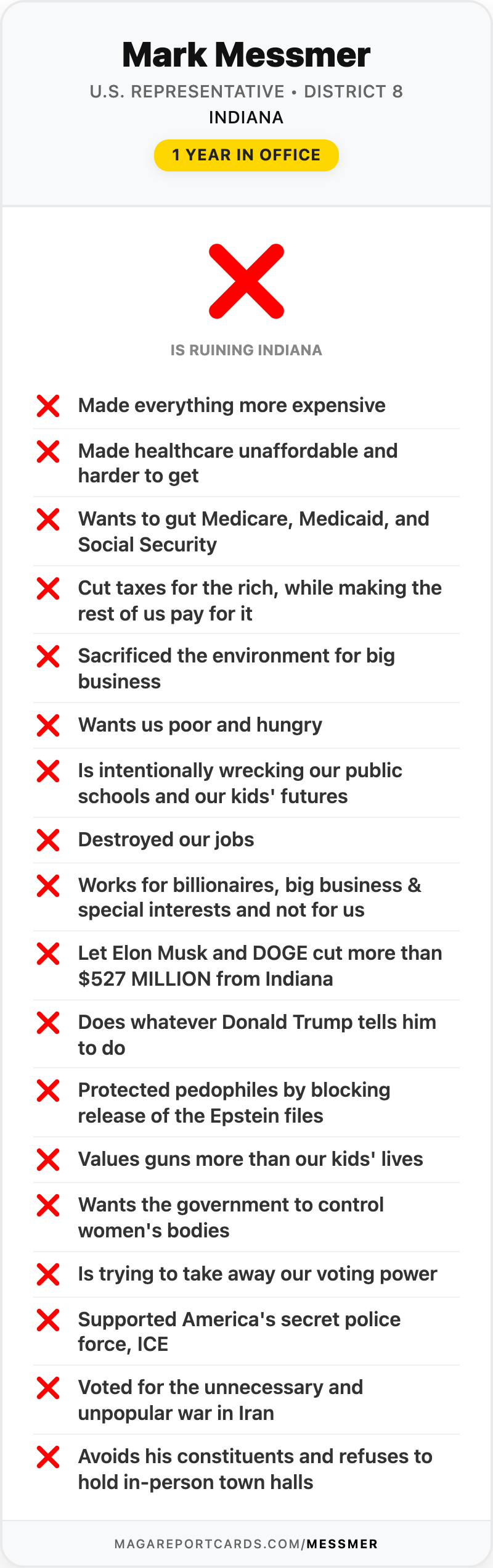
A week before the 2024 Republican primary in Indiana's 8th District, a super PAC called Defend American Jobs bought $493,420 worth of ads. The next day it spent another $10,600 producing more of them. All of it was to elect one candidate: Mark Messmer.
You can look the spending up yourself in the FEC's independent-expenditure records — $504,020, spent April 30 and May 1, 2024, and described on the filings as nothing more than "IE-MESSMER-MEDIA BUY" and "IE-MESSMER-MEDIA PRODUCTION."
Nothing about the name "Defend American Jobs" tells you what it is. That's the point of the name.
What Defend American Jobs actually is
It is the cryptocurrency industry's Republican-facing super PAC — an arm of Fairshake, the crypto network that has become one of the biggest spenders in American politics.
FEC filings show where its money comes from. In the current election cycle alone, Defend American Jobs has taken $28 million in transfers from Fairshake, plus $250,000 directly from Ripple Labs and $100,000 from the venture firm Andreessen Horowitz's AH Capital Management — a check the filing itself breaks out as $50,000 each from Marc Andreessen and Ben Horowitz personally.
That is not a coalition of Indiana job creators. That is a handful of crypto companies and their investors, pooling money to pick who writes their rules.
Then he got the seat
When Messmer arrived in Congress in January 2025, he was assigned to the House Agriculture Committee. Within it, he sits on the Subcommittee on Commodity Markets, Digital Assets, and Rural Development.
"Digital Assets" means crypto. That subcommittee is where the House writes the rules governing the exact industry that had just spent half a million dollars getting him elected — because crypto tokens traded as commodities fall under the Commodity Futures Trading Commission, which the Agriculture Committee oversees.
Messmer's official biography describes him and his wife as "small business owners", and he spent sixteen years in the Indiana legislature before this — six in the state House, ten in the state Senate. Nothing in that record is about digital assets.
In July 2025, when the Digital Asset Market Clarity Act came to the House floor — the bill setting the ground rules for how crypto is regulated, and the industry's central ask in this Congress — Messmer voted yes. It passed 294–134 and is now pending in the Senate.
We've written about this playbook before. Defend American Jobs spent $12 million to make Barry Moore Alabama's Senate nominee, and put another $615,885 into a first-time candidate in San Antonio — part of $2.1 million there from AI and crypto money, all of it through PACs whose names mention neither industry. Messmer's race was an early, cheaper version of the same bet.
The bigger picture: he was the sixth most expensive House race in America
The crypto money was one piece of something larger.
By May 1, 2024 — six days before the primary — outside groups had spent $5,069,670 in Indiana's 8th District. That made it the sixth most expensive congressional race in the entire country that spring, ahead of every Senate race except four, according to an OpenSecrets tally reported by the Indiana Capital Chronicle.
All of that $5 million was aimed at just two of the nine Republicans running: Messmer and former congressman John Hostettler.
The money on Messmer's side of the ledger, per that reporting:
- $955,000 from the Republican Jewish Coalition, spent for Messmer
- $1.2 million from the United Democracy Project, the super PAC tied to AIPAC, spent against Hostettler
- $1.5 million from America Leads Action against Hostettler, plus $106,000 for Messmer
- $420,000 from America's First Freedoms for Messmer
- $504,020 from the crypto industry's Defend American Jobs for Messmer
- $49,000 from Building a Strong America for Messmer
Hostettler had two groups behind him: Protect Freedom PAC at $482,000 and the American Leadership PAC at $233,000.
Messmer's own campaign raised $1,545,284 across the entire 2024 cycle, according to FEC totals — less than a third of what outside groups spent in his race. Of that, only $17,595 came in small unitemized donations. That's roughly one percent.
He won the primary with 38.5% of the vote to Hostettler's 19.7%. In a safe Republican district, that primary was the election.
Where he sits today
Two years later, the pattern hasn't changed. Who Bought My Rep, which builds its rankings from FEC filings, ranks Messmer 409th out of 440 House members in the share of his money that comes from grassroots donors — and 256th out of 275 Republicans. His single largest career backer is the Republican Jewish Coalition's victory fund at $954,925; Defend American Jobs is third at $504,020.
None of this is illegal. Super PACs can raise and spend unlimited money as long as they don't coordinate with the campaign, and the crypto industry is entitled to spend it. The question isn't legality. The question is who a congressman is accountable to when the people who put him in the seat were a handful of national industry funds — and the people back home can't get him to show up for a town hall.
Indiana's 8th District has 750,000 people in 21 counties. In 2024, the loudest voice in their primary belonged to none of them.
Source
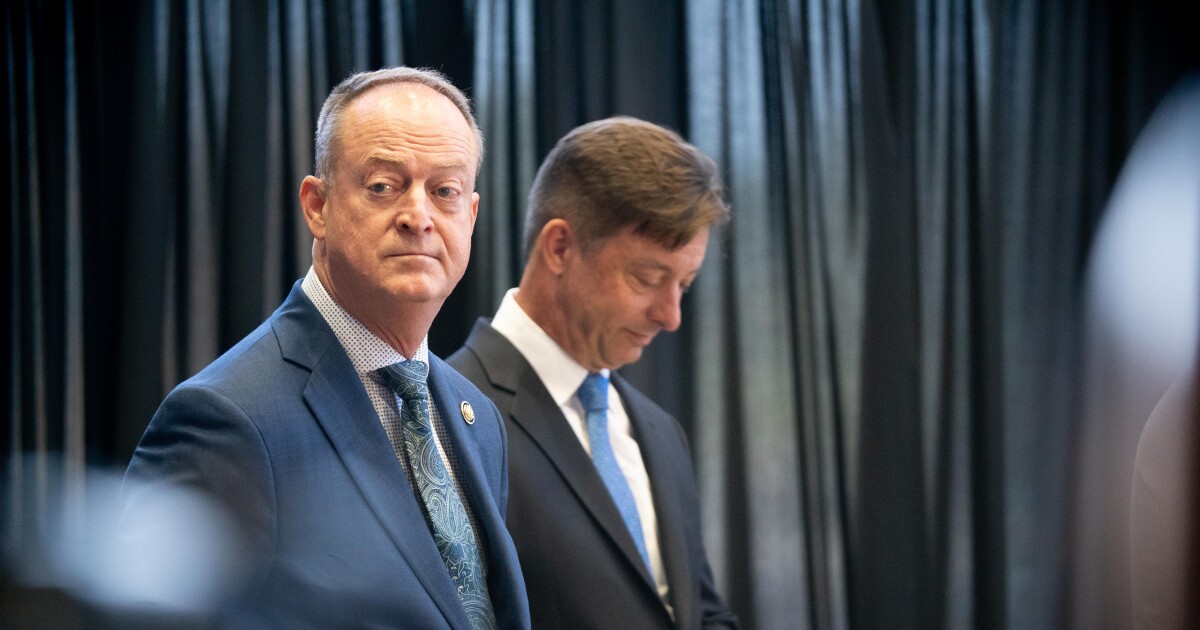
Whitney Downard, "Outside spending in three of Indiana's congressional races ranks in the nation's top ten", Indiana Capital Chronicle, May 3, 2024. Photo by WNIN News.