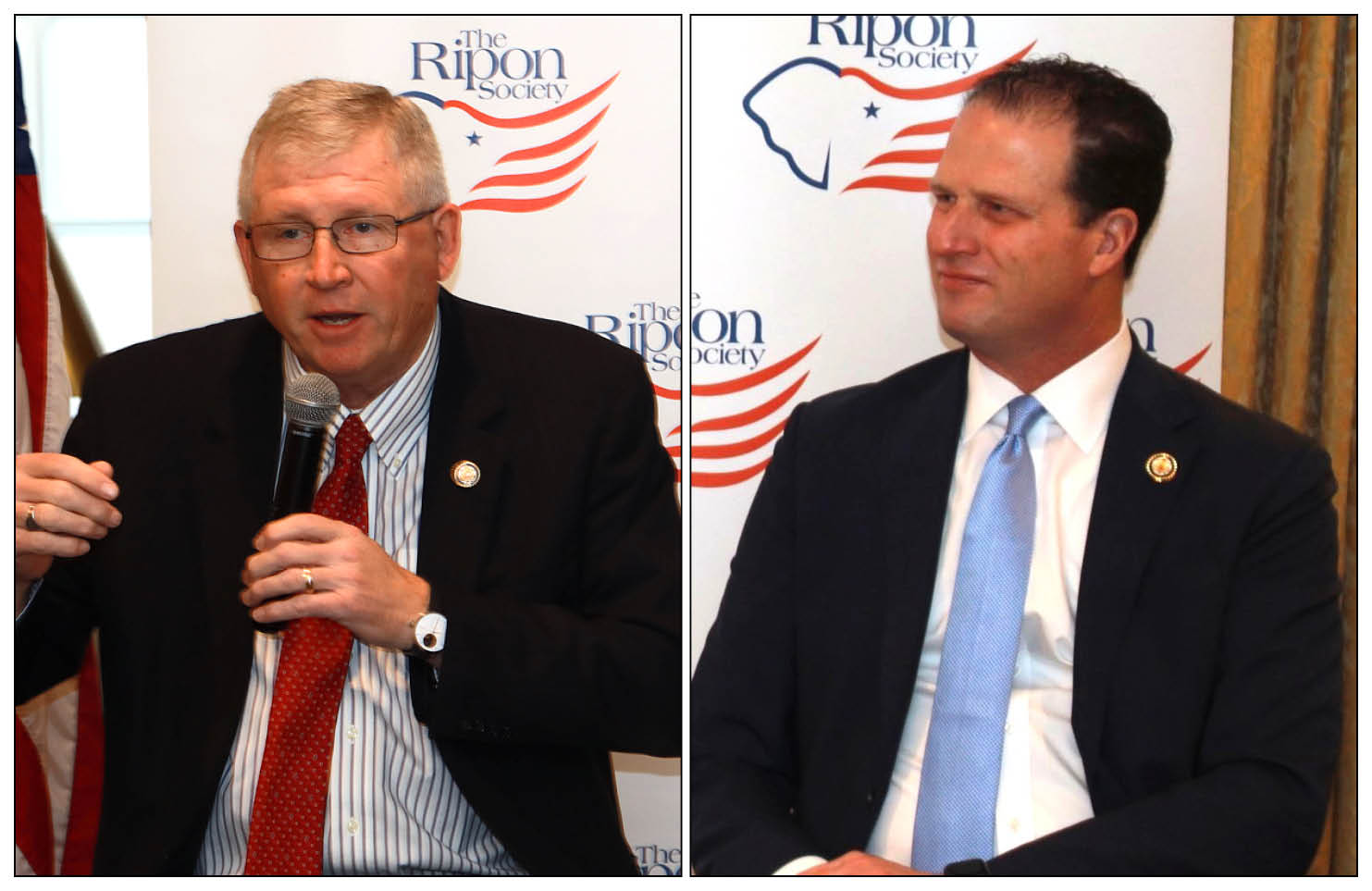
On the morning of March 27, 2025, Frank Lucas sat down at a Ripon Society breakfast in Washington and told a room of Republicans what Elon Musk's Department of Government Efficiency had done to Oklahoma.
It was a specific list.
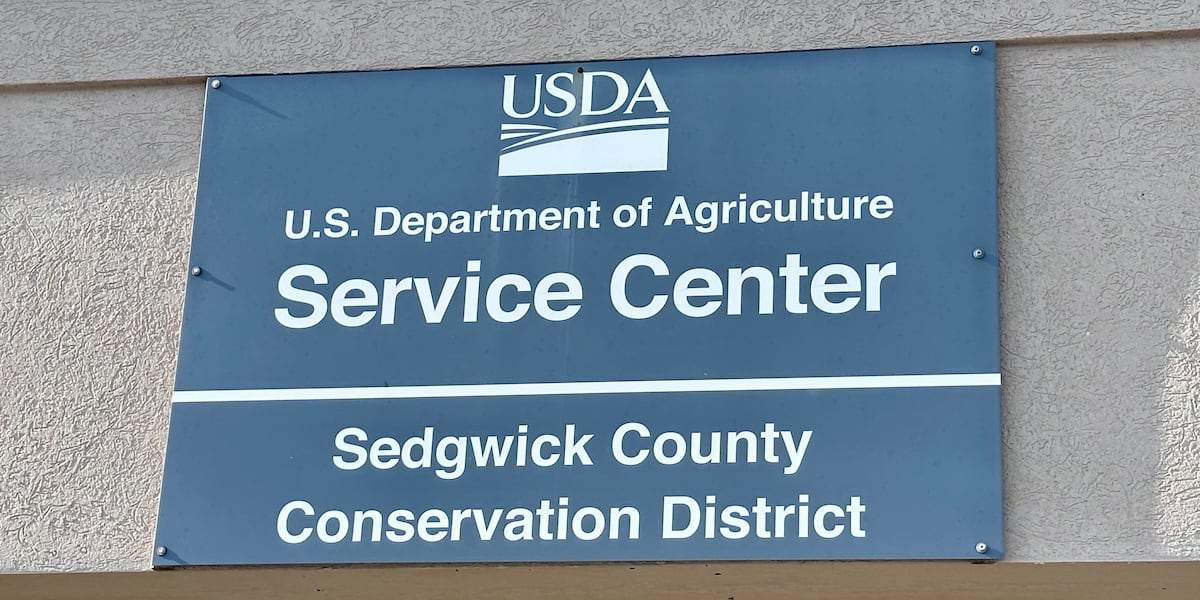
"Initially, they fired all 10 federal predator control people at USDA in my state."
Those are the workers who handle migratory birds and other animal problems that state and local officials can't. Lucas explained what they did, he said, and they came back to work.
Then there was the research station.
"I also lost 15 of my 61 scientists at a research station in El Reno, Oklahoma."
That's a quarter of the scientific staff at the Oklahoma and Central Plains Agricultural Research Center — the USDA facility on the old Fort Reno grounds in his own district. Lucas explained the value of the research. Those scientists came back too.
So: a member of Congress watched a White House operation fire 25 federal workers in his district and his state, spent his own time walking DOGE through what those people actually do, and got the firings reversed.
And then, in the very same remarks, he said this:
"They will sometimes make dramatic recommendations for change, and that's a good thing. We just have to make sure that it's a good change."
He knew. He said so out loud.
There's a version of this story where a congressman is caught off guard — where DOGE moves too fast, nobody in Congress knows what's happening, and the damage gets discovered after the fact.
That's not this version. Lucas knew exactly what DOGE was doing, in detail, in his own district, and he described it in public at the time.
Less than two weeks after the Ripon breakfast, Oklahoma Watch reported that Lucas had introduced a bill to shield the FAA Academy in Oklahoma City — housed at the Mike Monroney Aeronautical Center, one of the FAA's largest facilities, which trains tens of thousands of students a year, in a country with a well-documented air traffic controller shortage — from any future government shutdown.
Why did he want it protected? He said part of the reason was DOGE. He was worried about the academy, he told the reporter, because DOGE was looking at "anything and everything." And his worry wasn't limited to the academy. It extended to "any number of things" — including food safety inspections.
That's the same man who told the Ripon Society that dramatic recommendations from that same program were "a good thing."
Here's how he described his role:
"My job is to work with the administration, whoever the administration is, work with my colleagues, whoever they may be, and try and make sure that wise decisions are made. We helped DOGE on a couple of issues, in a general sense, see that perhaps things should be done differently."
Read that again. We helped DOGE see that perhaps things should be done differently. That is a man describing damage control on a program he was publicly endorsing.
What Oklahoma actually lost
DOGE's own claimed savings sheet puts Oklahoma at $376,967,499 in cancelled federal spending. Those aren't abstractions — every line is a contract, a grant, or a job somewhere in the state.
And Lucas's own account is the proof that DOGE wasn't cutting "waste, fraud and abuse." It was cutting people it had never bothered to look up. All ten predator-control workers in an entire state, gone in one pass. Fifteen scientists at a research station whose work a House Agriculture Committee aide would later describe as work that "cannot be replicated anywhere else in the world."
Nobody at DOGE knew what any of them did. A congressman had to explain it.
The layoffs weren't confined to those two. More than 300 FAA employees were fired in a single weekend, and KFOR reported that many of them worked at the Mike Monroney Aeronautical Center in Oklahoma City — the very campus Lucas turned around and wrote a bill to protect.
One of them told KFOR they got the email at 10:35 on a Friday night, at their personal address, while they were out shopping for clothes to wear back to the office.
"It was due to performance, which was the most shocking part about it."
They had worked as an FAA contractor for nearly a decade before joining the agency the previous fall. They hadn't been an employee long enough to have had a performance evaluation at all.
"This narrative — that federal employees are just wasteful or crazy — it couldn't be further from the truth. My colleagues and I work very hard to serve our communities and uphold our agency's missions."
The part he never says out loud
Lucas is not a bystander to DOGE. He is a senior Republican — in Congress since 1994, chairman of a House Agriculture subcommittee, a member of the Financial Services Committee. When cuts land in his district, he has the standing to object publicly, on the record, by name.
He didn't. He explained things to DOGE behind the scenes, got his own constituents rehired, and then went to Washington and called the program that fired them a good thing.
That's not oversight. That's a member of Congress buying insurance for his own district while endorsing the thing burning down everyone else's — because the other 434 districts didn't have Frank Lucas making calls on their behalf. When DOGE's charter finally expired on July 4, 2026, it left behind no final report, no accounting, and nobody willing to own the wreckage.
The people Lucas got rehired were lucky. Most weren't.
Meanwhile, 45,277 households in his district — about 15% of them — rely on SNAP to eat, and an estimated 36,705 people in his district are projected to lose health coverage from Medicaid and Affordable Care Act cuts — 21,205 of them from the Medicaid cuts he voted for. There's no quiet phone call that gets those back.
We deserve better.
Source
Lucas & Pfluger Discuss DOGE Effort to Reshape Government — The Ripon Society, March 28, 2025. Photo: The Ripon Society.