On July 4, 2026, the Department of Government Efficiency — DOGE — officially hit its expiration date. Trump's January 2025 executive order that created it said it "shall terminate on July 4, 2026." Trump promised that a smaller, more efficient government would be "the perfect gift" for America's 250th birthday.
There was no gift. There was no ceremony. As POLITICO reports, there won't even be a final report. The people who built DOGE walked away long ago, and the White House won't say whether it has officially folded — or whether it already did.
Here's what DOGE actually left behind — and why one of the men who built it is now asking Ohio to make him Governor.
The promise: $2 trillion. The claim: $215 billion. The reality: it cost us.
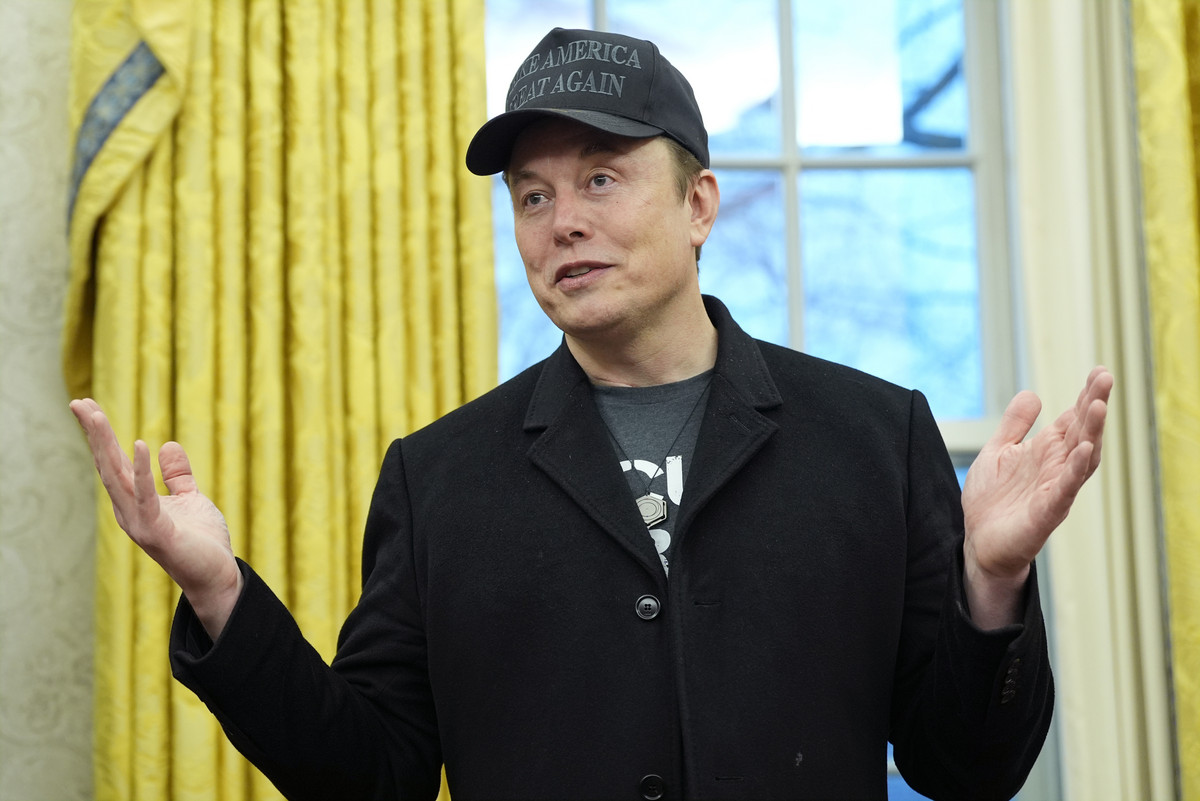
At a Trump rally in October 2024, Elon Musk promised DOGE would cut "at least $2 trillion" from the federal budget. By early January 2025 — before DOGE had even started — he had already cut that promise in half, calling $2 trillion a "best-case outcome" and saying there was only a "good shot" at getting $1 trillion.
The final claim? DOGE says it saved $215 billion. That's about 3% of the roughly $7 trillion the government spends every year — and even that number is doubtful. DOGE's own savings page hasn't been updated since January 1, and its receipts have never held up. The nonpartisan Partnership for Public Service estimated that in fiscal year 2025 alone — back when DOGE was claiming $160 billion in savings — the paid leave, the re-hiring of mistakenly fired workers, and the lost productivity DOGE caused would cost taxpayers $135 billion. Meanwhile, federal spending went up more than 6% during Trump's first 100 days, despite DOGE's chainsaw.
Doreen Greenwald, president of the National Treasury Employees Union, put it plainly to POLITICO: "DOGE never proved its claims of savings or widespread waste, fraud, or abuse." It "only caused chaos, disrupted lives, and made government work worse for the people it serves."
What the chaos cost us
In January 2025, more than 2 million federal workers got an email telling them they could quit now and get paid through later in the year. About 154,000 took the deal. Add the firings on top, and agencies lost their top experts and most skilled practitioners — in a federal workforce where almost a third of the employees are veterans.
Did that make government work better for us? Harvard public policy professor Elizabeth Linos told POLITICO the opposite: "If anything, wait times are going up, and people are not getting the level of safety that they would expect from their government." She said DOGE's data grabs did lasting damage too — it "told the American people that they can't trust government to protect their data."
The Center for Economic and Policy Research and Citizens for Responsibility and Ethics in Washington have both documented the same pattern: the "efficiency" was an illusion, and the costs — lost services, lost expertise, lost trust — live on in every state and congressional district.
Nobody wants to own it
Watch how the people responsible are acting now that the bill has come due.
- Days before the deadline, budget director Russ Vought told Congress: "We have no plans to do kind of a closing DOGE report." No report card. No accounting. Nothing.
- The White House wouldn't answer POLITICO's questions about whether DOGE will officially fold — or whether it already has.
- Musk left in May 2025 when his 130 days as a special government employee ran out. In December he called DOGE just "a little bit successful" — and said he wouldn't do it again.
- DOGE's X account has gone quiet. Its cost-savings page is frozen. Its acting administrator took a new job.
Even the people who study government reform for a living see this as a dead end. University of Maryland professor emeritus Don Kettl told POLITICO that future presidents of both parties will look for other ways to improve government — "But no one will go down the DOGE road again."
Remember: Congress had chances to stop this. Instead, House Republicans approved a $9.4 billion package of DOGE cuts by a single vote. That's why the DOGE section appears on almost every report card on this site.
The man who built it wants a promotion
Which brings us to Vivek Ramaswamy.
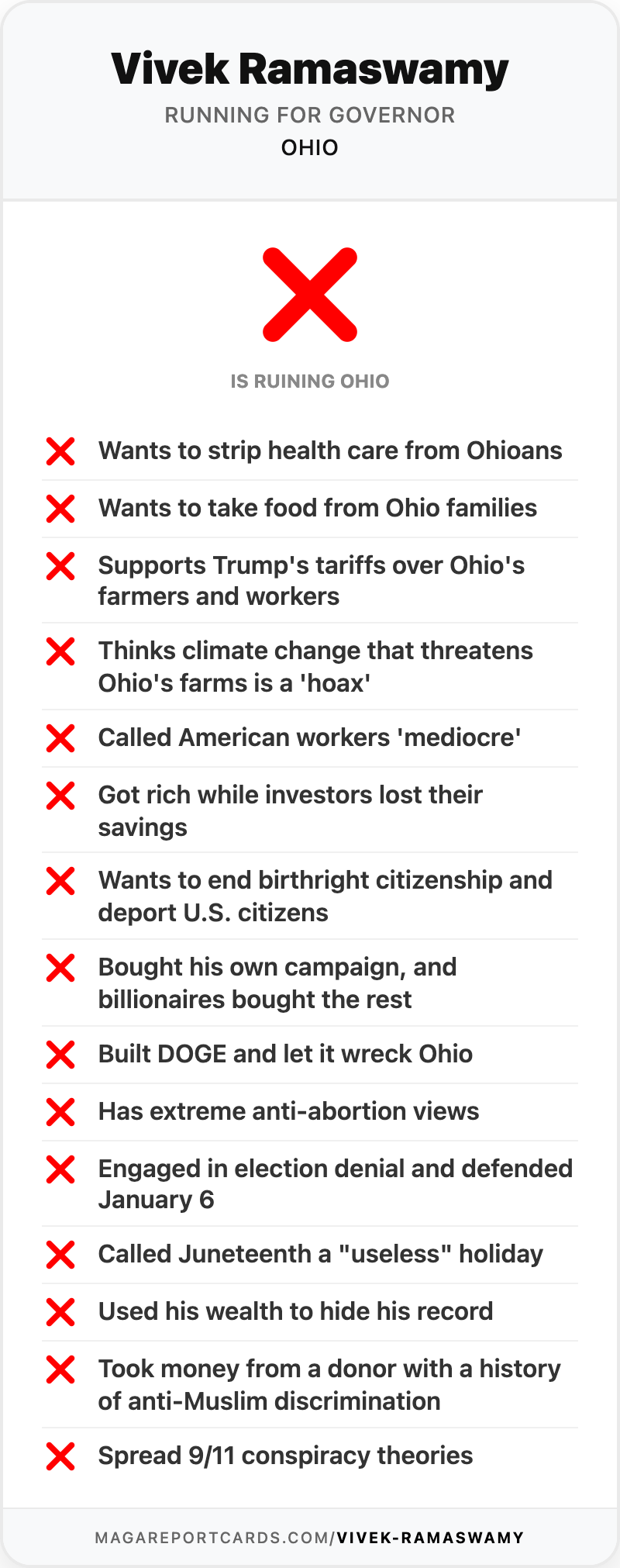
Trump named him and Musk DOGE's co-leaders. Ramaswamy called it an "honor to help support the creation of DOGE." He had already told us exactly what he wanted to do: in 2023 he called for firing 75% of the federal workforce.
Then he quit in January 2025 — before DOGE had done almost anything — to run for Governor of Ohio. POLITICO's word for it: he "decamped almost immediately."
He left. The wreckage didn't. In Ohio, the state he now wants to lead, DOGE put an Ohio Social Security office on its list to close, canceled nearly $70 million in Ohio State University research grants in three months, $29 million of it never paid out, and put cuts in motion in a state with 83,000 federal civilian employees.
So the pitch to Ohio voters goes like this: he helped design the machine, promised it would transform government, bailed out weeks in, and let it grind through his own state. Now that DOGE is dead — no report, no proven savings, chaos documented from coast to coast — he'd like to be trusted with running Ohio.
DOGE deleted itself on July 4th, just like Musk promised. The damage doesn't come with a delete button. We deserve better.
Source
This post is based on POLITICO's report: "DOGE self-deletes on July 4th. The grand experiment fell apart long before that." (July 4, 2026), with additional sources linked above.