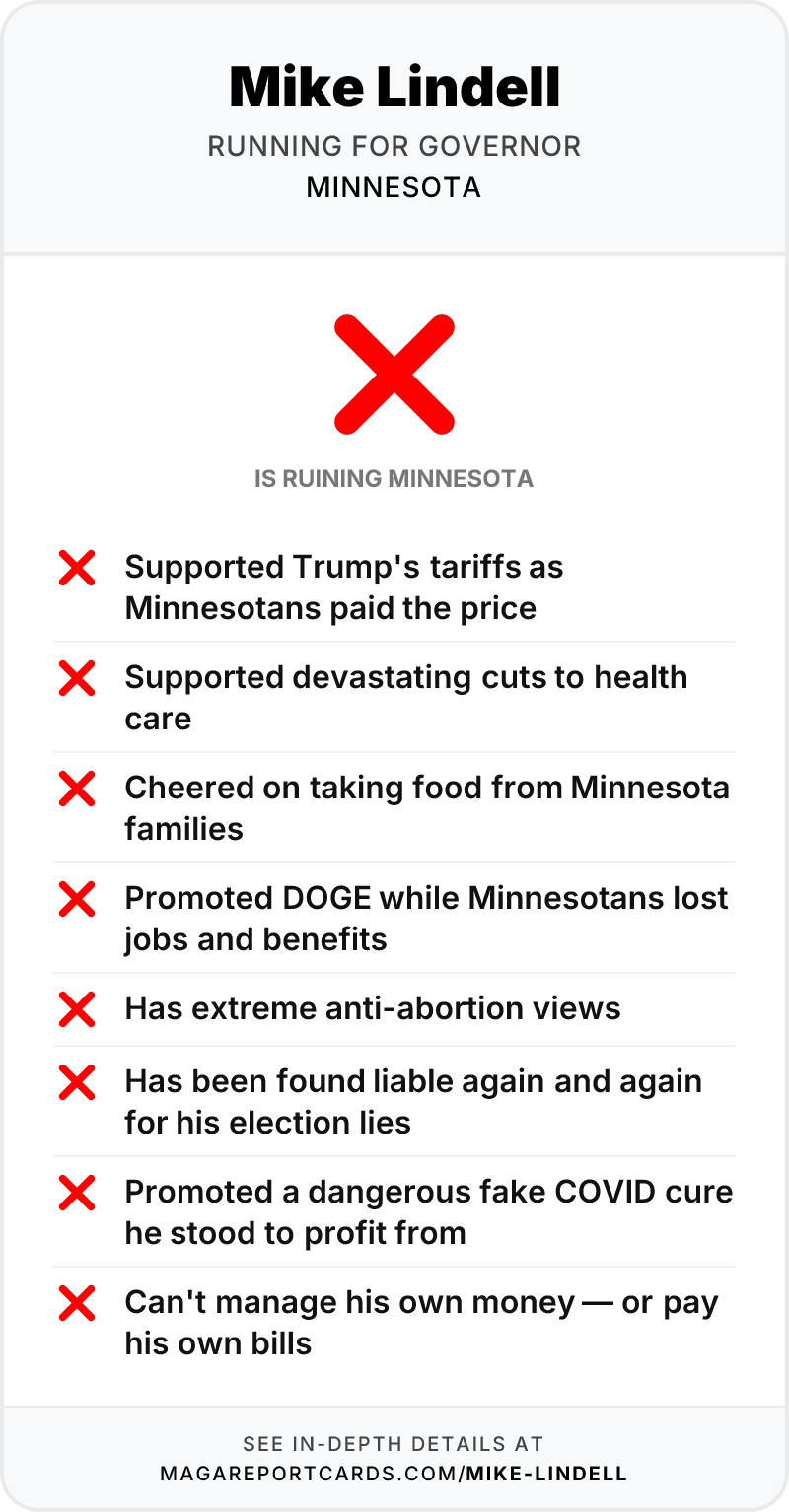
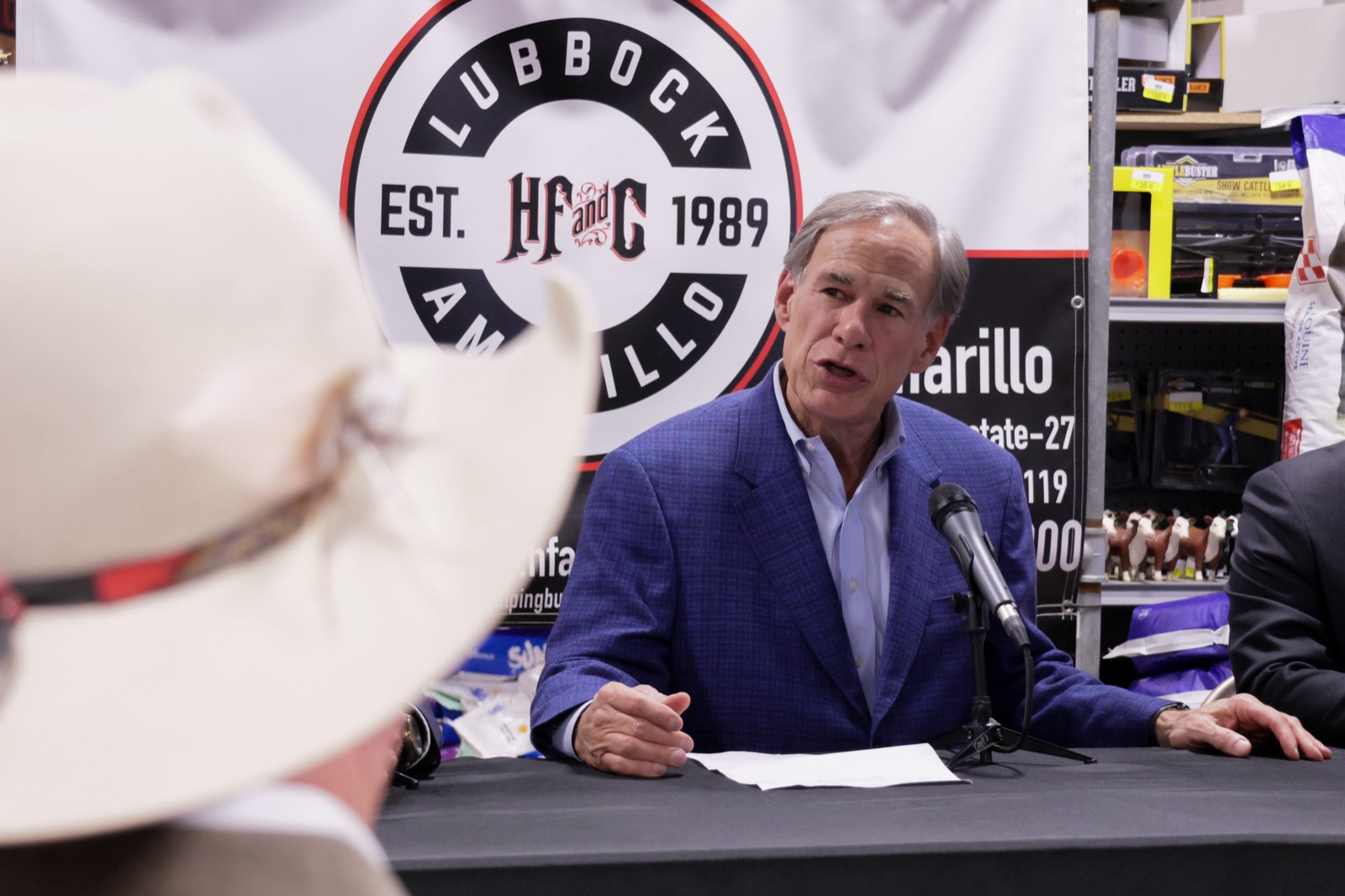
On Thursday, August 6, 2026, Mike Lindell released a 72-page plan for what he'd do as governor of Minnesota.
The headline is eliminating the state income tax. The arithmetic underneath it is cutting the state general fund budget in half.
Minnesota's primary is August 11. Voting has already begun.
What gets cut
In some places the plan is very specific. Over Minnesota's 2028–29 two-year budget, it cuts:
- Education: $4.9 billion, roughly 18% of the state's general-fund K-12 budget.
- Healthcare: $11 billion.
- Public assistance programs: $3.6 billion.
That's $19.5 billion out of schools, hospitals and help for people who can't make rent.
Minnesota is a state that has, historically, taxed more and gotten more for it — better schools, better healthcare, better roads, parks, social services. The plan's argument is that the extra spending hasn't produced better results, and it cites Mississippi's recent early-literacy gains at far lower spending as proof.
Set aside whether that comparison holds. Ask instead what happens to Minnesota schools that lose nearly a fifth of their state general-fund money, in a state where the federal government is already pulling out. Under Trump's budget bill, Minnesota is set to lose $15.4 billion in federal Medicaid funding over the next decade, and state officials estimate 152,000 to 253,000 Minnesotans could lose health coverage.
Lindell's $11 billion healthcare cut would land on top of that.
Where the money comes back from
Here's the part that deserves the closest reading.
Even $19.5 billion in cuts doesn't pay for eliminating the income tax. For the $16.5 billion still missing, the plan turns to "Minnesota Direct," a state giving channel "modeled after Mike Lindell's proven inner city Lindell Direct Assistance Program" — his own charitable model. Private donors would fund things the state pays for now, "displacing an equal amount of appropriated General Fund spending." The claim is that "services can be delivered with private sector sponsorship for 40% less than government assistance."
Read that again. A candidate for governor is proposing that $16.5 billion of Minnesota's public services be paid for by voluntary donations, through a program modeled on a charity named after himself.
There is no statute for this. No agency. It exists in a campaign document.
The rest of the gap gets filled with "dynamic scoring" — the tax-cutter's assumption that cutting taxes generates enough growth to bring in extra revenue. The plan books $3.9 billion in revenue on that basis.
So: $19.5 billion in real, specified cuts — and even then, a hole covered by donations nobody has made and a growth projection that assumes the cuts work.
Whether he can run a charity is a fair question
This is where Lindell's own record stops being background and becomes the point.
A Star Tribune investigation published in July found that creditors are chasing MyPillow in court for more than $25 million in unpaid bills — including a $15.4 million default judgment to a footwear supplier and an $8.8 million default judgment to FedEx, which accused Lindell of misrepresenting the company's ability to pay. Most of the judgments were defaults, meaning MyPillow didn't show up to defend itself. MyPillow told a court that if a levy on its Amazon account wasn't lifted, the company "could go out of business."
Lindell has since stepped down as CEO of MyPillow to focus on the governor's race.
And last week, an administrative law judge found a prima facie case that Lindell broke Minnesota campaign finance law and scheduled a probable cause hearing — after his campaign bought 2,500 pillows from his own company and gave them away from a parade float.
That is the operator whose charity is the model for a $16.5 billion backstop to Minnesota's public services.
Who actually pays
Eliminating an income tax doesn't make government cheaper. It moves who pays.
Minnesota's income tax is progressive — higher earners pay a higher rate. Delete it and the revenue has to come from somewhere else, or the services go away. In Lindell's plan, the services go away.
The people who lose the most are the ones who use public services most: families whose kids are in public school, people on Medical Assistance and MinnesotaCare, the 452,600 Minnesotans who receive SNAP, the 1 in 6 Minnesota kids who faces hunger.
The people who gain the most are the ones with the biggest incomes.
Lindell's plan would make Minnesota the 10th state with no income tax, joining South Dakota, Texas, Wyoming, Florida and the rest. Those states are not, generally, known for their schools or their hospitals.
Minnesota is. That's the trade on the ballot Tuesday.
Source
Minnesota Reformer, "Lindell releases plan to eliminate income tax with massive cuts to education, healthcare spending," by J. Patrick Coolican, August 6, 2026. Photo by Nicole Neri/Minnesota Reformer.