On October 3, 2024, the New York Times published photographs it had obtained of a college student at a campus Halloween gathering. He was dressed as Michael Jackson — black shirt, red jacket, striking one of Jackson's signature dance poses. His face had been visibly darkened.
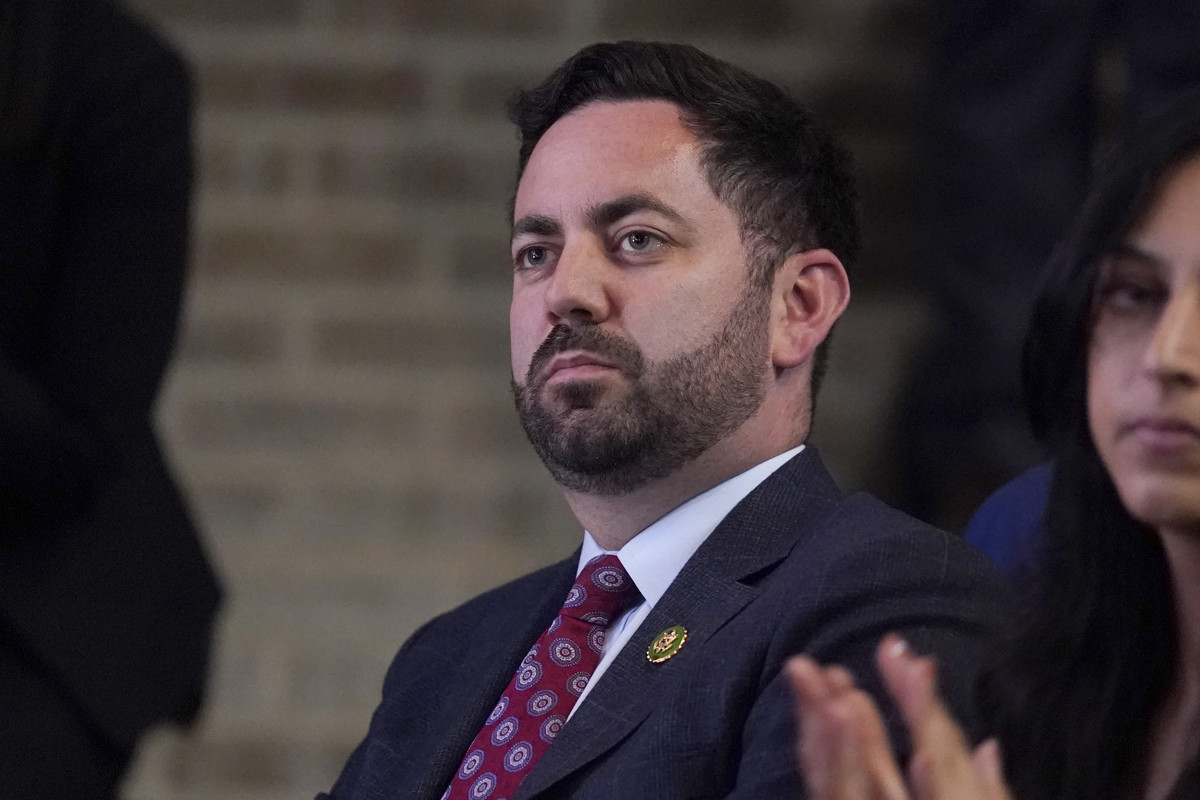
The student was Mike Lawler. He was 20 years old, and the photos were taken around October 2006. Eighteen years later he was a first-term Republican congressman from New York's Hudson Valley, locked in a tight re-election race against Mondaire Jones — a Black Democrat who had held the seat before him.
Lawler did not dispute the photos. What he did instead is the part worth looking at.
Two versions of sorry, in a matter of hours
His first response, given to the Times, was that the costume was flattery:
"When attempting to imitate Michael's legendary dance moves at a college Halloween party eighteen years ago, the ugly practice of black face was the furthest thing from my mind."
He called it "the sincerest form of flattery, a genuine homage to one of my childhood idols since I was a little kid trying to moonwalk through my Mom's kitchen," and added: "I am a student of history and for anyone who takes offense to the photo, I am sorry."
Read that last line again. It is not an apology for what he did. It is an apology aimed at the people who were bothered by it.
Then, that same night, he went on CNN and started taking even that back. He explained that he had used a friend's bronzer, and said:
So within a single news cycle he apologized for the photo, then told a national audience the photo wasn't really the thing everyone was upset about. Jones, his opponent, told NBC New York that Lawler "knew exactly what he was doing" and "is only upset because he got caught doing it and not because he actually engaged in offensive behavior."
The NAACP told him he was wrong about that
Lawler's argument was essentially that he gets to decide whether what he did counts as blackface. The day after the photos ran, two NAACP branches in his own backyard and the organization's regional director told him he does not.
In a joint statement issued October 4, 2024, Wilbur Aldridge, NAACP regional director for the Mid-Hudson/Westchester branches, Nicole Hines of the Nyack branch, and Willie Trotman of the Spring Valley branch informed the congressman that he had in fact worn blackface, and that they and the community were offended.
They also did not treat it as an isolated college mistake. Their statement laid out a pattern: a 2022 campaign mailer they called racist, a current campaign ad showing a Black child throwing a water balloon at a white child, his silence when a racial slur was used in front of him at a September 13 roundtable, and his silence when a radio host dismissed the existence of white supremacy. They said he needed to disavow his own campaign materials to show anything had actually changed.
Twice in one month, he had the chance to say something. Twice he didn't.
The two silences the NAACP referenced were reported by POLITICO the day after the Times story.
On September 13, at a roundtable in Chappaqua about combating antisemitism, a participant argued that campus antisemitism goes unchecked — and made the point by describing a hypothetical group of white students at Columbia chanting a lynching threat, using the full racial slur for Black people. According to audio POLITICO reviewed, Lawler spoke almost immediately afterward. He did not address the slur. He talked about a visit he had made to Columbia.
Weeks later, on the radio show "Sid & Friends in the Morning," host Sid Rosenberg told him that Islamophobia doesn't exist and neither does white supremacy — "Blacks, yes, but not white supremacy." Lawler didn't engage with it. He steered back to a bill of his about Secret Service protection for presidential candidates.
To be fair about what these are: in neither case did Lawler say anything racist. POLITICO made that point explicitly. But a member of Congress in a room where a slur has just been said has a choice, and he made the same choice twice. His campaign's answer to POLITICO wasn't to explain the silence — it was to demand the outlet write about racially charged things Mondaire Jones had said instead.
The 2022 mailer he wouldn't condemn
The mailer in the NAACP's list dates from Lawler's first campaign. In October 2022, the Congressional Leadership Fund — a Washington super PAC that spends to elect House Republicans — sent Hudson Valley voters a mailer attacking Democrat Sean Patrick Maloney over bail reform, illustrated with photos of four Black men.
Black community leaders called it a "disgusting racist mailer" and asked Lawler to condemn it. He didn't. He said the super PAC was independent of his campaign, and accused Aldridge of coordinating his statement with the Maloney campaign — suggesting that if Aldridge felt strongly, he should have just called.
Lawler said that at an NAACP candidate forum days later. Aldridge's reply, when a reporter reached him afterward, was blunt:
"I have been fighting racism for almost 60 years, so I don't need a political candidate to tell me what is racist in nature."
This is a habit. When local Black leaders tell Lawler something he did was racist, his answer is that they've misunderstood it, or that they're doing politics. It's the same move he made on CNN about the photograph — he is always the one who gets to decide what counts. Brinker Harding in Omaha did the exact same thing when a Latino leader asked him to take down a sombrero video: he went on camera and defended it instead.
About the Michael Jackson defense
Lawler's explanation leaned hard on being a genuine, lifelong Jackson fan. That part is true. It's also stranger than the costume.
In 2005, an 18-year-old Lawler turned up in a Santa Barbara County courtroom for Michael Jackson's child molestation trial. He got in with help from J. Randy Taraborrelli, the Jackson biographer, who described what happened next in his 2009 book: during testimony from the accuser's mother, Lawler was so disgusted that he muttered something derogatory under his breath. Court officials heard him and threw him out. A sheriff's deputy afterward told Taraborrelli that next time he helped someone get in, he should tell them to keep quiet "even if the witnesses are crazy as freaking loons."
A teenager traveling across the country to sit in on a molestation trial and getting ejected for muttering at a witness is not evidence that a blackface costume was innocent. It's evidence of how far the fandom went. Lawler's campaign spokesman confirmed the fandom, noting the congressman had attended one of Jackson's last Madison Square Garden concerts in 2001.
Then he won, and did the dance
On election night, November 5, 2024, Lawler beat Mondaire Jones. He took the stage at his victory party to Michael Jackson's "Beat It," performed a high kick, and told the crowd:
"Folks, tonight the Hudson Valley told Mondaire Jones to 'Beat It!'"
One month after photos of him in blackface as Michael Jackson went national, he closed the campaign with a Michael Jackson bit aimed at his Black opponent.
We deserve better
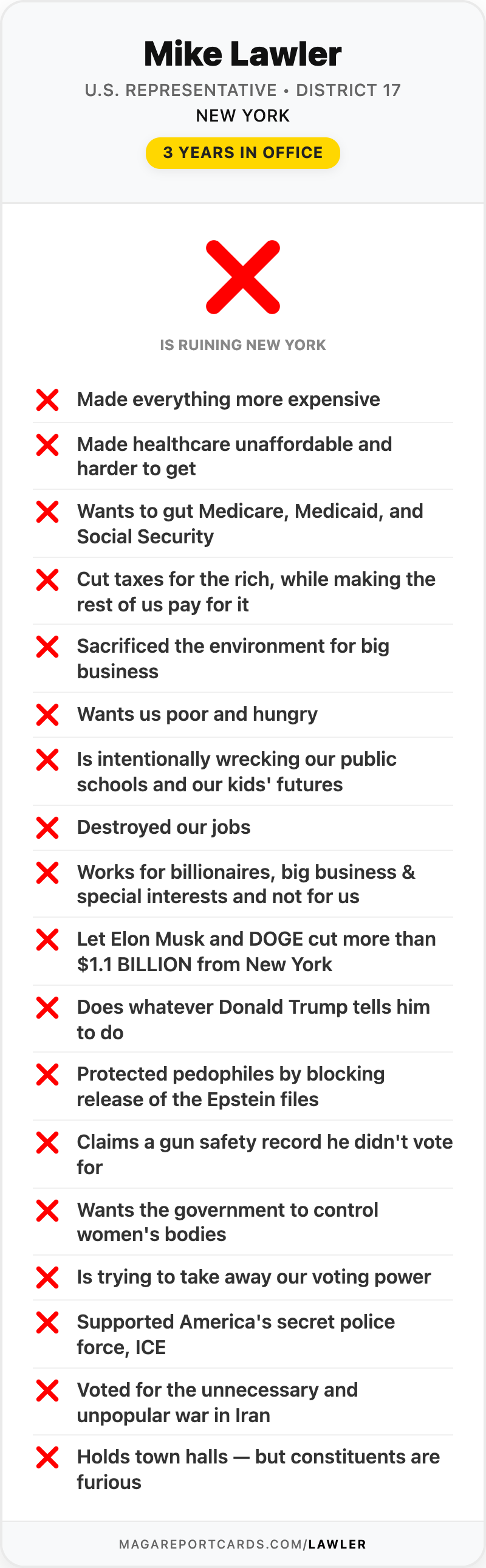
Nobody's record should be reduced to something they did at 20. That's not the problem here. The problem is everything Lawler did at 38, with a microphone and a staff and a seat in Congress: apologizing to people for being offended instead of for the act, going on television hours later to argue it didn't count, refusing to say a mailer full of Black men's faces was racist, sitting silent while a slur was said in front of him, and then doing a Michael Jackson bit aimed at his Black opponent on stage the night he won.
Every one of those was a choice he made as an adult, in public, on purpose. Jason Smith took the same route in Missouri — say the thing, then insist it wasn't what everyone plainly heard.
We should hold our leaders to a higher standard than "I understand why you're upset."
Sources
Nicholas Fandos, "Photos Show New York Congressman in Blackface as Michael Jackson," The New York Times, October 3, 2024. Photo: Evan Vucci/AP, via POLITICO.