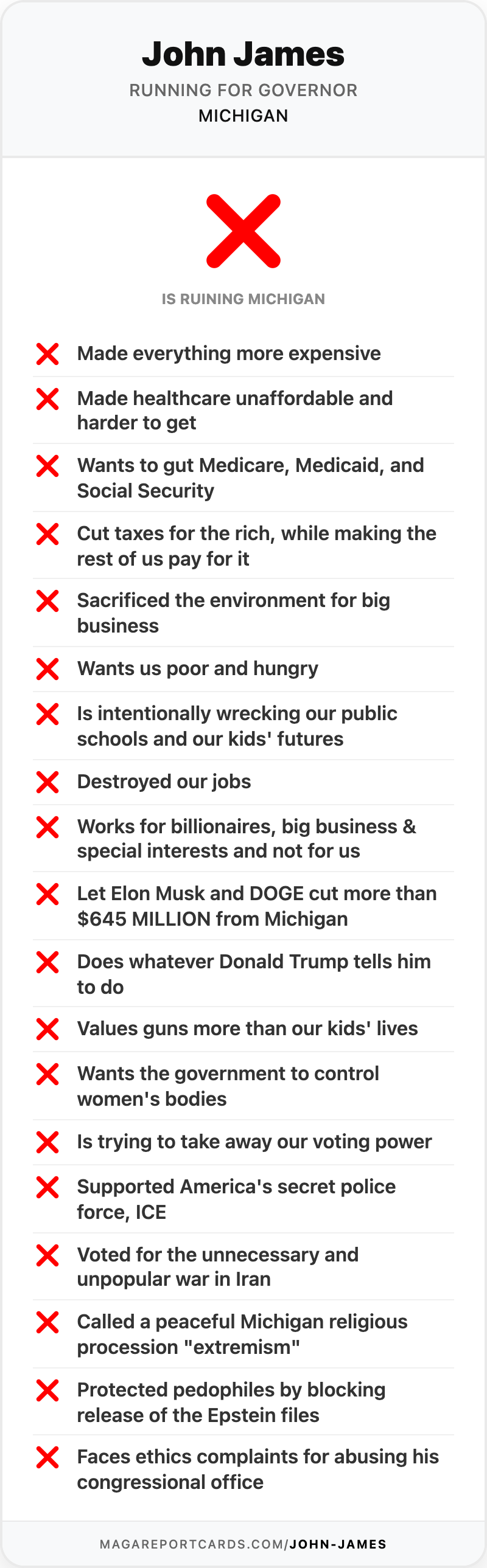
In 2023, Michigan became the first state in 58 years to repeal a right-to-work law. John James, the Republican running for governor, wants to put it back.
On April 27, 2026, James posted on X:
"Making Michigan right-to-work again would be a massive win for freedom. The only people opposed to it are those who think they know how to spend our money better than we do. Getting them out of power? That's an easy choice."
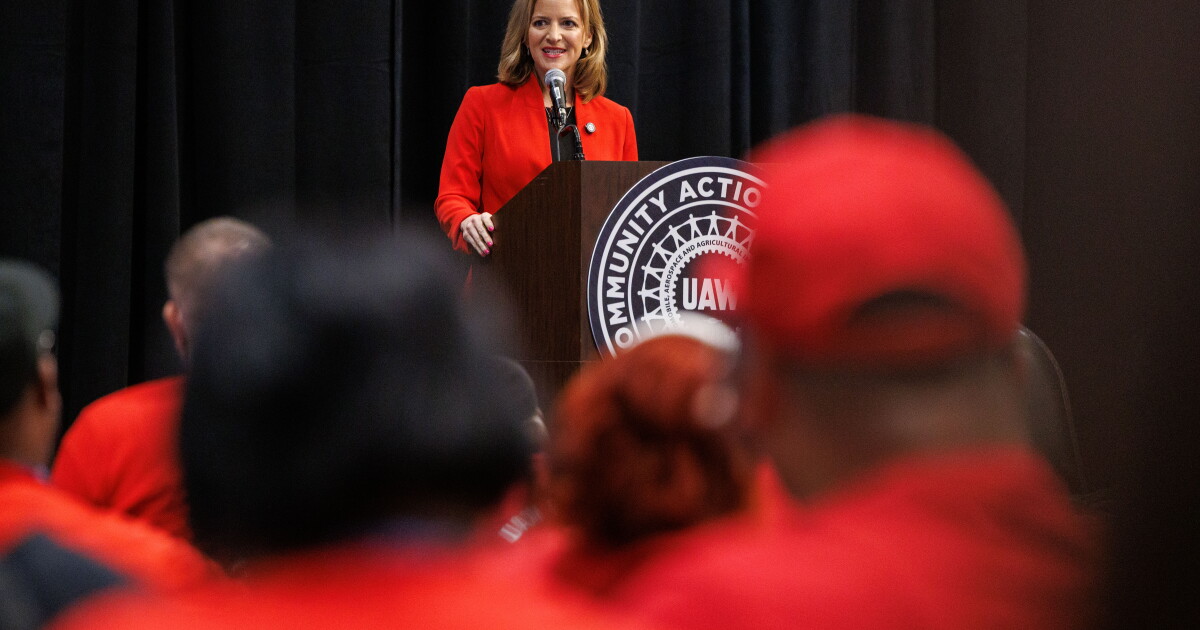
On September 16, at the UAW's Community Action Program Conference in Lansing, his Democratic opponent, Jocelyn Benson, warned union members that James would roll back a hard-fought win for labor by bringing right-to-work back. UAW President Shawn Fain called bringing back right-to-work union busting. "Him and his corporate donors want to weaken our movement," Fain said.
What right-to-work actually does
The name sounds like it gives you a right to a job. It doesn't.
Federal law already says no one can be forced to join a union to keep a job. What a right-to-work law adds is this: a worker covered by a union contract gets every raise, benefit and grievance protection the union wins — and pays nothing toward the cost of winning it. The union still has to represent that worker, even if a grievance costs tens of thousands of dollars.
Do that across a whole workplace and the union runs short of money to bargain with. That is how the law works.
Who pays for it
The Economic Policy Institute compared workers in right-to-work states with similar workers in other states — same education, same industry, same cost of living. It found that wages in right-to-work states are 3.1% lower. For a typical full-time worker, that came to $1,558 less a year. EPI's earlier research, which this study updates, found workers in those states are less likely to get health insurance or a pension through their job.
And it isn't just union members who lose. As EPI put it, where unions are strong, nonunion employers have to keep up with union pay. Weaken the unions and every worker in the state feels it.
The gap between union and nonunion paychecks is real. Nationwide in 2025, full-time union members had median weekly earnings of $1,404, compared with $1,174 for nonunion workers. The Bureau of Labor Statistics notes that gap also reflects differences in jobs, industries and ages, not only the union contract.
How many Michiganders this touches
Michigan is a union state. In 2025, 566,000 Michigan workers belonged to a union — 13.0% of wage and salary workers, well above the national rate of 10.0%. Another 54,000 were covered by a union contract without being members.
Those are the paychecks on the table. James's post says the only people who oppose right-to-work are those who "think they know how to spend our money better than we do." Hundreds of thousands of Michigan workers belong to unions that bargain their pay. Their dues are their money too.
Where James's words came from
The words James posted were not written for his post. They are the closing lines of an opinion column published the same day by Michigan Enjoyer, a Michigan news and commentary site, under the headline "John James Announces Plan to Restore Right-to-Work in Michigan." James's post repeats the column's last paragraph almost word for word and attaches an image of that headline.
The column says James "has announced" a plan. The plan page on James's own campaign site — his "Freedom Agenda," which lays out his economic plan under the heading "Make Work Great Again" — does not mention right-to-work at all.
So the vow Benson warned the UAW about is, on the record, a post on X built on someone else's column. What James has done about unions in Congress is on the official record.
What he has done in Congress
He signed on to impose right-to-work on every state. The National Right-to-Work Act, H.R. 1232, would make union contracts that require everyone covered to chip in illegal nationwide — no matter what a state's own legislature or voters decided. James became a cosponsor on May 6, 2025. That would override Michigan's 2023 repeal from Washington. We covered all 109 Republicans on this site who signed that bill, including three from Michigan.
He voted against giving federal workers their union contracts back. After executive orders stripped collective bargaining from most of the unionized federal workforce, the House voted on December 11, 2025 on the Protect America's Workforce Act to restore it. It passed — and James voted Nay. We wrote about that vote and the 195 Republicans who opposed it.
This is the same fight we've seen in Wisconsin, where Tom Tiffany voted for the law that stripped bargaining rights from public workers, and in Ohio, where Vivek Ramaswamy wouldn't rule out right-to-work in his own race for governor. James went further than Ramaswamy: he didn't dodge the question. He called it an easy choice.
What Michigan already decided
Michigan Republicans passed right-to-work in 2012. In 2023, the legislature repealed it and Governor Whitmer signed the repeal. The repeal took effect on February 13, 2024, the first such reversal since Indiana repealed its law in 1965.
James wants to undo that as governor. In Congress, he has already signed a bill that would undo it for every state at once.
What the record shows
John James called bringing right-to-work back to Michigan "a massive win for freedom," in a post that repeated an opinion column's closing lines, and the law he wants is one linked to wages 3.1% lower — about $1,558 a year for a typical full-time worker. In Congress, he cosponsored a bill to force right-to-work on all 50 states, overriding Michigan's 2023 repeal, and voted against restoring union contracts for federal workers. Michigan has 566,000 union members whose bargaining power that law is designed to weaken.
Source
This post is based on WKAR's report on Jocelyn Benson's remarks to the UAW (September 16, 2026). Photo: Andrew Roth / WKAR-MSU.