About two weeks ago, President Trump told Americans not to worry about running out of weapons in his war with Iran. According to CBS News, he said the U.S. has:
"virtually unlimited amounts of Mid to High Grade Ammunition, far more than we could ever use for this, or for any other War (which is highly unlikely!), that could improbably take place."
On Monday, September 14, his own Defense Department's inspector general — the Pentagon's in-house watchdog — sent Congress a report that says the opposite:
"The munitions expenditure on OEF has resulted in strategic inventory shortfalls and revealed industrial base bottlenecks for munitions resupply."
"OEF" is Operation Epic Fury, the Pentagon's name for the war. In plain words: we have fired off so many weapons that our stockpiles are now short, and the factories can't make new ones fast enough.
The White House and the Pentagon are still denying it. And this week, service members in the Middle East sent CBS News photos of what the war has done to U.S. bases — damage that, one said, hasn't been communicated to the American public.
What the watchdog found
CBS calls the inspector general's report a first-of-its-kind mandatory report to Congress. According to CBS News, it found:
- The war cost an estimated $33.4 billion between February 28 and June 30.
- $22.3 billion of that was spent on weapons alone.
- The U.S. lost four F-15 fighter jets, had one F-35 damaged, had seven KC-135 refueling planes damaged, and lost up to 30 Reaper drones.
- The State Department spent $79.2 million on things like evacuating staff, their families and U.S. citizens.
- Fixing Iranian damage to U.S. diplomatic buildings in Iraq, Kuwait, Saudi Arabia and the UAE will cost about $184 million.
A second CBS report says the watchdog put total equipment losses at up to $3.7 billion, including nearly 60 aircraft.
The report also says Iranian strikes "damaged and destroyed hundreds of buildings and structures at U.S. bases in Kuwait, Bahrain, Qatar, UAE, Saudi Arabia, Iraq, Oman, and Jordan." It gives no price for that damage. It says it's not yet clear whether all of those bases will be repaired — or who will pay.
The denials
Here is what the people running the war said about shortages, in their own words, as reported by The Washington Sun:
- The White House, through spokesperson Anna Kelly: "The United States military has more than enough munitions, ammo, and stockpiles to serve all of the commander-in-chief's strategic goals and beyond."
- The Pentagon, in a statement: "claims of U.S. munition shortages are false."
- Pentagon spokesperson Sean Parnell: "We have everything required to strike at the time and place of the President's choosing."
The Sun also reports that Defense Secretary Pete Hegseth and Trump have both denied reports of shortages, and that on Monday — the same day the watchdog's report came out — Trump posted that the U.S. is producing and delivering weapons at record levels.
Meanwhile, according to CBS, Hegseth has been pushing weapons makers to build faster. The head of Lockheed Martin's missile division called the rush "controlled chaos."
You don't tell factories to speed up when you have a "virtually unlimited" supply.
The missiles that protect our troops are running low
Some of the hardest-hit supplies are the missiles that shoot down incoming Iranian missiles and drones — the ones that protect U.S. troops and bases.
On Tuesday, Congress's nonpartisan budget office released its own report. According to The Washington Sun, it found the U.S. has used between half and two-thirds of its supply of four kinds of these defense missiles since June 2025, including Patriot missiles. Replacing them will cost $13.1 billion. Rebuilding the stockpile could take five years or longer.
These aren't cheap, and they aren't quick to make. CBS reports each new Patriot missile costs about $4 million, and Lockheed Martin is building 750 a year.
A defense expert at the Center for Strategic and International Studies, Mark Cancian, told CBS the U.S. has enough to finish a war with Iran. "The problem is a war against China," he said. "We might be able to provide enough munitions for a month, but getting on to month two or month three or four, that's a great challenge."
The budget office agreed: the war leaves the U.S. with fewer weapons for a possible conflict involving China and Taiwan.
"We're just watching them get destroyed"
On Tuesday, CBS News published photos sent in by active-duty service members. They sent them without their names because the military strictly limits what troops can say to reporters.
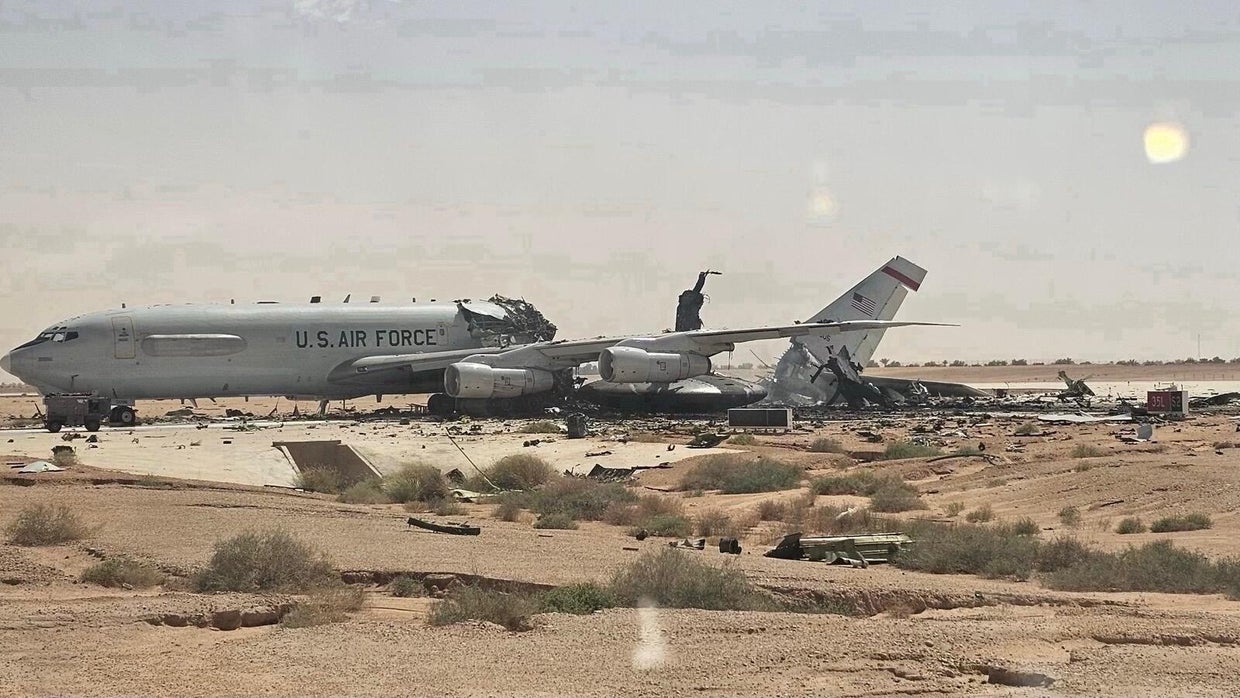
One photo, from Prince Sultan Air Base in Saudi Arabia, shows a Boeing E-3 Sentry — a radar plane that gathers intelligence in the air — with its tail blown off. Others show gutted buildings and barracks at the same base, and more wreckage at Camp Buehring and Camp Arifjan in Kuwait.
One service member told CBS:
"This is major damage to our bases that hasn't been communicated to the American public. We're standing there with our eyes closed getting punched in the face."
The same service member threw Hegseth's own word back at him. After an Iranian drone killed six U.S. troops at Port of Shuaiba in Kuwait on March 1, Hegseth called it a "squirter" — a drone that slipped through a "fortified" position's defenses. Survivors of that attack told CBS back in April that their post was not fortified at all. "Painting a picture that 'one squeaked through' is a falsehood," one injured soldier said.
Now a service member who is still deployed is saying the same thing about the bases:
"These are not 'squirters' getting through. We're not defending these bases. We're just watching them get destroyed."
The Pentagon did not respond to CBS's request for comment.
This isn't the first time the Pentagon has kept the public from seeing the real toll. Its own website dropped four dead soldiers from its Iran war count from one day to the next in July, and it has kept changing how it reports the wounded.
The Pentagon wouldn't even tell Congress
The budget office's report came with a warning about its own numbers. According to The Washington Sun, its estimate that the war cost $38.1 billion through August 1 carries "considerable uncertainty" — because the Pentagon didn't answer the budget office's requests for information. It had to use public databases and news reports instead. And because the Pentagon wouldn't cooperate, the budget office couldn't estimate what it will cost to fix the damaged U.S. bases.
The official numbers have been moving all year. CBS reports that in April, a Pentagon official told Congress the war had cost about $25 billion. Soon after, U.S. officials who knew the internal numbers told CBS the real price was closer to $50 billion. Last month, Hegseth told lawmakers the cost was $37.5 billion, according to the Sun.
The war is still costing $2 billion to $3 billion a month, the budget office says.
And now they want $70 billion more
The Trump administration is asking Congress for up to $70 billion in emergency military spending to cover the war and more, according to The Washington Sun. The budget office found only $42.3 billion of the Pentagon's share appears directly tied to the war — and $12.1 billion is for secret programs, a large amount compared with similar requests during the Iraq and Afghanistan wars.
In July, House Republicans pushed through a budget plan with $73 billion for the Pentagon and intelligence agencies, mostly for the Iran war. It is stuck in the Senate.
House Republicans keep voting to let the war go on. On September 15, the House voted to order U.S. forces out of the war for the third time since June, and Republicans voted 203 to 7 against it. Congress has never voted to authorize this war. But it is being asked to pay for it.
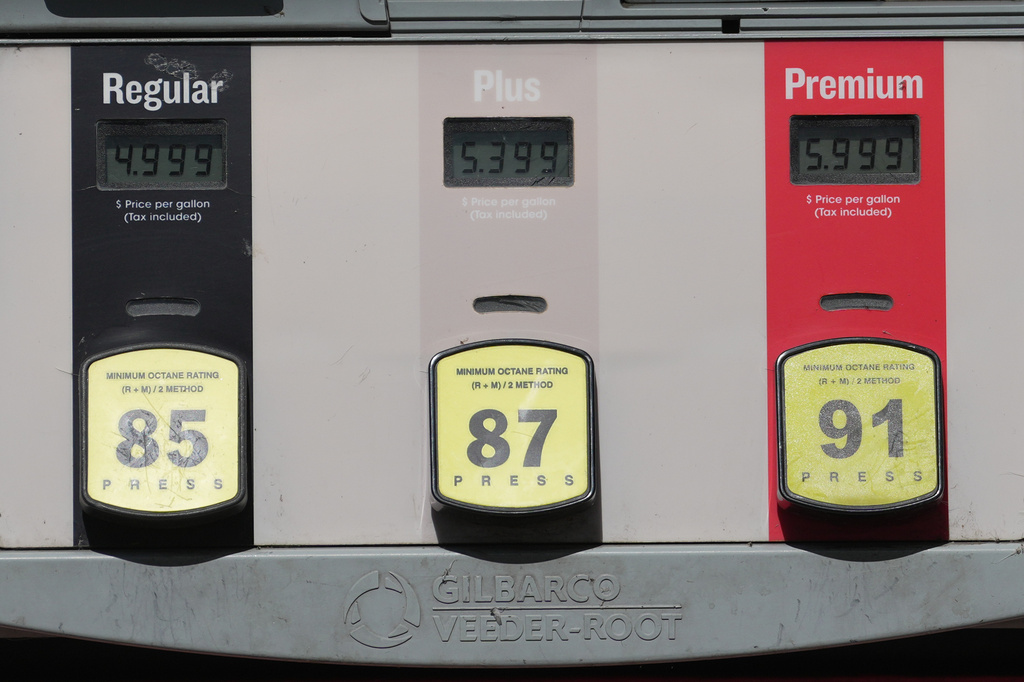
You're already paying too. The budget office expects the war to push inflation up by about half a percentage point in early 2027, mostly from higher energy prices. We added up what it has cost the average household earlier this month.
What the record shows
Trump said the U.S. has "virtually unlimited" ammunition, and the White House and Pentagon call shortage claims "false." Trump's own Pentagon inspector general told Congress this week that the Iran war has caused "strategic inventory shortfalls," cost up to $3.7 billion in lost equipment including nearly 60 aircraft, and damaged or destroyed hundreds of buildings at U.S. bases in eight countries. Congress's budget office says the U.S. has used half to two-thirds of four kinds of missile-defense interceptors, which could take five years or more to rebuild, and that the Pentagon didn't answer its requests for information. The administration is asking Congress for up to $70 billion more.
Sources
- CBS News: Pentagon inspector general says $22.3B spent on Iran war munitions has caused "strategic inventory shortfalls"
- CBS News: New photos show widespread damage at U.S. positions caused by Iranian missile, drone attacks
- The Washington Sun: CBO Warns the Iran War Is Driving Up Inflation
- CBS News: Army survivors of deadly attack in Kuwait dispute Pentagon's account, say unit "was unprepared" to defend itself
Photo: A damaged U.S. aircraft at Prince Sultan Air Base, Saudi Arabia, in a photo provided to CBS News by a service member.